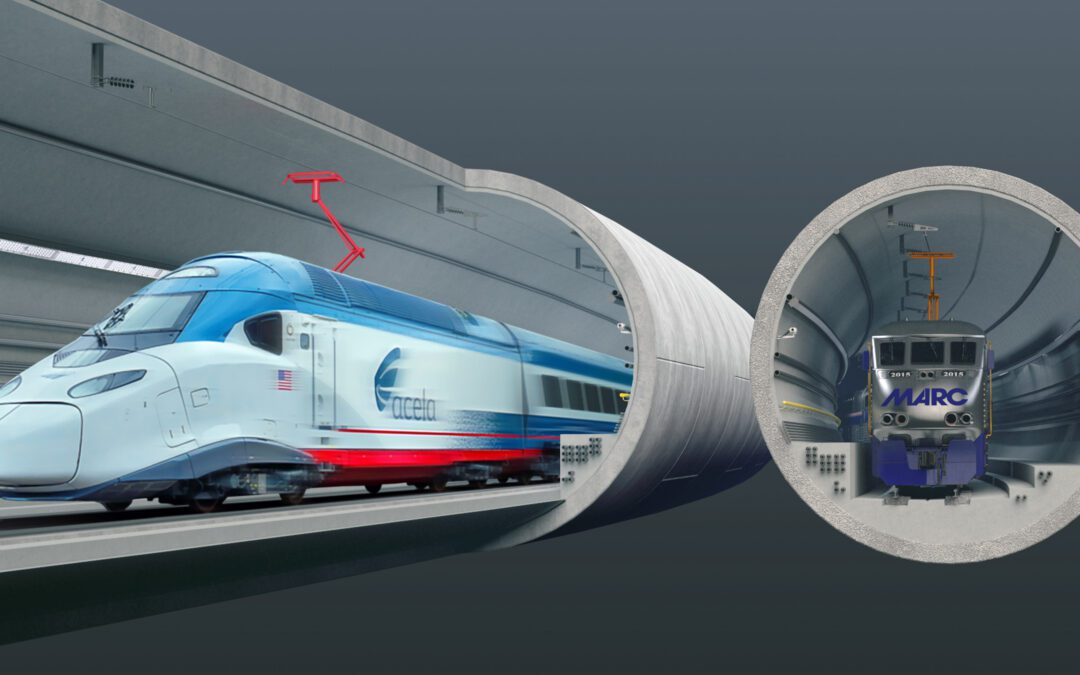
Early work is underway on the two-mile Frederick Douglass Tunnel in Baltimore. It’s the largest Amtrak-led infrastructure investment in the railroad’s history, and it’s the most consequential piece of the Northeast Corridor’s future outside of New York. Amtrak’s...
House Bill Would Slash Funding for Trains—And It Gets Worse
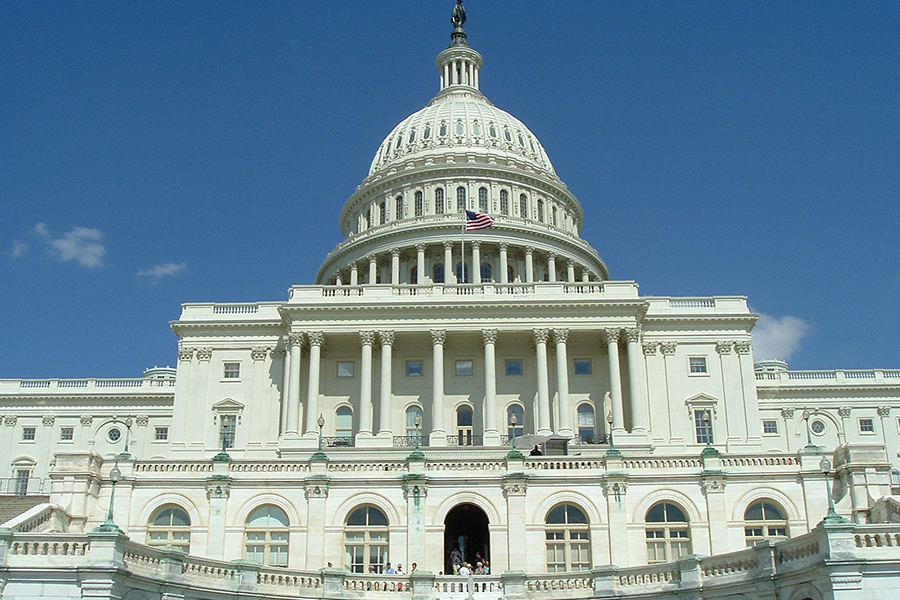
The battle over transportation spending is on in Congress. We need your help.
Congress is currently working on two bills that will determine how much the U.S. invests in passenger rail over the near term. Both bills fail to create the growing passenger-rail network this country needs.
The bills would cut funding levels for passenger rail. Even worse, the money for trains wouldn’t be guaranteed.
Which means we need to focus on not only securing more money but establishing a guaranteed, multi-year funding stream for passenger rail. In Congressional lingo, this is called an “advanced appropriation.”
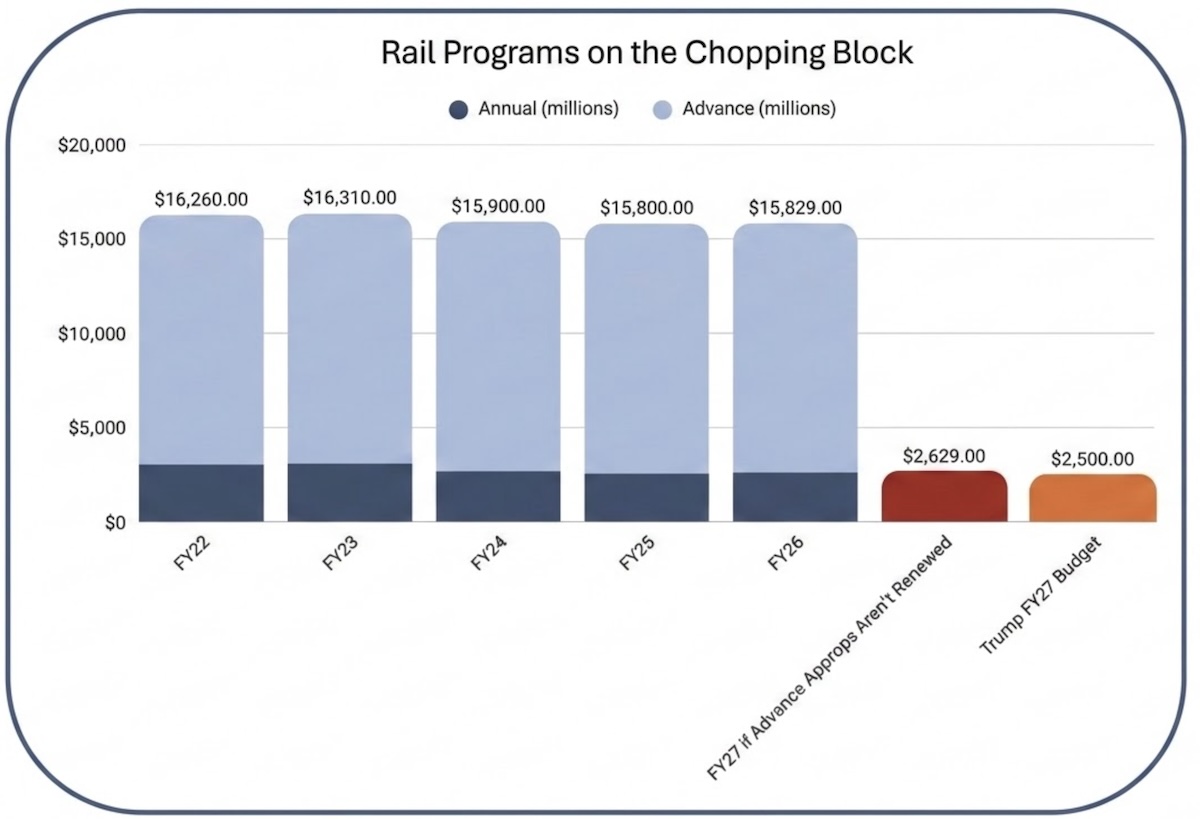
Chart source: Senate Commerce Committee
Authorizations vs. appropriations
First, some clarity on how Congress creates transportation programs (authorization) and funds them (appropriation).
Authorization
Every five years or so, Congress passes a surface transportation law that establishes the policies and programs for America’s highways, transit systems, and passenger-rail projects over the next five years. The bill also suggests annual spending targets for those programs. But these targets are meaningless without a companion appropriation.
Appropriation
Every year, if on schedule, Congress passes an appropriations bill that establishes the specific amount to be spent in the next fiscal year. This amount is what really matters, because it’s the money that Congress actually approves. (One way to think about it is the “theory vs. practice” distinction. Authorizations are the theory; appropriations are the practice.)
Advanced appropriation
For decades, highways and transit have received multi-year “advanced appropriations,” in which spending levels are established and approved simultaneous with the authorization. Crucially, these appropriations extend through the full length of the authorization timeframe. This guaranteed money over several years allows agencies to plan and implement long-term programs. Until 2021, passenger rail was never funded with advanced appropriations. So the money for railroad programs was always uncertain and in flux.
Status of the new authorization bill
The Infrastructure Investment and Jobs Act of 2021 (IIJA) was a breakout moment for railway funding. In addition to creating important new programs, it authorized the biggest investment in trains in recent U.S. history, i.e., $102 billion overall. Of that total, the advanced appropriations were $66 billion, or roughly $13 billion per year.
For comparison, the transportation bill that Congress passed in 2015 authorized just $10.4 billion (over five years) for passenger rail.
The IIJA expires on September 30. The House Transportation and Infrastructure Committee passed their proposed replacement, called the BUILD America 250 Act, in late May. It would roll back much of the policy progress contained in the IIJA. Most damaging, it does not propose any advanced appropriations.
That bill now moves on to the full House floor for a vote.
Status of the appropriation bill
Meanwhile, the House Transportation, Housing and Urban Development Subcommittee passed its appropriation bill in late May, and the full Appropriations Committee marked it up this week. It also moves to the full House for a floor vote this summer.
The bill underscores how important the IIJA’s funding levels—and advanced appropriations—have been to building America’s passenger-rail network. It proposes to spend just $2.1 billion on Amtrak—and $3.1 billion on passenger and freight rail, total—in fiscal year 2027. By contrast, spending on passenger rail was about $16 billion in FY 2026 with the IIJA’s advanced appropriations.
Why guaranteed funding is key
Of the $66 billion in advanced appropriations for passenger rail in the IIJA, $22 billion went specifically to Amtrak. That’s an annual average of $4.5 billion. For comparison, Congress had appropriated an average of about $2.5 billion for Amtrak in the three years prior to 2021.
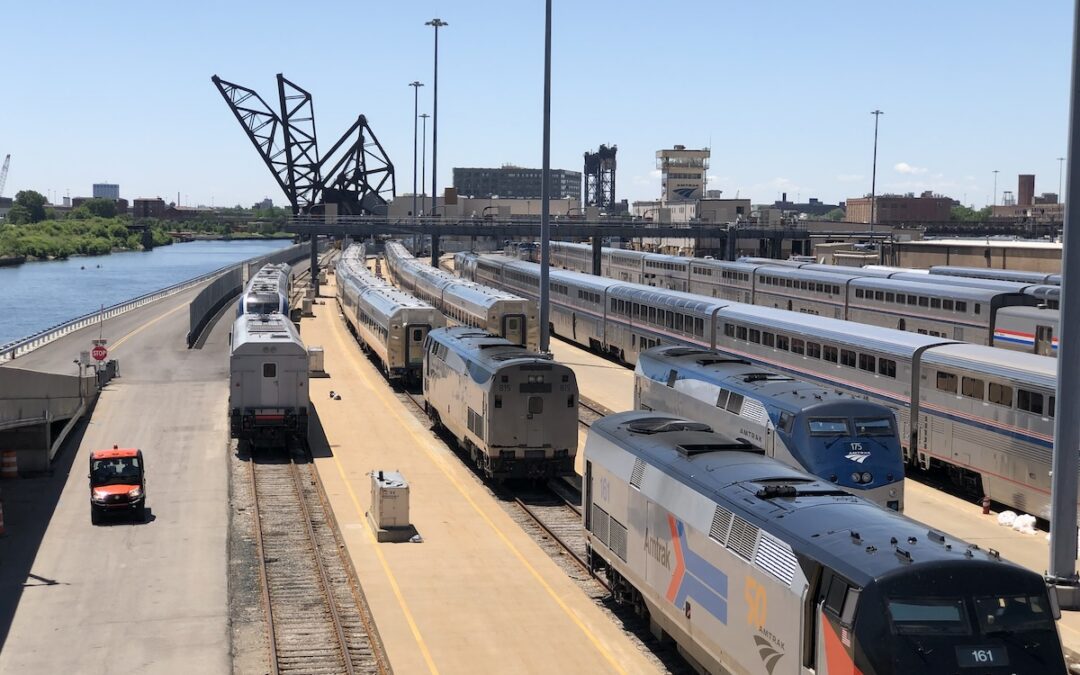
This boost in funding—and the guaranteed, multi-year funding stream—have driven Amtrak’s rapid expansion plans over the past five years. As the Eno Center for Transportation noted, “Through its new ability to plan with certainty, Amtrak has advanced a host of major investments including major bridge and tunnel projects along the Northeast Corridor, plans for a modern fleet of locomotives and trainsets, station improvements, and investments in Chicago’s rail infrastructure, the major hub of Amtrak’s National Network.”
The Federal-State Partnership for Intercity Rail received another $36 billion in advanced appropriations in the 2021 bill. Grants from that program funded several critical passenger-rail projects, including a $3 billion grant to Brightline West for its high-speed line from Las Vegas to greater LA.
The upshot is that the two bills now moving through Congress would deal a massive blow to Amtrak’s ability to maintain and upgrade existing train routes—much less plan new ones—by not only slashing funds but creating immense uncertainty around funding levels.
Three ways you can make a difference
We need to let both political parties know that more funding—and guaranteed funding—for railroads is an urgent priority. And we have a window of opportunity to do just that.
The Senate is working on its version of the surface transportation bill. The IIJA will likely be extended into late 2026 or early 2027 as Congress works out final details.
Broadly, Democrats in the Senate support more funding for passenger rail and giving it advanced appropriation status. And passenger rail’s vital role in many “red” states and rural communities has helped it gain bipartisan support.
Which means even a Republican-dominated Congress is persuadable. And if work on the bill stretches into late 2026 and early 2027, the makeup and leadership of the House and/or Senate might be much different than it is now.
- Send a message to Congress using our forms about advanced appropriations for trains and the American High-Speed Rail Act of 2026.
- Contact your representatives directly with your own customized comment—preferably by phone. Calls and customized letters have the greatest impact because they show you’re motivated enough to devote time and energy to the cause.
- Donate to the Alliance and then share this post with friends and family. Our best hope for success is to broaden our movement and multiply our voices.
The Latest from HSRA
Our Latest Blog Posts
Check out the latest news, updates, and high speed rail insights from our blog!