
Recharging Chicago Union Station: Electrification of the Nation’s Rail Hub is Key to Modern Train Travel Union Station should be a pillar of the rail revolution — the core of a modern, connected railway network. Imagine fast, clean, frequent intercity trains gliding...
Crashes in Thailand, Spain Don’t Mean Trains Are Unsafe
Railways ‘50 times safer than cars’
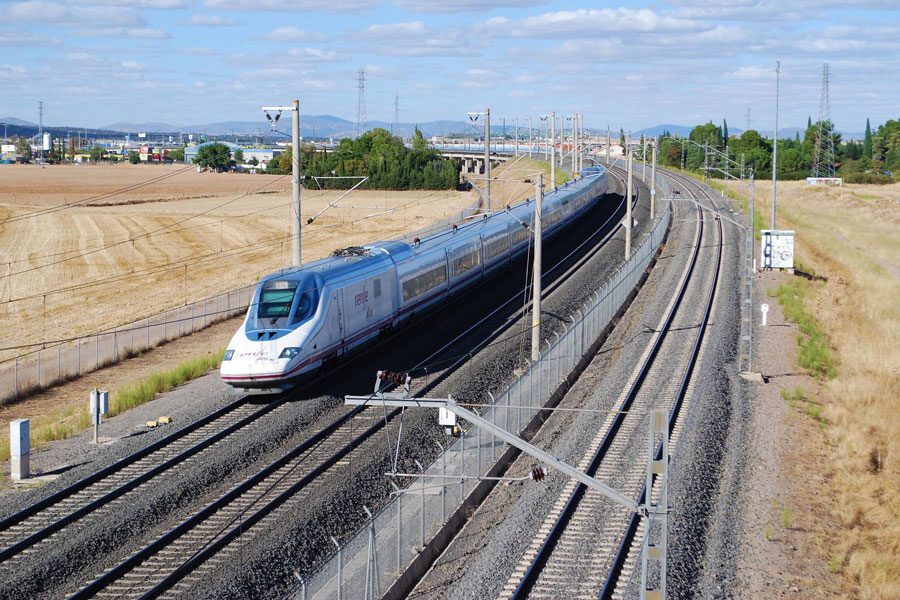
More than 40 people were killed and 152 injured in a crash of two high-speed trains near Córdoba, Spain on Jan. 18. Preliminarily, the crash is blamed on a derailment due to a broken joint on the tracks.
On Jan. 14, a construction crane fell on the tracks in Nakhon Ratchasima Province, Thailand, causing a train crash that killed 32 people and injured 69.
Photos from these scenes were gut-wrenching and heart-rending. We offer our deepest condolences to the bereaved families.
We do not wish to reduce these tragedies and these deaths to statistics, but we do wish to dissuade anyone who doubts the safety of train travel, especially against its No. 1 competitor, the automobile.
“While our immediate reaction is to suddenly think that trains are dangerous, it’s important to remember that train travel remains statistically much safer than driving. Trains are approximately 50 times safer per passenger mile traveled than cars,” said Dr. Dietrich Jehle, professor of emergency medicine at the University at Buffalo School of Medicine and Biomedical Sciences. He was reacting in a university publication to the Amtrak Northeast Regional crash in Philadelphia in 2015 in which eight people were killed and 200 injured. The train was traveling at 102 mph, too fast for a curve designated for 50 mph.
One might find other experts or number crunchers who say trains are only 17 times safer than driving, but you have to be careful with the data. “You’ll see that 95% [of rail-related deaths] have nothing to do with … passengers killed in accidents,” Allan Zarembski, director of the Railroad Engineering and Safety Program at the University of Delaware, explained to the website HowStuffWorks.com.
Subscribe to Our Newsletter
Your #1 source for the latest news in high-speed and regional rail – and how you can get involved
Most railroad deaths come from people trespassing on railroad property or from collisions at rail crossings, according to the Federal Railroad Administration Office of Safety Analysis. Of 581 railway deaths in 2025, 560 were “trespassers,” such as people walking on the tracks, and 247 occurred at rail crossings. (Some were in both categories.) Only one of the railway deaths was a train passenger, up from zero in 2024. “It’s a bad year if 10 passengers are killed,” Zarembski says.
People tend to experience salience bias, where we focus on information that stands out. A train crash is big news, in the newspapers and on television, with terrible images and escalating casualty counts. Meanwhile, an average of 107 people a day are killed in car crashes in the U.S., according to the National Highway Traffic Safety Administration. Many of these car crash fatalities are reported – if at all – in brief articles with small headlines in the local newspaper, or a 10-second mention on radio or television. The story of individual car crash deaths is not spread around the world the way word of a train or airplane crash would be.
All modes of travel are getting safer for those inside the vehicle, consistently and measurably so over the last century. For cars in the U.S., fatalities per 100 million miles traveled experienced a momentary peak of 16.71 in 1934 and has declined ever since. The figure was 1.38 in 2023, according to the National Safety Council.
Commercial aviation worldwide had one to two deaths per 100 million miles traveled in the 1980s; now it’s virtually zero. In the United States in 2022, it was 0.003.
It is clear that the most dangerous mode of travel is by motorcycle, with 31.39 fatalities per 100 million miles in 2023, according to the National Safety Council. Then come cars at 1.38. Trains and planes have microscopic numbers – again zero fatalities for U.S. train passengers in 2024, one in 2025.
When individuals are considering their options for travel, they usually think about time, convenience and cost. If safety ever figured into their calculations, they’d always choose the train over driving.
The railroad industry, both passenger and freight, continues to employ technology to detect cracked rails and broken joints to prevent crashes like the one in Spain. Crashes do happen sometimes, though, and it’s distressing when they do. But the risk of a passenger being injured or killed in a train crash is infinitesimal.
The Latest from HSRA
Our Latest Blog Posts
Check out the latest news, updates, and high speed rail insights from our blog!