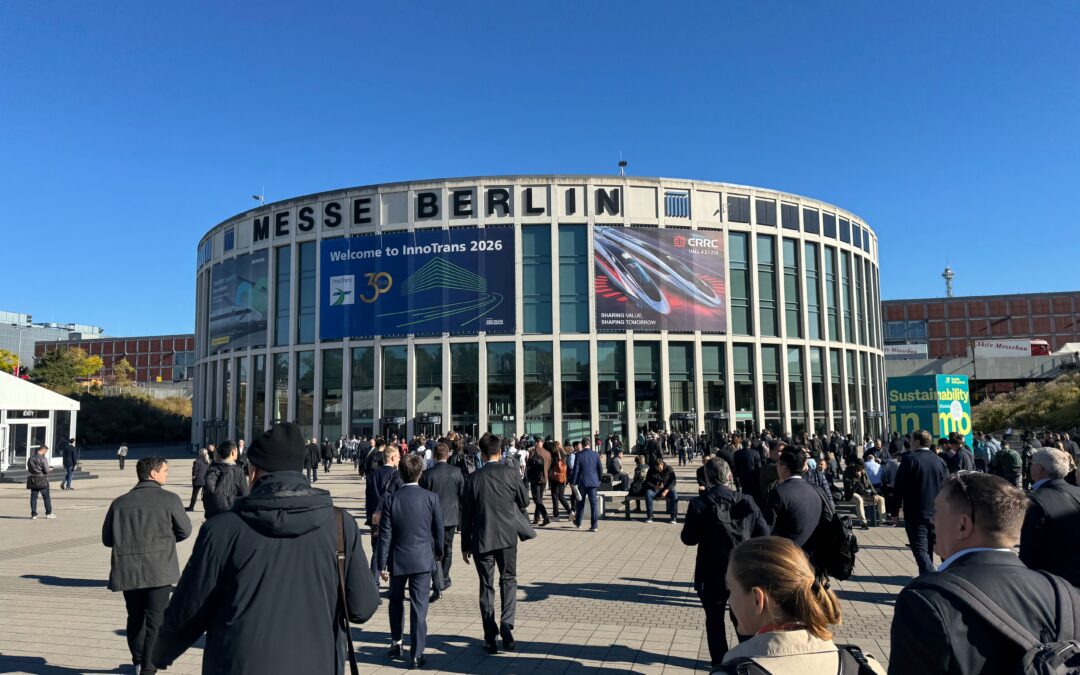
U.S. Takeaways From the Largest Railway Trade Show on Earth By Jordan Pokorney, Manager of Outreach & Engagement There’s nothing like InnoTrans. Held every two years since 1996 at the massive Messe Berlin, InnoTrans is where the latest transit technology is...
What We Can Accomplish in 2026
More Amtrak equipment, California tunnels, Corridor ID on the list
The movement to develop a great train network in the United States made undeniable gains in 2025:
- Illinois passed transit legislation worth $1.5 billion a year, which not only will continue to fund transit systems statewide, but also will lead to growth, including the development of a statewide regional rail network.
- California committed $1 billion a year to build their high-speed line, now under construction.
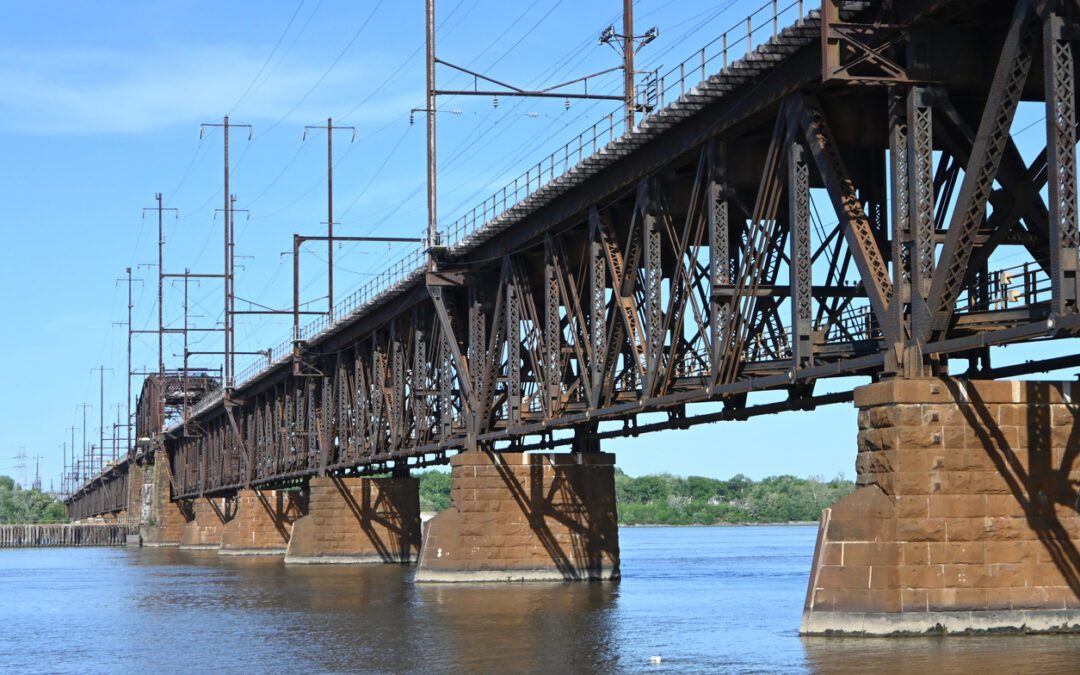
- Construction began on the new railway bridge over the Potomac River between Washington, DC and Virginia, essential to boosting train speed and frequency from Virginia to Florida.
Now it’s a New Year and we intend to make further progress. Here’s what we have our eye on this year to improve passenger rail:
We are urging the Federal Railroad Administration to approve the purchase of more equipment for Amtrak’s long-distance routes.
Amtrak reported record ridership of 34.5 million passengers in Fiscal Year 2025 (ending Oct. 31, 2025), a 5% increase over Fiscal Year 2024. The previous record was 32.5 million, set in 2019. Amtrak also reported ticket revenue of $2.7 billion, and 6.9 billion passenger-miles travelled in 2025, both all-time highs.
But Amtrak turns away an unknown number of riders because of lack of capacity: The trains are too short.
Amtrak needs an order of at least 1,086 new units immediately—including coaches, dining cars, sleeper cars and lounge cars—for its long-distance routes. At roughly $3 million each, that adds up $3.26 billion, which is a pittance in the federal budget. And, ultimately, these new units will generate revenue.
Once Amtrak overcomes its urgent need for new trainsets, Congress should fund an ongoing program to purchase new trains every year—to stay ahead of demand growth and deterioration, and to create a consistent workflow so that factories can build the cars faster.
The same goes for the state-supported routes, where the states, or consortia of states, purchase and own the equipment. Those trains also are too short, and some of the coaches and locomotives are too old.
Adding capacity enables more people to travel, at times convenient to them, at more reasonable prices, and increases ticket revenue, which decreases Amtrak’s operating loss.
We will keep the pressure on the California legislature to proceed with its tunnel projects
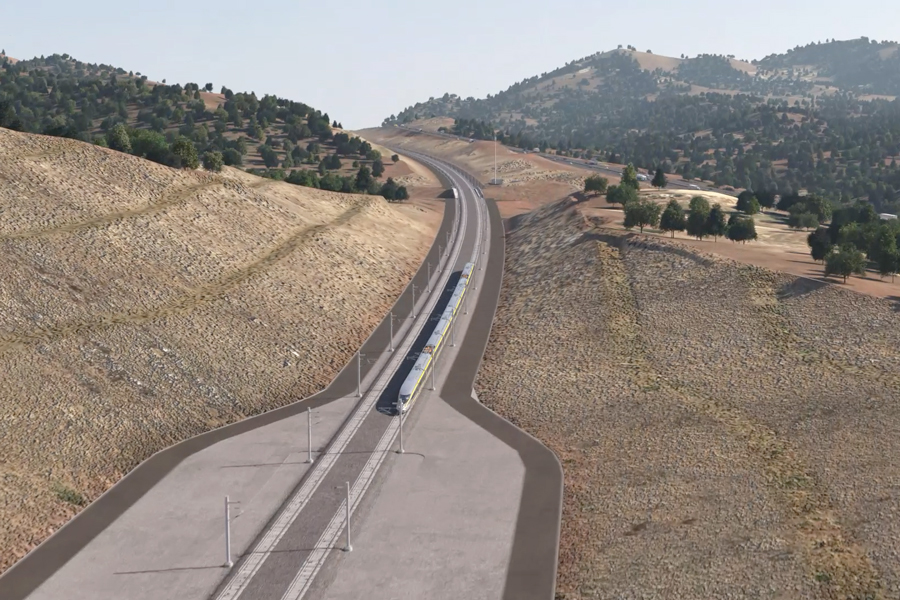
The Pacheco Pass Tunnels, connecting San Jose to Merced; and the Tehachapi Mountains Tunnels, from Bakersfield to Palmdale, are essential for connecting the Central Valley to the Bay Area and the Los Angeles Basin. Initial designs are complete, and environmental clearances are in hand.
Now, the California Legislature needs to remove existing restrictions and give the California High Speed Rail Authority permission to begin pre-construction work.
California High Speed Rail is a challenging political, administrative, engineering and construction undertaking, connecting significant population centers on terrain that includes mountains, valleys and environmentally sensitive stretches. Everyone who wants better passenger rail service should be rooting for California to succeed, because it will set an example for other projects to learn from.
We aim to maximize public engagement throughout the U.S. on the Corridor Identification and Development Program.
The program, established in 2022, is meant to identify potential passenger rail expansion and improvement projects. It provides funding for planning, but not for construction or operation.
By the end of 2023, 69 passenger rail corridors in 44 states had been selected for planning funding. These include new high-speed rail proposals, new conventional rail proposals, extensions of existing rail lines, or upgrades of existing lines with no extension.
Corridor ID is the tool that the Federal Railroad Administration will use to prioritize how federal intercity passenger rail funds are allocated. The project pipeline will help Congress decide how much funding to give intercity passenger rail.
Interested individuals and organizations (chambers of commerce, labor groups, civic betterment associations, etc.) should make sure their members of Congress know this is important to them. Also, contact local elected officials – mayors, city council and county board members, state legislators. They should know that the people they represent want passenger rail service, or improved passenger rail service, in their communities.
Having said that, we’re sure you know that Election Day 2026 is momentous for the direction of our country. All 435 seats in the U.S. House of Representatives are up for election, as are 35 U.S. Senate seats. Thirty-six states will elect governors; 46 states have elections for their state legislatures. Even before Election Day on Nov. 3, there will be primaries to nominate candidates.
We urge our readers and members to discover where candidates stand on passenger rail, and sniff out who will make it a priority. Will candidates for Congress support an appropriation for Amtrak coaches? Who’s for a national infrastructure program that includes planning funds, plus billions for construction, to get regional and high-speed rail projects rolling?
As an organization, the High Speed Rail Alliance can bring good ideas to the attention of elected officials and political candidates – and sometimes they champion good ideas because they are good ideas per se. But it’s easier to get sponsorship for ideas that are popular. All of us who support passenger rail should tell candidates we want this, and so do all our friends. Make candidates for office aware that passenger rail is a vote-winner.
When you get involved, you are helping to achieve these critical goals and change the way America moves. If we work hard and stay focused, we can make excellent progress in 2026.
Happy New Year. Let’s build.
The Latest from HSRA
Our Latest Blog Posts
Check out the latest news, updates, and high speed rail insights from our blog!