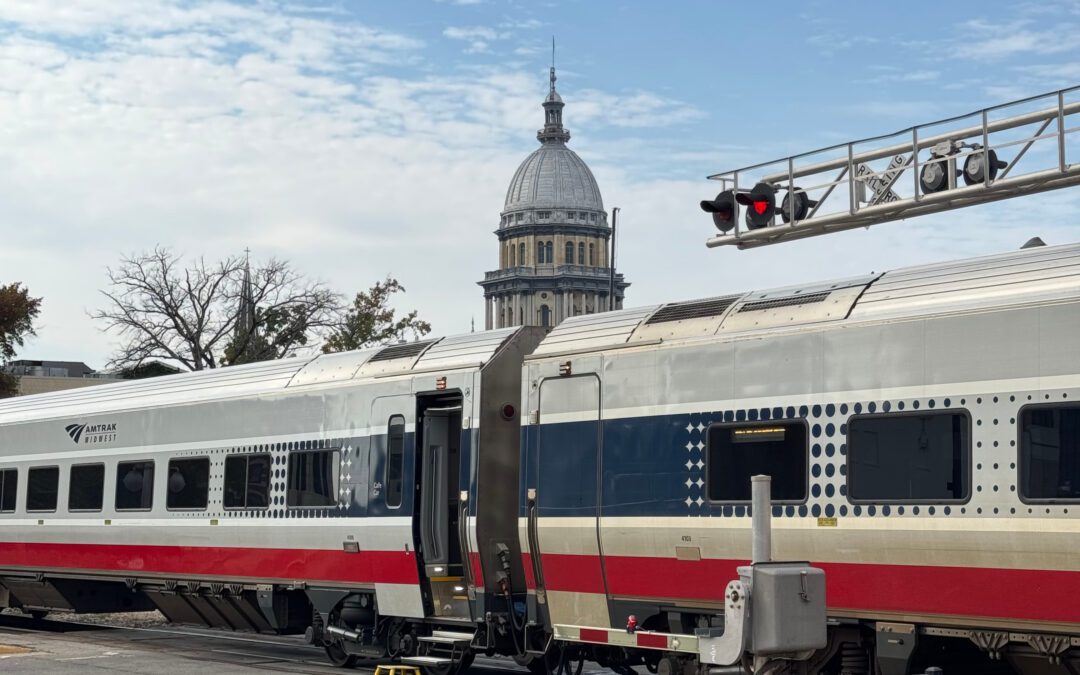
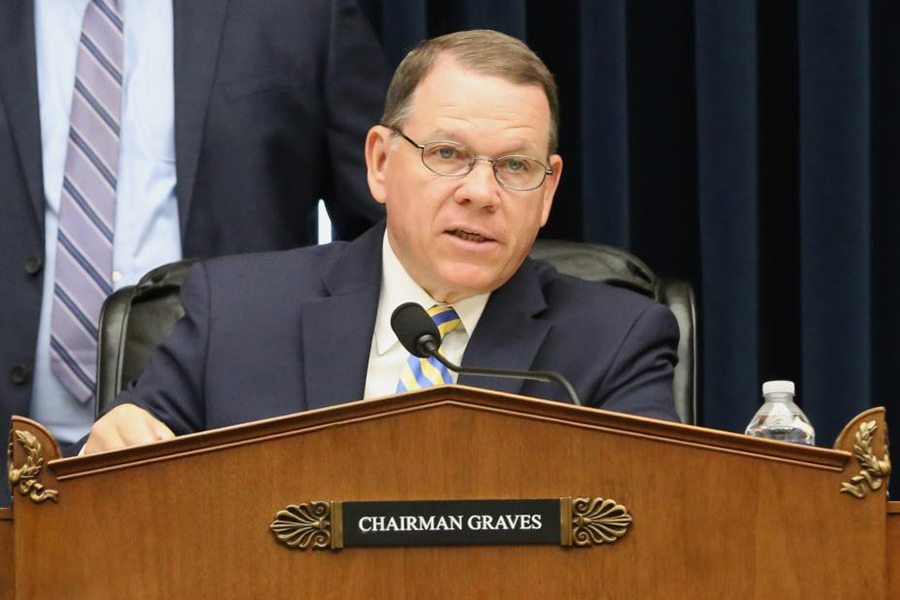
There is still a path for pushing back against the cuts As we reported recently, the House’s BUILD America 250 Act would simultaneously slash funding for passenger trains and strip it of “advanced appropriation” status, so the money wouldn’t be guaranteed. A House...
10 Reasons Why Trains Will Save Us

On this “Pale Blue Dot” we call home, railways are our past, present, and future.
On Easter Sunday, as the four members of the Artemis II crew traveled through space on their way toward the Moon, Astronaut Victor Glover offered a message to television viewers on Earth:
“In all of this emptiness—this is a whole bunch of nothingness, this thing we call the universe—you have this oasis, this beautiful place [where] we get to exist together.”
Trains won’t get you to the Moon. But here on Earth, they are the key to a brighter future for humanity.
According to the United States Environmental Protection Agency, transportation produces 28% of the nation’s total direct greenhouse gas emissions—more than any other sector. Road vehicles, from personal cars to large trucks, account for 80% of our transportation emissions.
We won’t make serious progress on overcoming the climate crisis without getting people out of cars—even electric vehicles—and into mass transit. A 2022 survey commissioned by the Rail Passengers Association found that a whopping 69% of American voters had never ridden a train. When we talk about the railway revolution, we mean getting this figure down to zero.
By joining our movement, you are helping expand access to passenger rail, bringing people together and making our planet a better place to live—for everyone.
This Earth Day, we offer 10 reasons why trains will save us:
- Trains are the most energy-efficient way to travel by land. High-speed trains powered by overhead electric wires consume almost ten times less energy per passenger-kilometer than cars—and six times less energy than airliners. Electrification is essential; once accomplished, a train is as green as the grid it’s plugged into. But even diesel trains use over three times less energy than cars.
- Steel wheels on steel rails is unbeatable physics. The reason that trains take so long to come to a stop is also the reason they are so efficient. Steel wheels on steel rails reduces friction by up to 99% compared to rubber tires on asphalt roads. As a result, less mechanical energy is lost through heat conversion.
- Trains make the draft—literally. Because trains are linked in a caravan formation, the locomotive (or leading unit) creates draft, which reduces drag and increases energy efficiency for the rest of the trainset. It’s like Mario Kart, but safe and legal; achieving the same effect on a highway would be reckless tailgating.
- Trains are the true EV powerhouses. For all the hype around electric cars, they can’t begin to compete with the OG electric vehicle—i.e., electric trains, which have been around since 1879. An Achilles’ heel of electric cars—and there are many—is that the bigger the vehicle, the bigger the battery, which does more damage to roads. The relatively light weight of electric trains reduces wear and tear on the tracks, allows for faster acceleration, and slashes energy use.
- Manufacturing electric trains does not depend on rare minerals. The great irony of EVs is that mining for lithium and cobalt for batteries is so carbon intensive (and exploitative) that producing one EV emits nearly twice as much carbon as building an internal combustion engine vehicle. In contrast, the resources needed to make an electric train are relatively simple and widely available.
- A train can outlive even the most resilient Toyota. The average service life of a train is around 30-35 years, or about double the average lifespan of the American car (16.58 years). The lengthy operational usefulness of trains and transit, along with the fact that they are not a consumer product, means less energy and resources are used for their manufacture.
- “Humanity’s default mass mover.” Borrowing a phrase from engineer and podcast host Gareth Dennis, author of “How the Railways Will Fix the Future,” trains simply carry more people and use less space than cars. A single freeway lane can carry only 2,000 cars per hour before congestion sets in. Meanwhile, one railroad track can move as many people as 10 highway lanes.
- Trains un-pave parking lots and put up a paradise (or whatever Joni Mitchell said). Switching to EVs still does not solve the problem of the amount of space that car infrastructure consumes, from parking lots to “just one more lane” of freeway. Nor does it solve the issue of traffic congestion. Tightly knit cities and towns, shaped by mass transit, mean more opportunities for green space and environmental preservation, encouraging human development to stay out of nature’s way.
- Trains multiply the use of other sustainable transportation modes. A rising tide lifts all boats—or trains, in this case. When more people take the train, more people take local public transit, walk, or bike. When more people can choose these modes, more people will take the train. Improving one system creates ripple effects and a virtuous cycle of increased ridership for all sustainable transportation modes.
- Trains strengthen communities—and our sense of community. Passenger rail generates denser, more efficient land use than cars. Trains make it easier to access jobs, spend time with friends and family, and experience this incredible world of ours. Places served by great trains have more vibrant downtowns and cleaner air than those shaped by car-induced sprawl. As the National Association of Realtors has found, Americans want to live in these walkable communities—and are willing to pay a premium to do so. With loneliness now a public health epidemic in the United States, it’s not hard to see why people want to live closer to each other. We need human connection—now more than ever.
Trains are the solution to our social, environmental, and economic problems.
Please donate today to build a rail-forward future.
This oasis is worth saving.
Image credit: NASA
The Latest from HSRA
Our Latest Blog Posts
Check out the latest news, updates, and high speed rail insights from our blog!