
Take the SurveyWashington is designing a transformative high-speed line The Washington State Department of Transportation (WSDOT) is taking public comment on its study for a high-speed line between Portland, Seattle, and Vancouver, B.C. The study will be released in...
American Rail on the Chopping Block
There is still a path for pushing back against the cuts
As we reported recently, the House’s BUILD America 250 Act would simultaneously slash funding for passenger trains and strip it of “advanced appropriation” status, so the money wouldn’t be guaranteed. A House committee passed the bill in late May and it awaits a vote in the full House. That’s the bad news.
The good news is that there is still a path for not only pushing back against the cuts but building the muscle to push for big investments in U.S. passenger trains over the coming years.
The opportunity in the Senate
The Senate is working on its own version of the BUILD America 250 Act. Then the two versions must be reconciled and approved by the full Congress. This final bill will replace the surface transportation bill that Congress passed in 2021—i.e., the Infrastructure Investment and Jobs Act. (A reauthorization of the law is required every five years.) The work will likely be completed late this year or early next year.
Broadly, Democrats in Congress support more funding for passenger trains, and they believe funding levels should be guaranteed—as with highway funding—for the bill’s full, five-year term. Republicans are less supportive, but some traditionally “red” states—including North Carolina and Georgia—have important railway projects underway or in the planning stages. Which means rail advocates have real leverage to shape what comes out of the Senate this summer and fall.
And there’s plenty of material to work with. The Senate Committee on Commerce, Science, and Transportation recently published “American Rail on the Chopping Block,” for example. It cites a recent Federal Railroad Administration study focused on a program to improve long-distance Amtrak service. The program could add 23,000 route-miles of passenger rail, serve nearly 40 million more people, and increase access in rural communities by 43%, according to the study.
The program would cost about $53 billion. For comparison, Congress just approved roughly $70 billion for the Department of Homeland Security.
The American High-Speed Rail Act
Meanwhile, Rep. Seth Moulton (D-MA) has re-introduced the American High-Speed Rail Act. The bill has 48 cosponsors and authorizes $205 billion over five years for the planning and construction of a U.S. high-speed rail network. It defines HSR as trains running at a minimum of 186 mph.
Moulton’s bill plants a flag for big investments in high-speed rail down the road. (Watch the Alliance’s webinar with Moulton after he originally introduced the bill in 2024.) In early June, the Illinois House passed a resolution voicing support for it and asking Congress to “ensure that any federal surface transportation reauthorization package includes substantial, dedicated funding for high-speed and higher-speed rail development nationwide.”
The big-picture view
The basic question here is straightforward: Should highways have a stranglehold on U.S. transportation spending?
Congress answered with a clear “no” by investing significant money in trains, transit, and other alternatives to driving in the IIJA. Those investments put the U.S. on a much different path than the one we’ve been on since the launch of the Interstate Highway System in the 1950s. Moulton’s bill is part of the same effort to re-balance U.S. transportation spending.
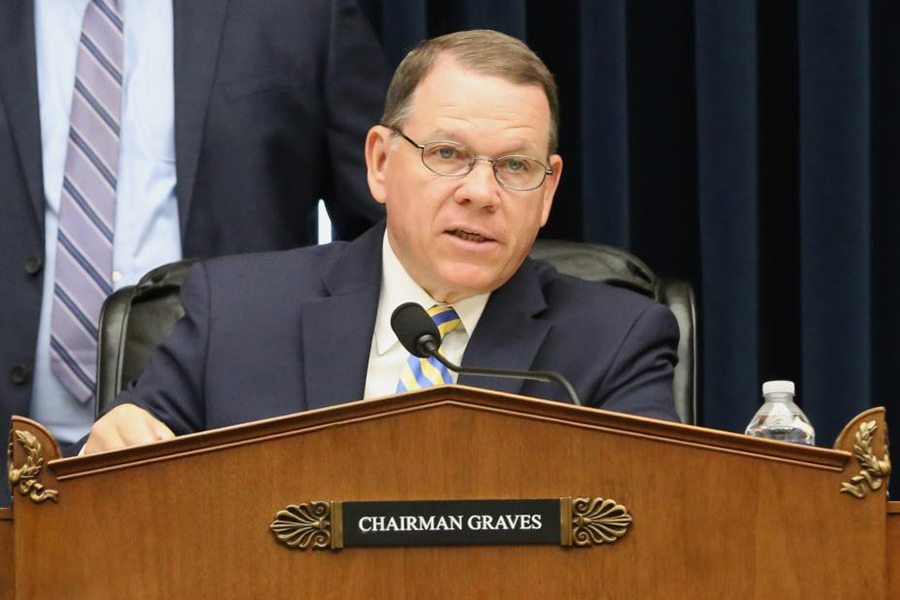
The BUILD Act aims to reverse that progress and relegate every other non-highway transportation mode to fighting for scraps. And the House leadership isn’t subtle about this. Last fall, the chair of the House Transportation and Infrastructure Committee said that the BUILD Act would be “a traditional highway bill,” focused on laying asphalt and pouring concrete. “We’re not going to be spending money on murals and train stations or bike paths or walking paths,” he said. “We’re going to spend money on traditional infrastructure. That’s roads and bridges.”
The Act also takes aim at one of the key innovations of the 2021 law—the Corridor ID program, which has funded planning and early design work in 69 train corridors across the U.S. The current bill would create new bureaucratic hurdles for being admitted to (and remaining in) the program.
Three things
As bad as the BUILD America 250 Act is right now, nothing is certain about how the bill will change as it moves through Congress this summer and fall. And there’s nothing certain about the makeup of Congress later this year or early next year, when it will pass.
Bringing great trains to the U.S. means building muscle with small, consistent actions—and keeping at it for as long as it takes.
With that in mind, here are three important actions you can take right now:
- Sign our petitions for advanced appropriations for trains and the American High-Speed Rail Act of 2026.
- Contact your representatives directly with your own customized comment—preferably by phone. Calls and customized letters have the greatest impact because they show you’re motivated enough to devote time and energy to the cause.
- Donate to the Alliance and then share this post with friends and family. Our best hope for success is to broaden our movement and multiply our voices.
The Latest from HSRA
Our Latest Blog Posts
Check out the latest news, updates, and high speed rail insights from our blog!