Compartmentalized Responsibility Amtrak, at the prompting of the Federal Railroad Administration, is proposing a major restructuring. According to Amtrak’s website: “The preliminary framework would transform key parts of the organization into smaller, more focused...
Why Union Pacific Should Lobby for Passenger Trains.
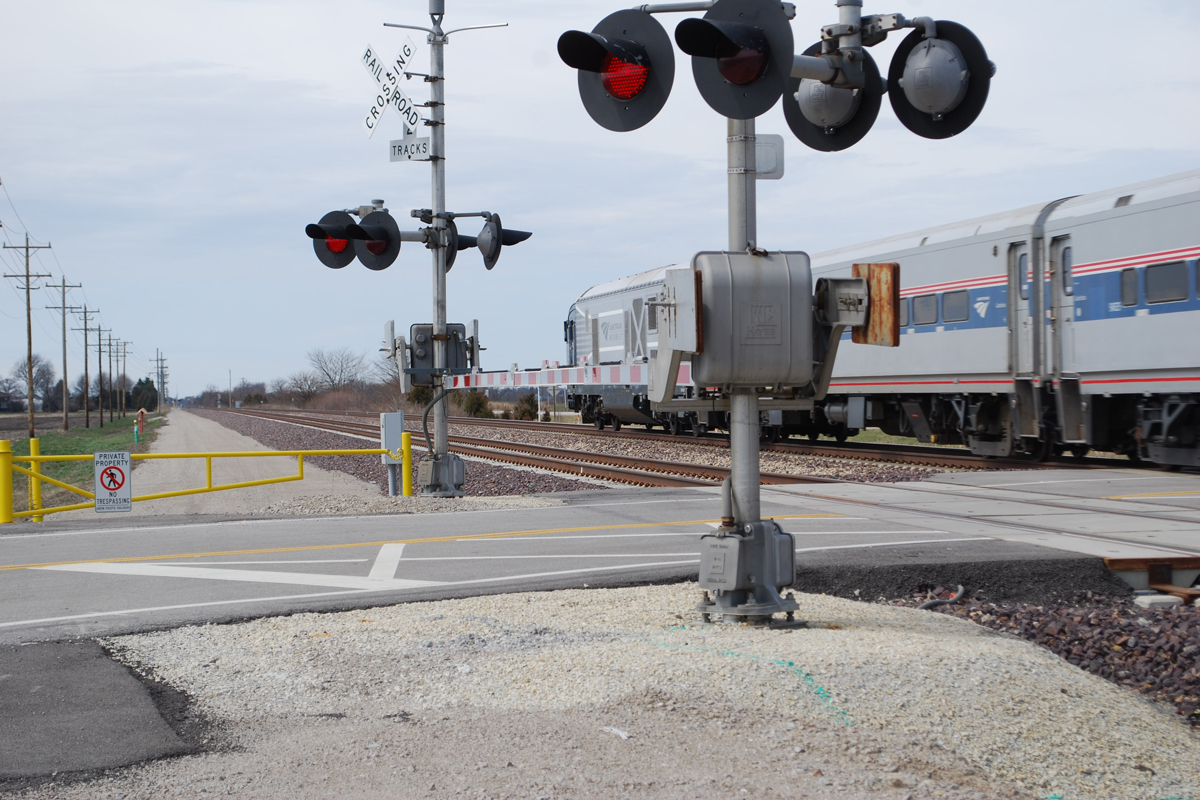
Benefiting the traveling public, shippers, communities, and railroads alike.
Shifting freight and passengers to railroads is urgent. For economic, safety, and environmental reasons, much of the freight transported on our highways should be moving by train. But private firms and capital markets have few incentives to pay for the infrastructure needed to compete with heavily subsidized highways.
To run more trains of all kinds, we need a federal program that will mobilize more private-sector interest—and investment—in rebuilding our railroads. To create that program, we need better deal structures.
Class I railroads view passenger trains as a source of delay, a drag on capacity, and a demand from someone else’s customers. But it doesn’t have to be this way. A productive relationship between railroads and passenger-rail operators is possible.
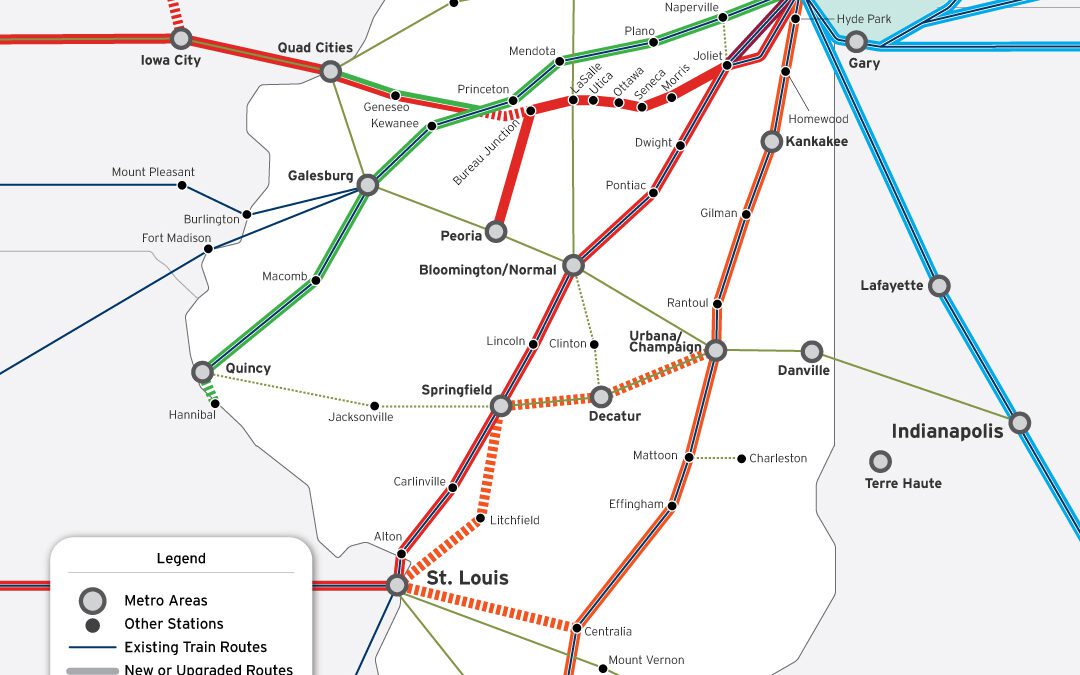
Passenger-rail operators need to structure deals that are good enough for the Class I railroads to advocate for—just as highway builders push for federal and state funds. The ongoing partnership between the Union Pacific (UP) railroad and the State of Illinois on the Chicago – St. Louis corridor is a great model.
The line’s abandonment and removal was a real possibility in 1989. Then Illinois, which had an interest in connecting Chicago and Springfield with faster trains, intervened. It helped Southern Pacific acquire the line and loaned the railroad $40 million to make it usable.
Since then, the program has benefited the traveling public, shippers, communities across Illinois—and especially Union Pacific. The successful recent rebuild of its portion of the Chicago – St. Louis Corridor gives it a model for launching similar projects across the US.
Here’s a partial rundown of the benefits to UP from the decision by Illinois to run faster trains through the state’s capital:
Bridges rated for 286,000 pounds
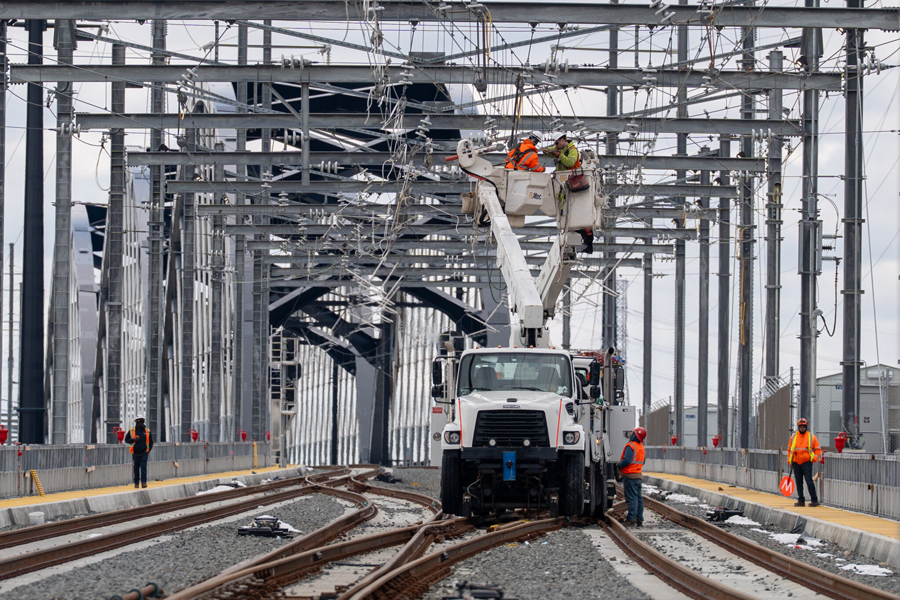
The project rebuilt or replaced more than 200 bridge structures and culverts to increase maximum payloads, from 268,000 lbs per car to 286,000 lbs. That’s roughly 10 percent more payload with the same crew, locomotive, and slot in the schedule—and less fuel per ton moved.
Because of passenger trains, UP can run standard-weight stack trains to its new intermodal yard in Joliet. The public, meanwhile, benefits from safer roads and fewer truck movements on congested urban freeways.
Routine maintenance
Illinois pays annually to keep the track to Class 6 standards, meaning trains can operate on the line at up 110 mph.
A common practice is to rebuild the track to Class 5 standards—then let it deteriorate to the lowest levels of Class 4 before refreshing it.
Keeping the line at the higher standard has multiple benefits, including faster trains, better on-time performance rates, and less risk of costly and time-consuming derailments.
Increased fencing, better grade crossings—and reduced tort exposure
Every trespasser strike or highway-crossing collision costs money and delays trains. It’s also a huge liability risk.
Lack of fencing is a prime source of risk. Trespassing is the leading cause of rail-related deaths in the United States. There were nearly 800 fatalities and more than 500 injuries in 2025 alone.
Congress regularly raises the prospect of mandating fencing along rights of-way through populated areas. The industry has argued that the cost-benefit calculus doesn’t support it.
There is a federal program for grade-crossing elimination but no comparable federal program for trespass prevention. Fencing that’s bundled inside a passenger-rail grant is scarce for that reason.
This project fenced off all sections within populated areas. It also upgraded more than 200 grade crossings.
Under the Railway-Highway Crossings program, those projects are funded at a 100 percent federal share. The program has been associated with a 41 percent reduction in grade-crossing fatalities nationally (between 2000 and 2023), despite rising vehicle miles traveled. For a railroad, this is a story about the largest per-incident tort exposure on the property—and the political pressure that follows every collision.
It’s a no-brainer: Railroads should be active proponents for publicly funded fencing and grade-crossing safety.
25-foot track centers and land acquisition
The corridor was also rebuilt with 25-foot track centers, and Illinois handled the land acquisition. Both facts are more important than they seem.
Twenty-five feet is the spacing that Class I railroads apply to their own main tracks. The FRA defines “adjacent tracks” as “two or more tracks with track centers spaced less than 25 feet apart,” and that definition triggers on-track safety requirements for roadway workers engaged in maintenance and construction. Widen the centers to 25 feet and the corridor stops being “adjacent tracks” in the eyes of the rule—meaning fewer flaggers, less protection time consumed, more productive maintenance windows, and safer crews.
None of this is free. Widening track can involve acquiring right-of-way, parcel by parcel, through developed land. It is a slow, expensive, and politically thankless job. Illinois did it. UP profited from the result.
The access road that came with it means that track crews, signal maintainers, and emergency responders reach a derailment or a broken rail by vehicle rather than on foot or by rail, which shortens the time a main line sits out of service.
The key question
Add it up: Bridges that accommodate the industry-standard car. Maintenance costs covered by Illinois. Fencing and grade crossings that reduce tort exposure and blunt arguments for a federal mandate. Track centers that take the corridor out of the “adjacent track” definition, on land acquired by somebody else. An access road that cuts the incident response time.
Union Pacific called itself “a key partner” on the project and described it as “a shining example” of a successful public-private partnership that improves America’s passenger-rail network as well its freight operations. “Everybody worked as a team,” a UP official said. “We pulled together in the same direction. We all had the same goals, and we all shared the same positive, solution-oriented attitude.”
With good reason.
All of this happened because Illinois committed to running faster passenger trains—and UP engaged as a productive partner. The benefits were real and substantial for everyone. The costs, for UP, were relatively few.
Which raises a key question for railroads: If a passenger-rail partnership is the mechanism by which the public will pay to modernize your railroad, why wouldn’t you advocate for them?
Subscribe to Our Weekly Newsletter
Your #1 source for the latest news in high-speed and regional rail – and how you can get involved
The Latest from HSRA
Our Latest Blog Posts
Check out the latest news, updates, and high speed rail insights from our blog!