Preface by Rick Harnish, Executive Director We need a federal integrated network plan Network planning is key to building the business and political case for great trains. That’s why pushing the federal government to create an integrated network plan for the entire...
America’s Best Train Stations
We’re looking for stations a city can build around
We’d like to identify America’s prototypical train stations, in terms of how the stations promote economic development in the area surrounding the station. Passengers getting on and off the trains are potential business customers or proprietors, office employees or residents. Their presence accessing the train allows for dense residential, commercial and institutional development nearby, without burying the city in cars. Cities that make use of this opportunity solidify their tax base, while bringing life to the city.
Once we’ve determined the top stations, we’ll use them as examples to show mayors around the country: Your city can have this, if you support fast, frequent passenger rail, and if you promote transit-oriented development around the station.
Every city is different, and the frequency of train service will vary, but our goal for passenger rail is service sufficiently frequent that the train station is busy much of the time, and can be a catalyst for development.
We’ll consider stations that have both Amtrak and regional/commuter service, as well as Amtrak-only stations, keeping in mind that more frequent service, no matter who the carrier is, keeps the station and surrounding area busy more of the day. Local transit connections are good, surface parking lots surrounding the station are bad. We want to see dense commercial, residential or mixed-use development in the blocks surrounding the station.
For the purposes of this discussion, we’re excluding big cities. New York, Chicago, Philadelphia and Seattle are difficult to replicate.
Some stations that immediately come to mind:
High Point, North Carolina – Population 118,399
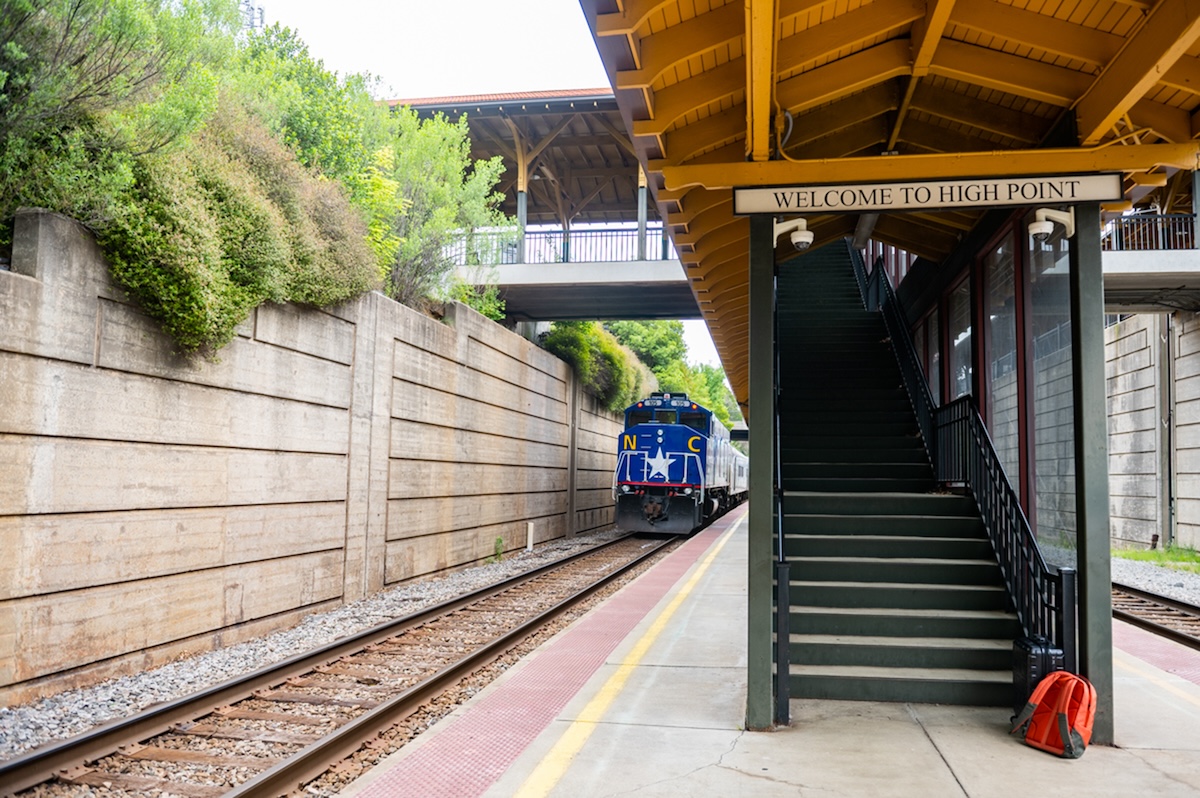
This station is served by three daily round trips on the Amtrak Piedmonts, running from Charlotte to Raleigh, as well as the state-supported Carolinian and the long-distance Crescent, for a total of 10 daily departures. The departures are spread throughout the day and night, so the station is frequently busy. Despite being a sprawling city, High Point has a well-developed downtown, and the station is near the middle of it, with many commercial uses, anchored by the furniture industry, on both sides of the tracks.
New Brunswick, New Jersey – Population 58,581
Most Amtrak trains whiz by on the center tracks without stopping, but a dozen Amtrak trains do stop, plus 60 trains in each direction on the New Jersey Transit Northeast Corridor. In 2005 the station was designated the core of the New Brunswick Transit Village, to promote transit-oriented development. New Brunswick is home to Rutgers University, so it is a destination per se, not just a commuter stop.
Photo Credit: Zete – Wikimedia Commons

New Rochelle, New York – Population 88,163
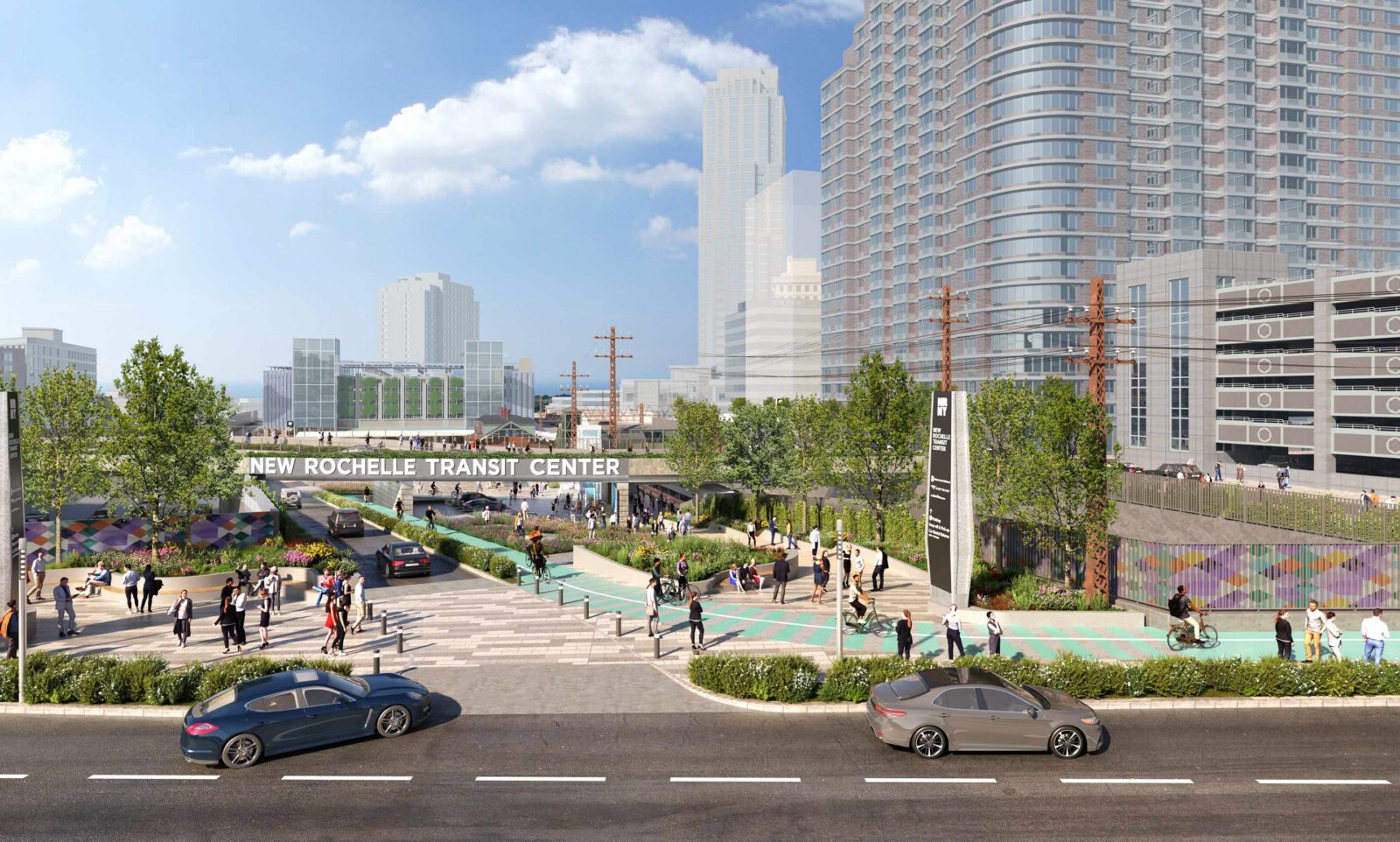
Amtrak has 19 daily departures, Metro North over 100. The station is a busy spot that serves downtown well, but pedestrian access to part of the city is impeded by Interstate 95.
Normal, Illinois – Population 53,495
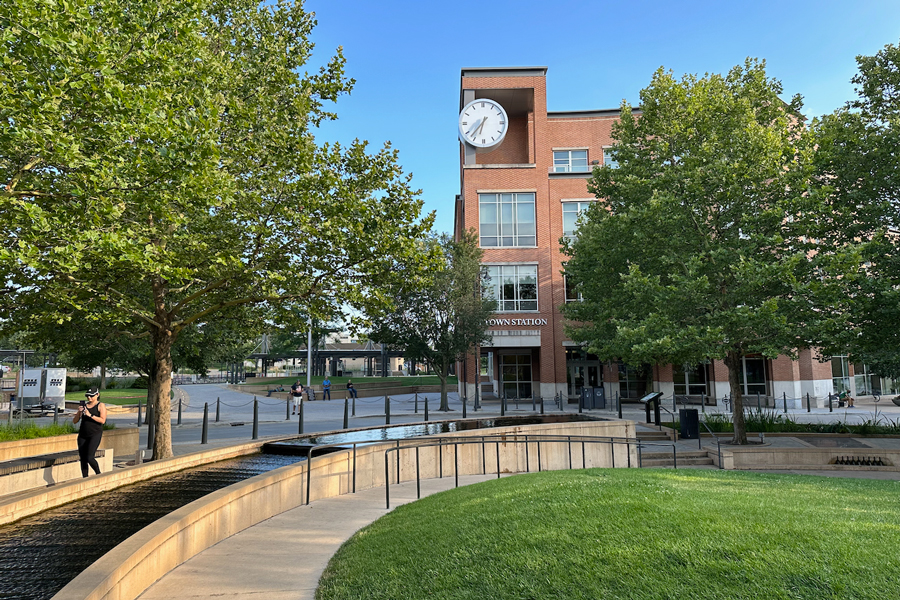
Ten daily Amtrak departures – four corridor trains plus the Texas Eagle stopping in both directions – serve Normal. The current station opened in 2012, and has been a catalyst for development in Uptown Normal, with a couple of new hotels, a strong commercial district and dense housing. The mayor has been instrumental in promoting this development. The station is walking distance from Illinois State University. There are some large surface parking lots within the surrounding blocks – opportunities for future development, especially if more trains would call at the station.
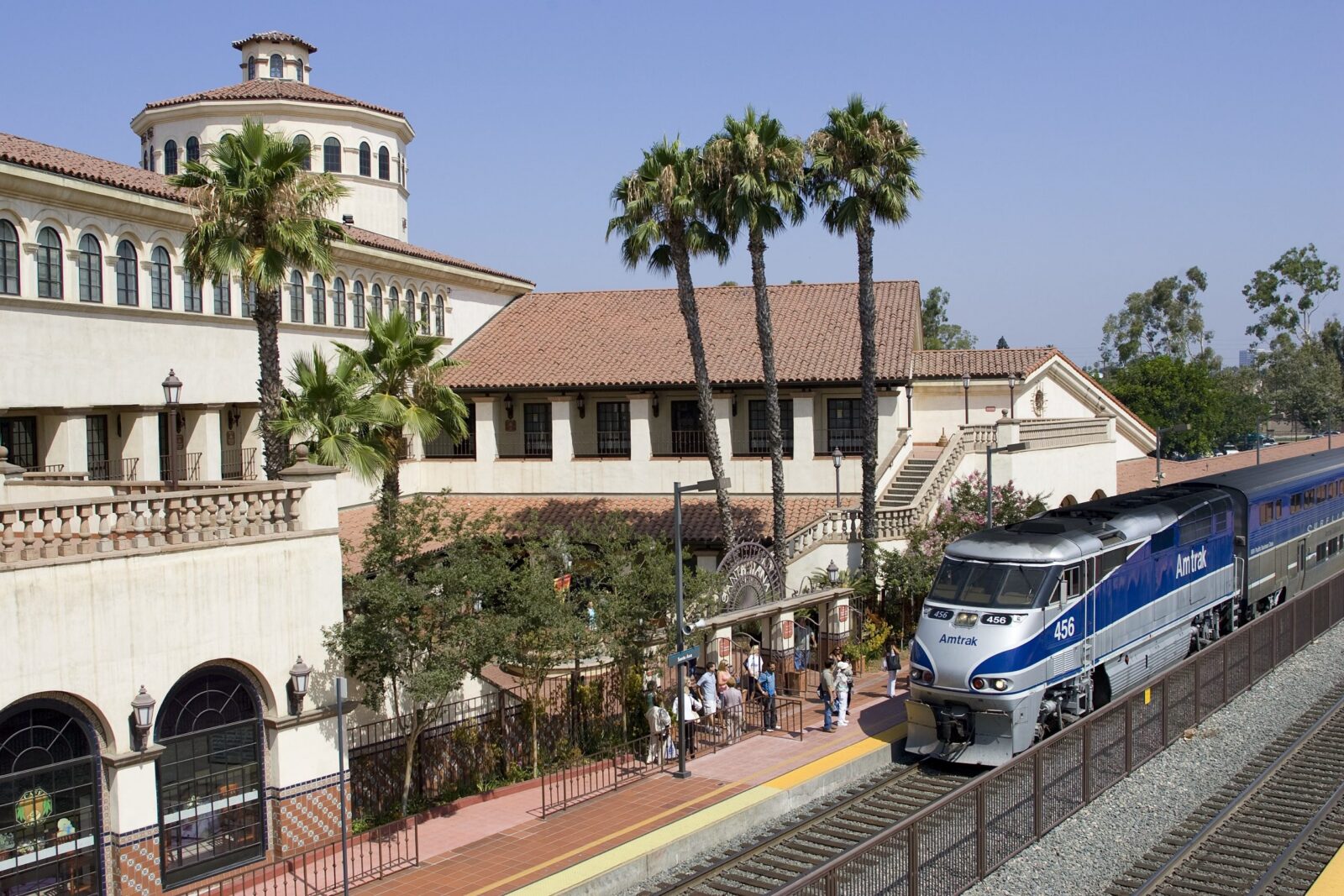
Santa Ana, California – Population 318,663
Amtrak has 20 daily departures, Metro Link has 46. The station is well located on the edge of downtown, amid dense residential and commercial uses. The area east of the tracks is industrial. The station itself is a beautiful building, in Spanish Colonial Revival and Mediterranean Revival style, which opened in 1985.
These are not the only choices; they’re examples of the attributes that make good stations for development of the surrounding city. You may suggest any station in the United States.
One of the difficulties of identifying outstanding stations is that train stations have to be where the tracks are, and the tracks often go through or are adjacent to industrial areas, highways, or thickets of other railroad tracks that carry a lot of freight traffic. Also, if a station has a lot of commuter/regional service, it might be surrounded by parking lots. Surface parking hinders a city’s development, but a modest amount of structured parking, especially with ground-floor retail, can help.
What are your thoughts? Send us an email or comment on social media and let us know!
The Latest from HSRA
Our Latest Blog Posts
Check out the latest news, updates, and high speed rail insights from our blog!