Take the SurveyWashington is designing a transformative high-speed line The Washington State Department of Transportation (WSDOT) is taking public comment on its study for a high-speed line between Portland, Seattle, and Vancouver, B.C. The study will be released in...
Charlotte voters say yes to transit expansion
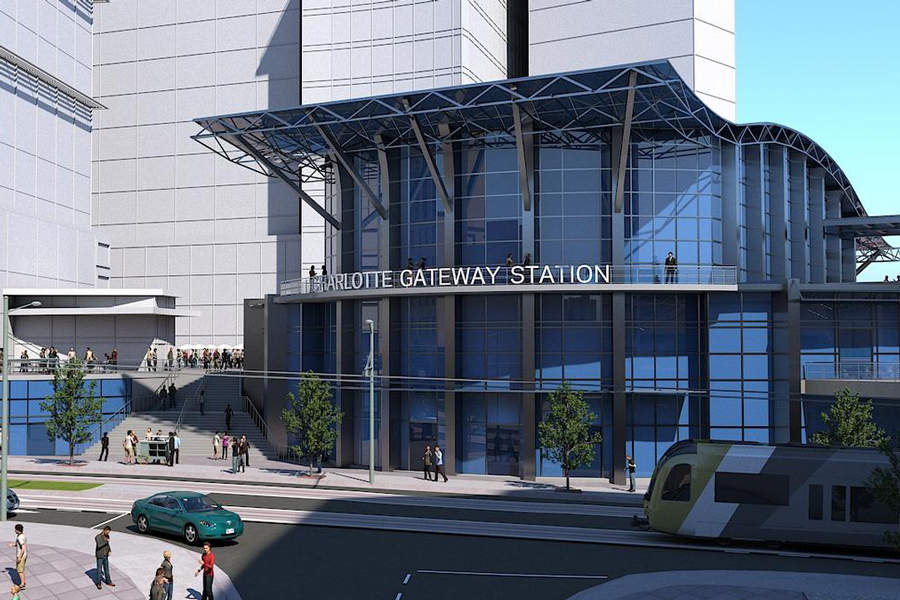
Charlotte, North Carolina will make a historic investment in transit, thanks to voter approval Tuesday of a sales tax increase of 1 percentage point, from 7.25% to 8.25%. The sales tax is expected to generate $19.4 billion over 30 years.
What will residents get in return? Rail expansion.
- The Silver Line, a new 29-mile east-west light rail line across the city and nearby suburbs, including service to Charlotte Airport.
- The Red Line, a new 10-station commuter rail line extending from Uptown Charlotte to Mount Mourne in Iredell County.
- Extension of the Blue Line light rail line to Pineville, N.C.
- Gold Line streetcar expansion.
Get Involved
Tell Congress: It’s time to reconnect the country with high-speed and regional rail!
These rail projects will be allocated 40% of the sales tax proceeds. 20% will go to bus system modernization, improved bus frequency and new bus stop shelters.
The other 40% will go to roads – but it’s not “one more lane, bro” highway expansion. It includes sidewalks, bike paths, and intersection upgrades.
Voters in Charlotte, the most populous city in North Carolina (943,000), and Mecklenburg County, the second-most populous county in the state (1.1 million), approved the sales tax referendum by a 52%-48% vote in the local election on Nov. 4.
“Big decisions lead to incredible opportunities,” Charlotte City Manager Marcus D. Jones said in a statement. “The voters of Charlotte and Mecklenburg County have chosen to invest in our city’s future. … Charlotte’s infrastructure can now keep pace with our city’s extraordinary growth. This is also an important economic development opportunity for our residents and small businesses.”
How this helps high-speed and regional rail
This is a tremendous development, because Charlotte is an important city on the Southeast High Speed Rail Corridor, which is an active proposal to extend high-speed passenger rail (meaning top speeds of at least 110 mph) south from Washington, D.C. to Raleigh, Durham, and Charlotte, North Carolina; Atlanta, Georgia; and Jacksonville, Florida. For cities to be successful stops on a main inter-city rail line, they should have the kind of dense residential and commercial development that strong local transit supports and sustains.
Charlotte, we believe, should have at least two departures every hour, one going north and one going south. Higher speed is imperative here too.
Charlotte is currently served by six Amtrak round trips each day – four state-supported round trips between Charlotte and Raleigh, plus two long-distance routes: The Carolinian, which runs between Charlotte and New York City, and the Crescent, which runs between New Orleans and New York City. It’s a 10½-hour ride to Washington via the Carolinian, vs. just over six hours by car, so you can see why we’re pushing for faster trains.
The willingness of Charlotte and Mecklenburg County voters to approve a sales tax hike to expand transit, particularly rail transit, is indicative that the community wants and will support better inter-city rail.
Wins and losses elsewhere
Charlotte is not the only place where voters said yes to transit. Thirteen of the 16 transit-related measures on the Nov. 4 ballot passed. “Transit is winning,” Jessica Grennan, executive director of the American Public Transportation Association’s Center for Transportation Excellence, said in an interview with Smart Cities Dive. “It doesn’t matter if you’re rural or urban, transit allows people to live their lives.”
Among the other wins:
- Kalamazoo County, Michigan voted to raise property tax to fund fixed-route buses and a new on-demand service.
- Voters in six Colorado cities approved the formation of the Yampa Valley Regional Transportation Authority.
- Ellensburg, Washington voted to make permanent the tax that supports its bus system.
Losses:
- Pitman, New Jersey voters said no to a light rail project.
- Delta Township, Michigan rejected a property tax to support bus service. As a result, the area will no longer have any service from the Lansing-based Capital Area Transportation Authority.
The Latest from HSRA
Our Latest Blog Posts
Check out the latest news, updates, and high speed rail insights from our blog!