
The battle over transportation spending is on in Congress. We need your help. Congress is currently working on two bills that will determine how much the U.S. invests in passenger rail over the near term. Both bills fail to create the growing passenger-rail network...
One Segment of High-Speed Line Could Stoke Ridership, and Cut Costs, for All of California’s Trains
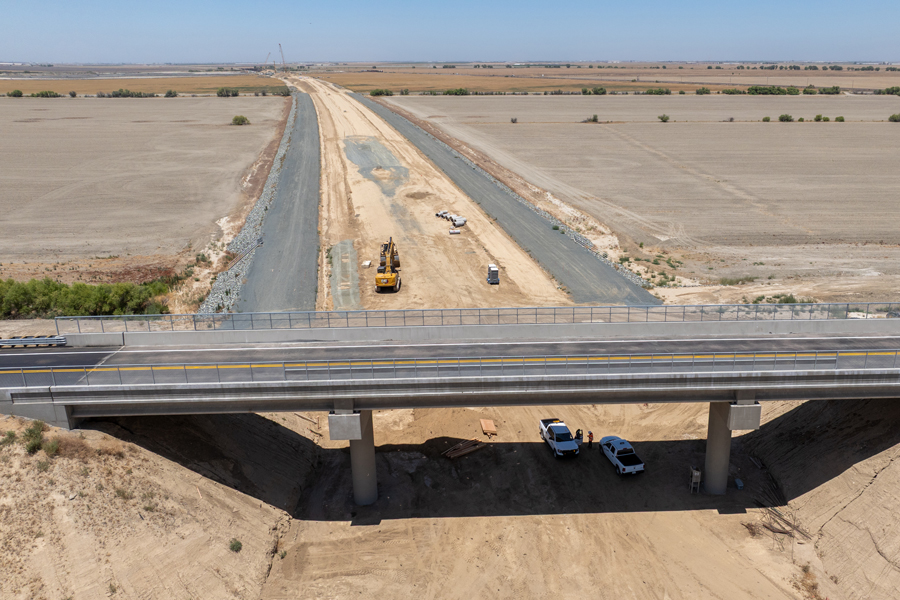
One reason that starting in the Central Valley is a great idea
California’s high-speed rail project has always faced a big challenge: How to create the maximum impact with the limited money and political support currently available.
The Alliance believes the tunnels connecting the Central Valley to the Bay Area and greater Los Angeles will be the project’s single most transformative element. Construction should begin soon. As we say: Dig the damn tunnels. But for now, the political will and funding are inadequate.
The solution? Finish the full Central Valley segment—from downtown Bakersfield to downtown Merced—as soon as possible. (Work is currently underway on a portion of the line.) Although critics often deride the decision to begin the project in the Valley, it’s actually a great launching point. That’s true for three reasons.
First, it’s a high-impact segment that’s politically and economically feasible right now. Second, the Central Valley line will drive increases in ridership and revenue across multiple train and bus routes—while lowering their needed operating support. And third, in doing all of that, it will build the political muscle to fund the tunnels and finish the full, San Francisco to Los Angeles high-speed line.
A 2019 study by the California High Speed Rail Authority illustrates these points. And it underscores why starting the project in the Central Valley was a great idea. It showed that a 171-mile segment of high-speed line—running from downtown Bakersfield to downtown Merced—would more than double the ridership for train routes throughout the corridor while reducing the state’s annual operating support by $20 million.
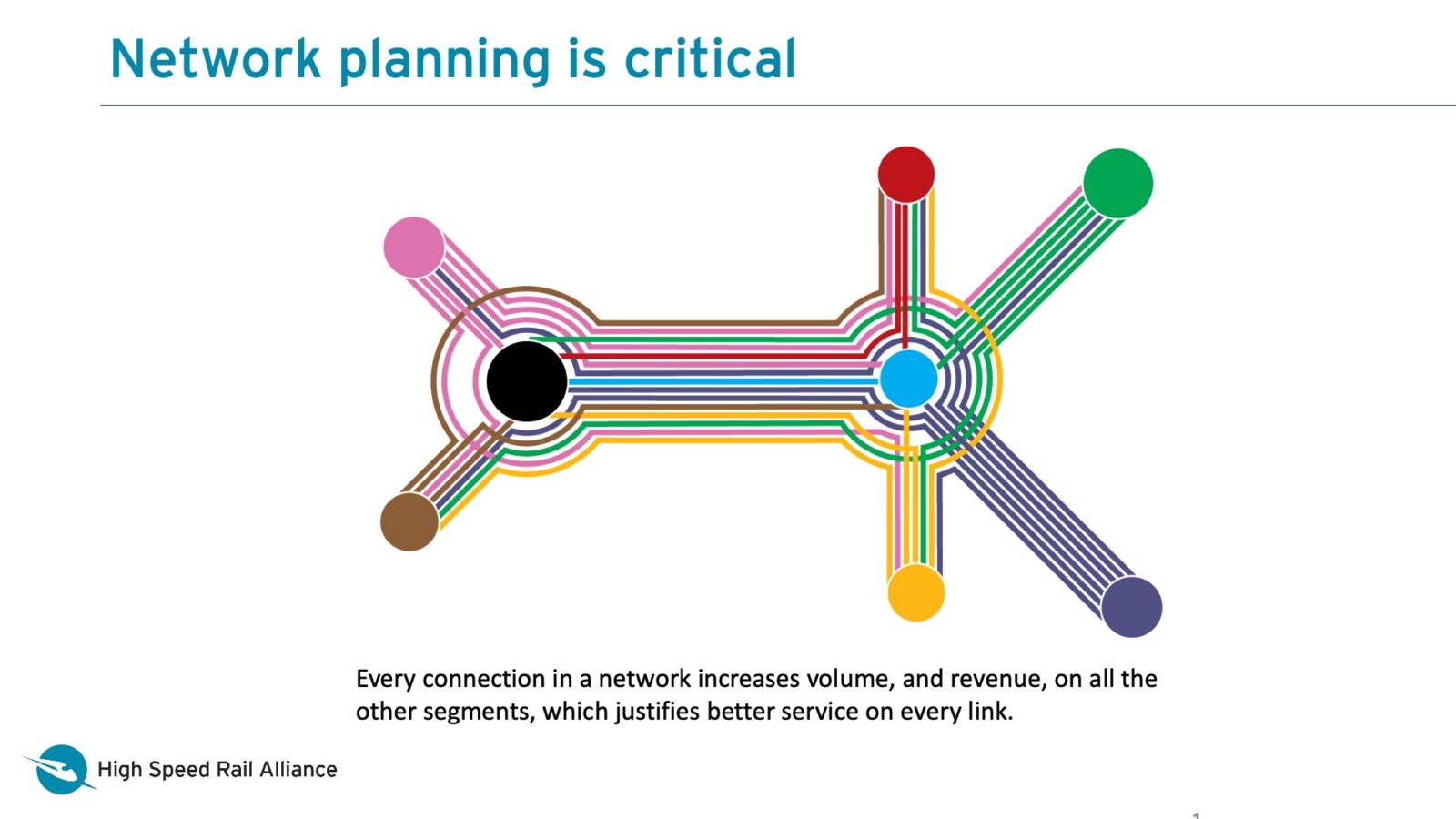
The entire network of connections needs to be taken into account to understand the full value of a new high-speed line.
More riders, lower costs
Why is the Central Valley line such a powerful leverage point?
Because high-speed rail isn’t just about connecting major cities. It becomes the backbone of an integrated network that includes high-speed and conventional trains, intercity buses, and more. Each element adds value to the network by creating more ways to move around—quickly and affordably.
As the network expands, more people use it. Ballooning ridership and revenue generate political will—and funding—to expand the network and upgrade the service. The net result is a massive mode shift, from cars to trains, across a whole region.
The study noted above shows the how this transformation can play out.
It analyzed the impact of replacing the Merced-Bakersfield segment of the Gold Runner line (formerly Amtrak’s San Joaquin route) with a high-speed line. The new line would offer 19 daily roundtrips and would cut travel times from Merced to Bakersfield in half, from 3 hours to 1.5 hours.
The study found, again, that the Central Valley high-speed line would more than double the ridership for train and bus routes statewide—and reduce their operating deficit by $20 million.
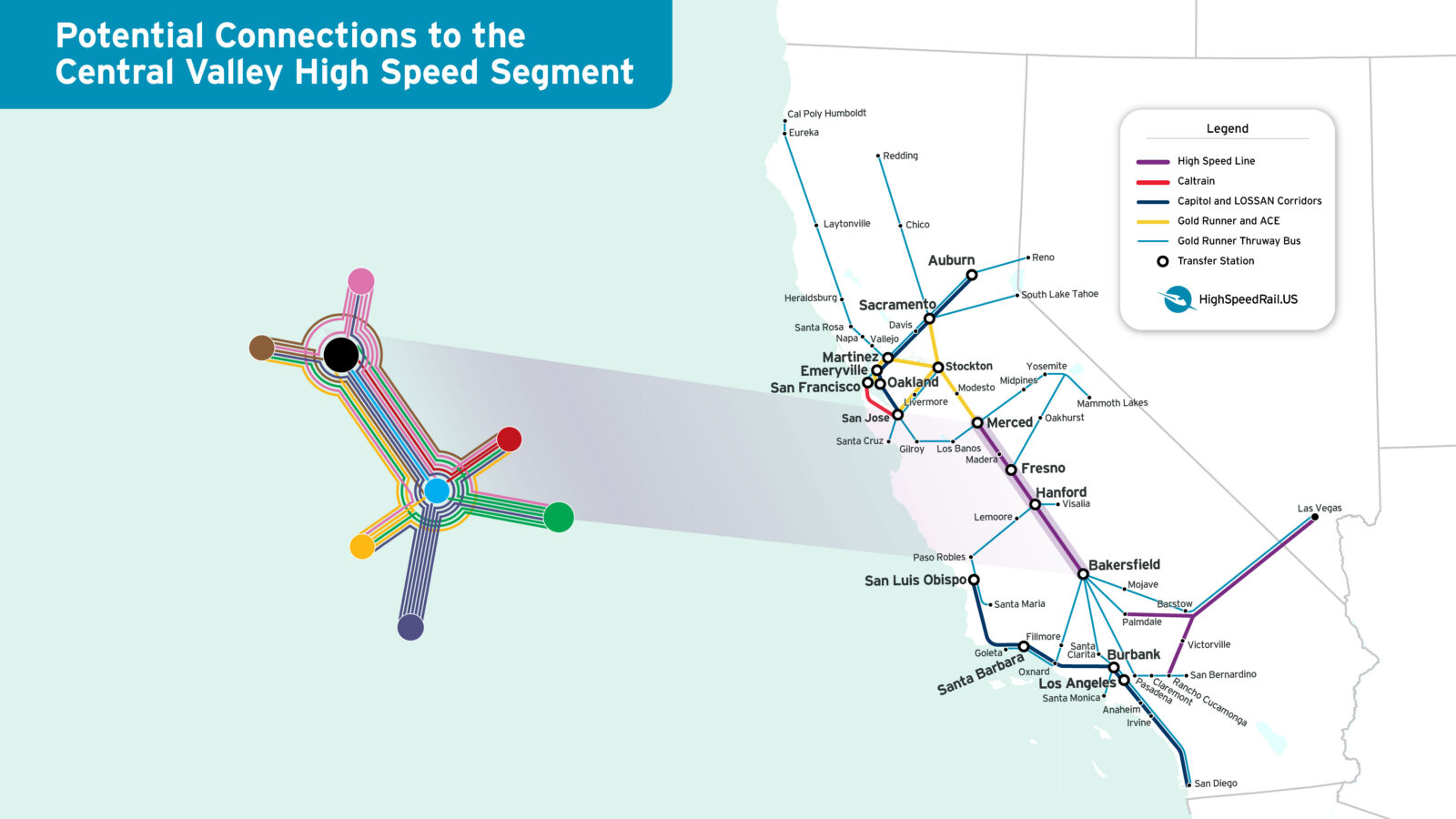
The Central Valley segment will feed volume into an extensive network of trains and buses. Note: the study highlighted in this blog did not study impacts to all routes on this map.
How so?
First, demand would increase enough to justify doubling departures north of Merced by adding Gold Runner trains and extending the Altamont Corridor Express service from Stockton to both Merced and Sacramento. Daily roundtrips on the Gold Runner Thruway bus network would also increase.
Second, ballooning ridership and revenue from the added service would mean lower operating costs, per passenger mile, for all train routes in the corridor.
Here’s the nuts-and-bolts breakdown:
Without high-speed rail, annual ridership on the ACE and Gold Runner lines (plus Thruway buses) would be about 4.4 million. With high-speed trains running from Bakersfield to Merced, ridership on those routes (including the high-speed line) would more than double, to about 10 million people.
Without high-speed trains, costs would be about $140 million and revenues would be about $57.5 million—for a deficit of nearly $83 million. With high-speed trains, costs would be about $228 million and revenues would be nearly $166 million—for a deficit of nearly $63 million.
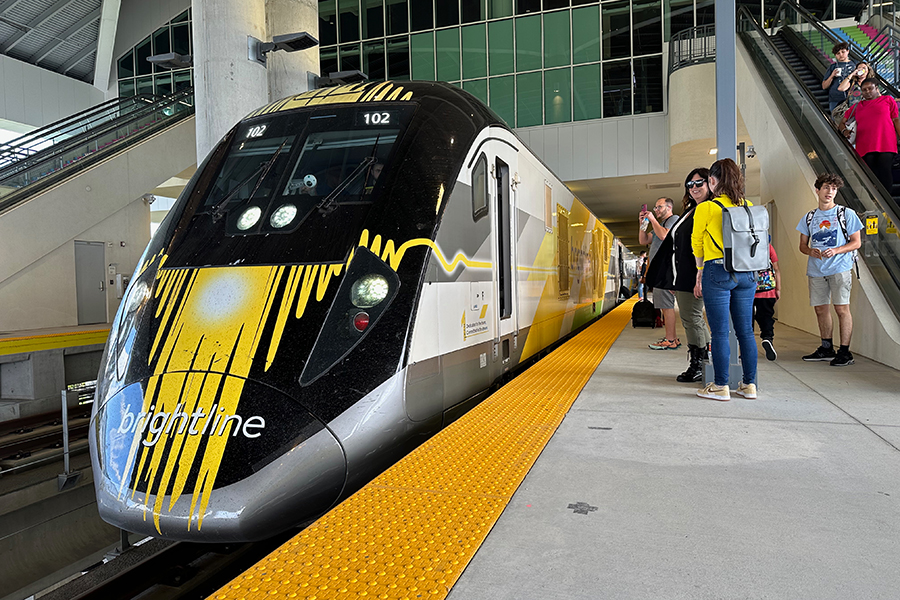
The line’s impact would be similar for connecting local transit agencies. And Brightline West—linking greater Los Angeles to Las Vegas and the High Desert Corridor connector—would also benefit.
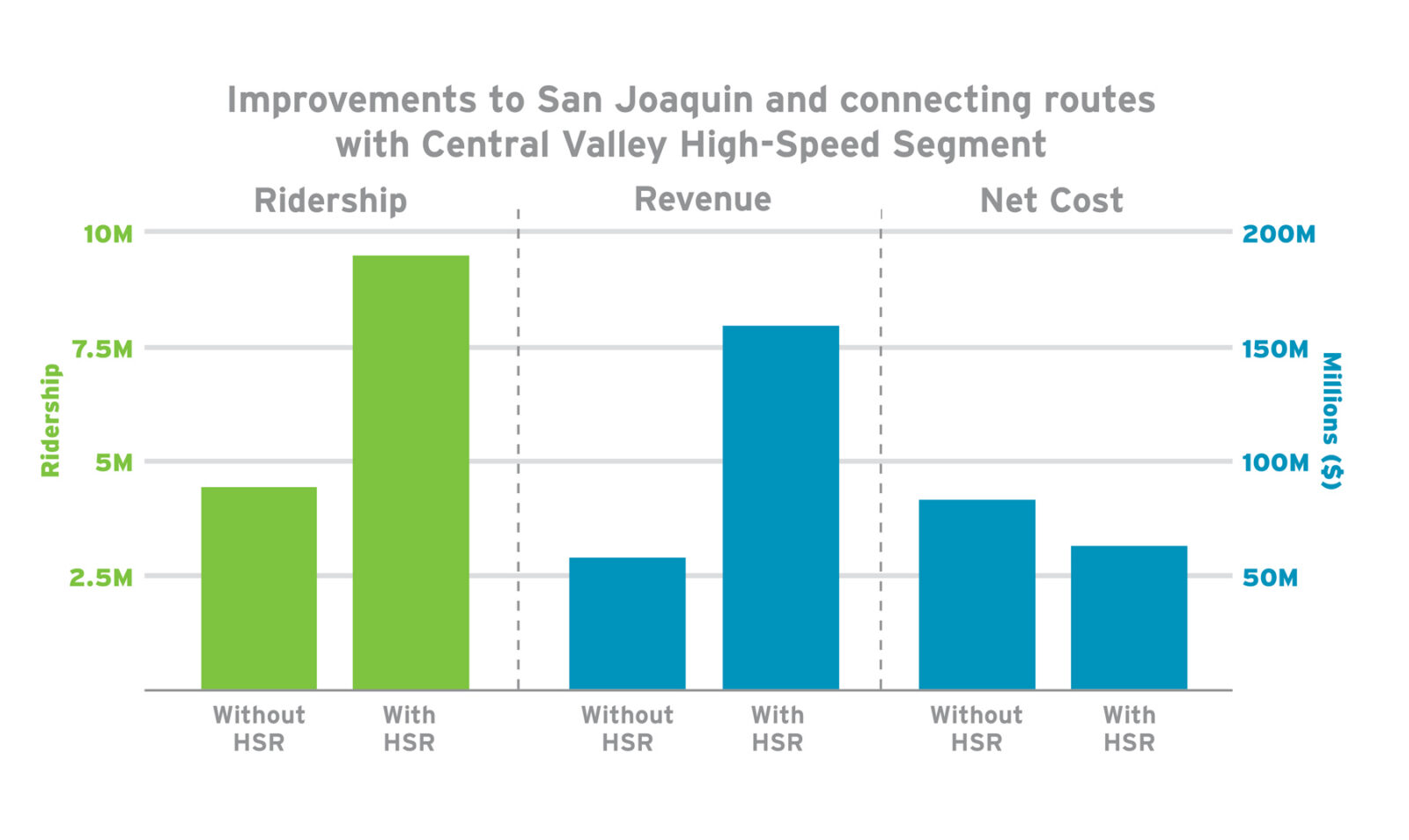
The Central Valley segment will cause ridership to more than double while the cost to the state drops.
California crossroads
The takeaway is that when you plan a high-speed line strategically and with a big-picture view in mind, it creates massive ripple-out effects across an entire transportation network. And way beyond.
It not only balloons ridership and drives down costs throughout the network. It slashes pollution and greenhouse gases, lowers road fatalities and injuries, multiplies opportunities for students and workers, and creates stronger communities and a better overall quality of life for everyone in the corridor.
The flip side of the coin is that adding highways and lanes also creates big ripple-out effects. It puts more people on the roads, produces more congestion and pollution, drives up transportation costs, creates more road fatalities and injuries, increases highway spending, and hollows out cities with oceans of asphalt and parking lots.
This is the crossroads California faces.
Critics of its high-speed line focus on the near-term costs of its construction. But average Californians have seen the costs and devastations of car culture.
They want a path out. Which is why a recent poll found that 62 percent of them want the high-speed rail project to move forward. That’s true even though most of them doubt the state is actually committed to finishing it.
California prides itself in being the world’s fourth biggest economy and the nation’s cutting-edge innovator across many realms. It’s time for the state to draw on that history and spirit and commit to going all-in on this project.
The costs of the status quo are too high—and the value of the high-speed line is too great—to back down now.
Get Involved
The Latest from HSRA
Our Latest Blog Posts
Check out the latest news, updates, and high speed rail insights from our blog!