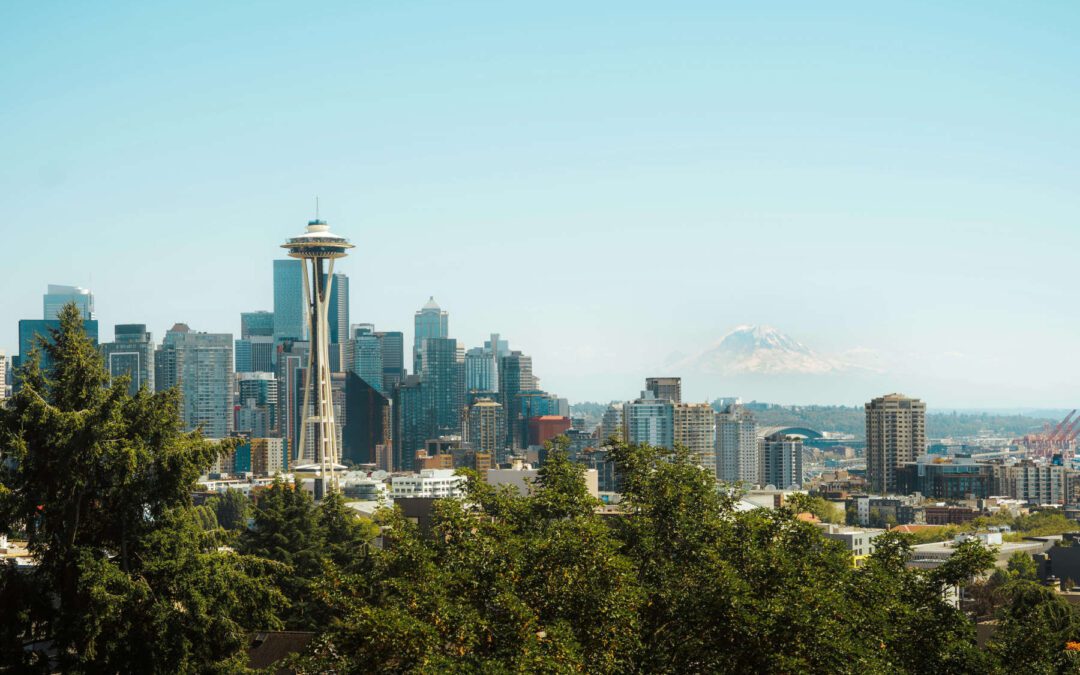
Take the SurveyWashington is designing a transformative high-speed line The Washington State Department of Transportation (WSDOT) is taking public comment on its study for a high-speed line between Portland, Seattle, and Vancouver, B.C. The study will be released in...
Illinois commits funding to bring trains to Quad Cities
On Dec. 31, 1978, the Rock Island Line ran its last passenger train from Chicago to Rock Island, Illinois. The Quad Cities of Illinois and Iowa have not had passenger rail service since.
This is due to change. The transit legislation that the Illinois General Assembly passed on Halloween calls for a one-time appropriation for “intercity passenger rail capital startup” of $300 million. Almost all of that will go toward establishing rail service between Chicago and Moline. The remainder will go to study and plan the embryonic Chicago-to-Peoria route.
Get Involved
Tell Congress: It’s time to reconnect the country with high-speed and regional rail!
The Illinois Department of Transportation estimated the cost of implementing the service at $750 million; $475 million had already been amassed from a variety of sources, so this allocation puts the project, in the works since early this century, over the top.
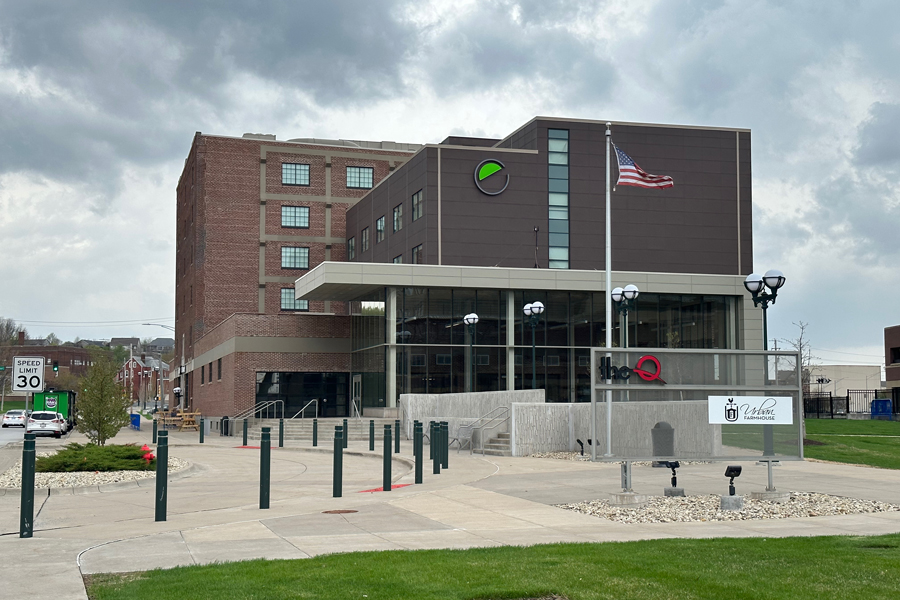
“Today is a day for celebrating, because we have secured funding for our train,” Moline Mayor Sangeetha Rayapat said at a news conference the following week at the Quad Cities Multi-Modal Station, the would-be train station.
The ribbon-cutting is still far off – far enough that a date for the first train to run has yet to be estimated.
Still required are the upgrade of 56 miles of tracks, and the installation of modern signals, on the Iowa Interstate Railroad, which now owns the old Rock Island route between Wyanet and Moline. This is currently a single-track facility; the expectation is that the passenger trains will run on the single track, and some new sidings will be built to get around or overtake freight traffic.
Also needed is a connecting track between the BNSF and the Iowa Interstate, which cross at an overpass with no interchange at Wyanet, just west of Princeton, Illinois. It is our understanding that the planning and engineering for this is largely complete. All that’s needed is construction.
Here’s how it appears the service will look:
Two round trips a day between Moline and Chicago
The planned route would use the BNSF between Chicago and Wyanet, then the Iowa Interstate from there to Moline, with a new stop at Geneseo, Illinois.
Frequency would be two round trips per day. “That’s what’s needed to make it a viable option for people,” Illinois State Sen. Mike Halpin, who helped secure the funding, told us in an interview.
This is less than ideal – nine or 10 round trips a day would really develop the market – but two round trips are all the BNSF says it can handle, with its extensive commuter service between Chicago and Aurora, Amtrak commitments, plus its freight business.
A different vision would route trains via the old Rock Island Line through Joliet and LaSalle, then split at Bureau Junction, with every other train going to Peoria and every other train going to Moline. Setting up this service would cost more initially, with track upgrades needed everywhere west of Joliet, but it would take care of Peoria and Moline in one swoop, and provide considerably higher frequency.
Halpin says if the market calls for more frequency, it’ll be worth studying the Bureau Junction route, but to get started, two round trips a day will be fine. “This is what we’ve explored and it’s taken 25 years to get to this point, so I don’t wanna rock the boat,” he said.
It should be pointed out that if at some future time the Bureau Junction option comes into play, no money will have been wasted. The Wyanet-to-Moline segment needs the track and signal upgrades no matter which way the trains travel between Chicago and Wyanet.
2½ hours
The goal, Halpin says, is a 2½-hour one-way trip between Chicago and Moline. This is what the Rock Island Line achieved in its post-World War 2 heyday, when service continued west to Omaha, Denver and Los Angeles. As track conditions deteriorated, the travel time lengthened. A 1971 timetable shows three hours 45 minutes (to Rock Island, which is a few miles more distant than Moline), and by 1975 it was four hours.
Two hours 30 minutes is ambitious: The published Amtrak time from Chicago to Princeton is one hour 46 minutes, leaving 44 minutes to reach Moline from Princeton. Trains would have to average 75 mph on track with a top speed of 79 mph.
We will be urging the Illinois Department of Transportation to find ways to run trains faster between Chicago and Princeton.
Iowa City?
The next object on the horizon is Iowa City, home of the University of Iowa, about 60 miles west of Moline. There has been occasional talk of extending service to Iowa City, with a possible stop in Davenport, but the state of Iowa does not appear to have the appetite for developing and supporting trains at this time. Things can change, and we hope they do.
Meanwhile, Illinois State Rep. Greg Johnson, at the news conference with the mayor, said the train will be big for Moline. “This will be a major boost for hospitality and tourism industries,” he said. “It will help attract more visitors to experience everything that makes the Quad Cities special.”
The Latest from HSRA
Our Latest Blog Posts
Check out the latest news, updates, and high speed rail insights from our blog!