Take the SurveyWashington is designing a transformative high-speed line The Washington State Department of Transportation (WSDOT) is taking public comment on its study for a high-speed line between Portland, Seattle, and Vancouver, B.C. The study will be released in...
Metro-North to offer daily departure to Albany
Note: This plan was not implemented. Amtrak added an additional roundtrip from Penn Station to Albany to avoid Metro-North creating this precedent.
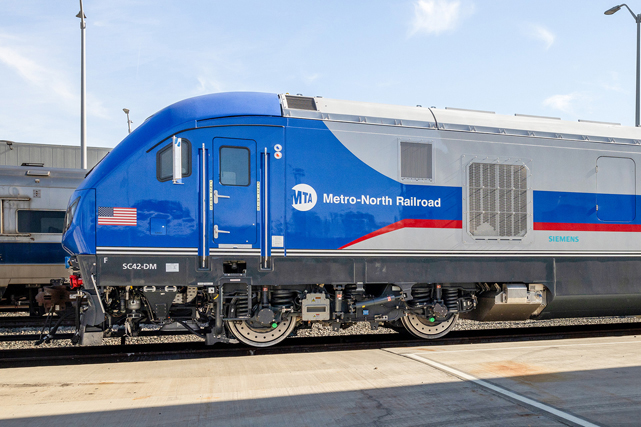
Metro-North, one of two New York commuter railroads, will run a daily round trip between New York City and Albany-Rensselaer, starting in spring 2026. Additional departures may be added in the future.
Currently, Metro-North operates from Grand Central Station to Poughkeepsie, 74 miles north on the Hudson Line. Amtrak operates from Penn Station, joining the Hudson Line in the Bronx, extending 141 miles to Albany and beyond.
The new Albany run will exceed the Long Island Railroad’s 115-mile Montauk Branch as the longest “commuter rail” route in the country, which is just a little bit longer than the 90-mile Chicago – South Bend, Indiana South Shore Line.
We find this exciting because we believe that commuter railroads should widen their horizons as they convert to regional rail.
Examples of other commuter railroads that could extend their reach:
- Virginia Railway Express; Washington – Richmond, 108 miles
- South Shore; Chicago – Lafayette, ~125 miles
- SEPTA; Philadelphia – Harrisburg, 104 miles
- NJ Transit; New York – Scranton, 133 miles
- Metra; Chicago – Champaign, 129 miles
- Metra; Chicago – Madison, 124 miles
- Metra; Chicago – Milwaukee, 90 miles
Get Involved
Tell Congress: It’s time to reconnect the country with high-speed and regional rail!
New York Gov. Kathy Hochul announced the New York City-to-Albany Metro-North service Oct. 20. The daily round trip, which will operate to and from Grand Central Terminal, is meant to replace service suspended by Amtrak due to construction in the East River tunnels in New York City.
The East River tunnels are not used for revenue service on this route, but they are used to allow trains to reach Sunnyside Yard in Queens, where they turn around.
Until 2024, Amtrak operated 12 daily roundtrips, but reduced service to 10 on weekdays and 9 on weekends. The service reduction caused fares to soar as trains sold out sooner.
The extension is almost a doubling of the distance of the Metro-North Hudson Line. It’s 74 miles from New York City to Poughkeepsie, the historic station where Metro-North now terminates. (73 miles from Penn Station) It’s another 68 miles to Albany-Rensselaer.
It is not yet clear what stops the Metro-North train will make between Grand Central and Poughkeepsie. The stops Amtrak serves on the line are Yonkers, Croton-Harmon, Poughkeepsie, Rhinecliff and Hudson.
Metro-North will charge $38 one-way on the New York City-Albany trains, which roughly represents the incremental extended distance between Poughkeepsie ($20 off-peak) and Albany, and also represents the cheapest Amtrak fare on the route. Amtrak has dynamic pricing, varying based on demand and how far in advance a passenger buys a ticket. Sometimes tickets are over $100; nevertheless, trains routinely sell out, Bruce B. Becker, past president of the Empire State Passenger Association, told us. Amtrak has agreed to cap fares at $99 on its trains on this route.
The new service marks the first time Metro-North will provide service from Grand Central to Albany, though a predecessor, the New York Central Railroad, did so until 1967. Amtrak used to run trains from Albany to Grand Central until 1991, when the Empire Corridor terminal moved to Penn Station.
Passenger rail service in New York largely radiates from Penn Station and Grand Central Terminal in Manhattan, with Long Island Railroad trains going east as far as Montauk, and Metro-North trains serving points north to Port Chester, Wassaic and Poughkeepsie. Amtrak trains use Penn Station to serve the Northeast Corridor, Empire Service and other services such as the Adirondack, Vermonter and Ethan Allen Express. Empire Service heads west from Albany to Buffalo and Niagara Falls, with one round trip per day, the Maple Leaf, serving Toronto. Two other passenger rail lines in the state, to Spring Valley and Port Jervis, terminate at Hoboken, New Jersey.
When it comes to extending commuter rail, obstacles to overcome may include track availability and condition, ownership of the tracks and rights of way, and collective bargaining agreements for train crews on commuter lines that are different from the collective bargaining agreements for Amtrak employees on the same routes. For routes that cross state lines, officials might have to execute a bi-state compact and agree on funding sources.
In our quest to see more of America have access to fast, frequent, and affordable trains, we urge commuter rail agencies to look at their outlying terminals where the tracks don’t end, and determine if there are markets beyond, and how they can develop and serve them. We also urge the elected officials who oversee these agencies to recognize the value of investing in further-out passenger rail service.

Photo: Instagram @AroundAlbany
The Latest from HSRA
Our Latest Blog Posts
Check out the latest news, updates, and high speed rail insights from our blog!