
The Union Station concourse should be a beautiful gateway to Chicago It should also be a place where thousands of people connect between trains each day—easily and efficiently. The current concourse serves neither purpose. At a moment when Chicago aims to reinvent its...
Milwaukee-Racine-Kenosha Route to Chicago Now Back on Drawing Board
The Wisconsin cities of Kenosha, Milwaukee and Racine have revived an effort to initiate passenger rail service among the three cities. This is an opportunity to create a high-quality regional rail line between Chicago and Milwaukee.
Representatives of the three cities, meeting Dec. 5 in Racine, created the Milwaukee Area-Racine-Kenosha Passenger Rail Commission, to be known by the acronym MARK. The commission then approved a memorandum of understanding to work with the Chicago-based commuter rail agency Metra.
This commission is a second attempt to institute passenger service on the Union Pacific line between Kenosha and Milwaukee. The first, called the Kenosha-Racine-Milwaukee Commuter Rail Project, formally began in 1998. It was scrapped by Wisconsin lawmakers in 2011. The new attempt is called MARK, to distinguish itself from that previous effort.
Want Better Train Service in Wisconsin?
Tell Wisconsin: It’s time to commit to passenger rail.
What’s there now?
Metra currently runs 10 round trips between Kenosha and Chicago on weekdays, eight on weekends – but the line is busier than that. Some trains originate or terminate at Waukegan, Highland Park or Winnetka, adding up to 35 round trips arriving at and departing from Ogilvie Transportation Center in Chicago.
Meanwhile, Amtrak operates seven state-supported round trips daily between Chicago and Milwaukee – 86 miles in 89 minutes on Metra and CPKC tracks further west, with intermediate stops at Glenview, IL; Sturdivant, WI; and Milwaukee Airport.
The MARK route would serve new markets. This route, near the Lake Michigan shoreline, goes right through downtown Kenosha and Racine and the South Suburbs of Milwaukee, and can take passengers to and from Chicago suburbs such as Waukegan, Lake Forest and Evanston, as well as the North Side of Chicago and downtown.
The Wisconsin Department of Transportation and the Southeastern Wisconsin Regional Planning Commission determined a new passenger line would provide access to more than 400,000 jobs within 30 minutes by transit. Around half of homes in the corridor have incomes less than $50,000, according to planners. The proportion of homes without access to a car in the cities of Kenosha, Milwaukee and Racine is twice the national average – though frequent, fast, reliable service will attract riders who do have cars, but for whom the train just works better.
Much planning is needed to get anywhere near a service plan, or near raising the money required for construction.
The City of Racine secured a $5 million federal grant in 2022 to begin design and scoping. Additional federal funds for the project may come from the Corridor Identification and Development Program administered by the Federal Railroad Administration, or via the Capital Investment Grant administered by the Federal Transit Administration. Capital Investment Grants are for new or expanded commuter rail projects, with a maximum appropriation of $4.6 billion per year.
New train service is exciting, even if the effort to create it is officially 1 week old. Everyone wants to know what construction is needed, what the service pattern would be, and who would operate the service.
Again, stressing that service is so far off that there isn’t even a cost estimate yet (though commission members have tossed around the figure $100 million), let’s examine the possibilities:
Construction – The current Union Pacific single track between Kenosha and Milwaukee would have to be upgraded for 79-mph passenger service.
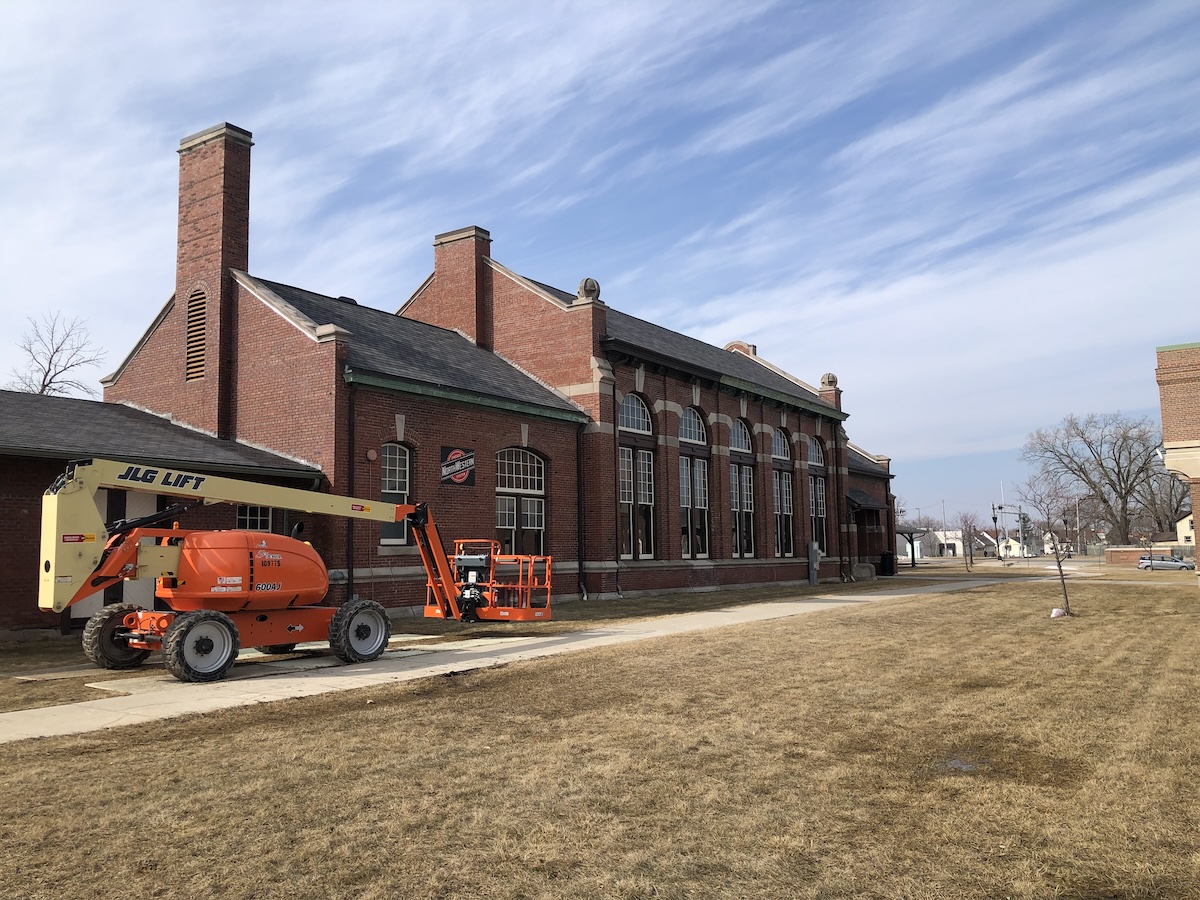
Racine has preserved its historic train depot, which would have to be modernized. Listed on the National Register of Historic Places in 1980, it’s located, ideally, next to the downtown bus terminal in Racine.
The previous KRM plan included commuter stops in Wisconsin – Somers, Caledonia, Oak Creek, South Milwaukee, Cudahy/St. Francis and the South Side of Milwaukee. The current MARK project envisions serving only Kenosha, Racine, Milwaukee Airport and Milwaukee Intermodal stations. Milwaukee Airport will need a station serving this route, and should commuter stops be added at some future time, stations would have to be built.
Service pattern – The High Speed Rail Alliance has developed a potential stopping pattern, showing the maximum service that could operate on a two-track facility between Chicago and Milwaukee. This is meant to illustrate possibilities; there has not been an engineering study. It shows one limited-stop through train every hour, with two frequent-stop commuter trains each from Chicago and Milwaukee that would meet at Kenosha, allowing a connection there, and two additional commuter trains to Chicago that originate and terminate south of Kenosha.
Our idea is meant to be thought provoking. We don’t expect it to be the last word. All we respectfully ask is for planners to think big.
Who would operate the service? – For several reasons, Metra is in a favorable position.
First, Metra is already operating the trains from Chicago to Kenosha, having recently taken over from the Union Pacific Railroad, though Union Pacific still owns the tracks.
Second, the new Illinois transit legislation pushes Metra into the regional rail business, where possible.
Third, Metra is already working on this project with the MARK Commission.
“One possible opportunity as we do this study is, should Metra just keep going [to Racine and Milwaukee]? So that’s one possibility,” Racine Mayor Cory Mason told CBS58 News in Milwaukee. “Previous possibilities talked about we would have a different provider, and then, you get off the train in Kenosha and have to switch trains.”
Foundation of regional rail
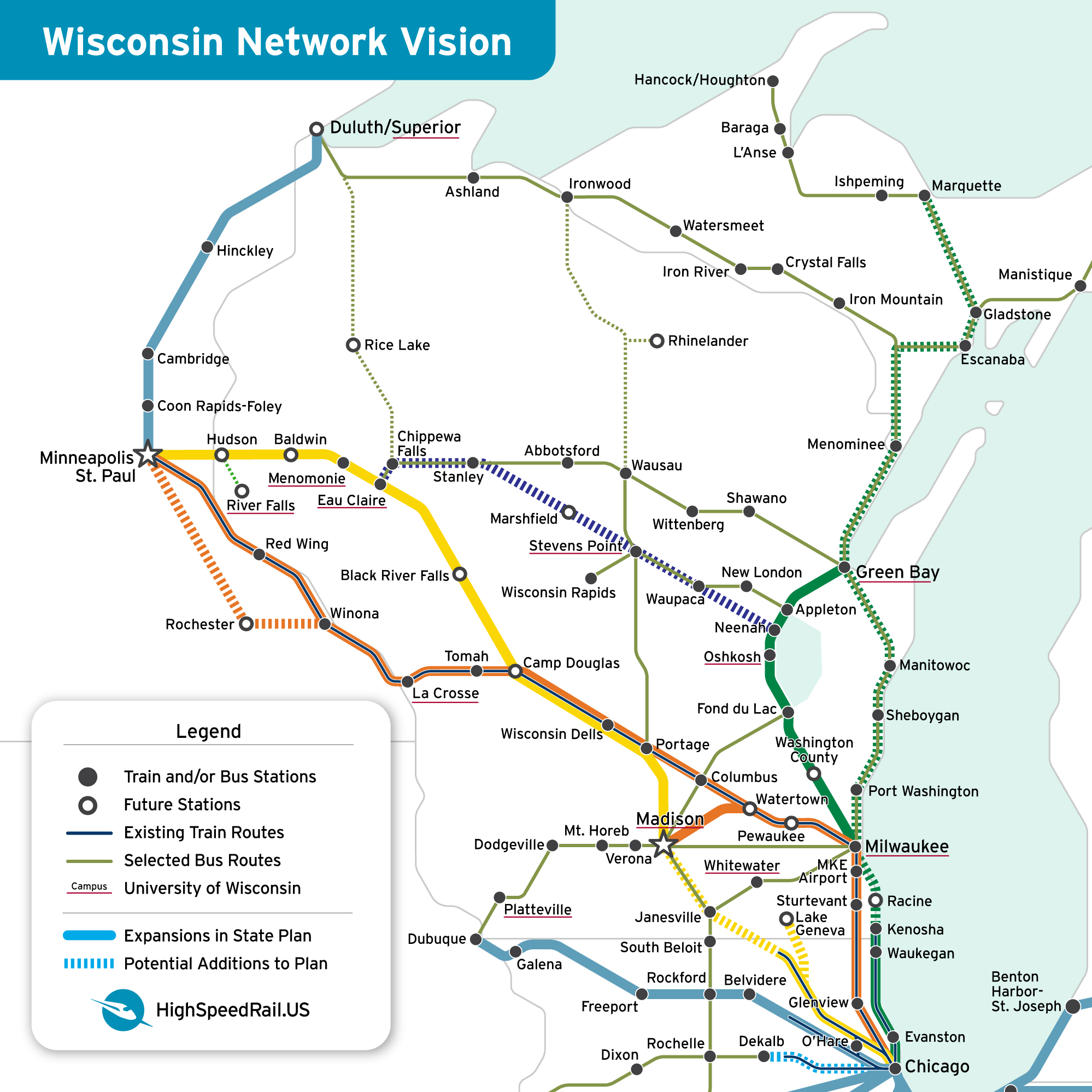
Milwaukee is a cornerstone of a regional rail network in Wisconsin, tying in Milwaukee, Green Bay, Madison, and Eau Claire, WI; St. Paul, MN; and Chicago, also serving passengers at points along the way.
The Amtrak trains would still run – we’d like to see more of them – and they’d be extended to Madison. MARK would be a different route, serving a different set of travelers going to slightly different locations. We are confident the demand exists or would soon develop. We wish the new MARK Commission the best in their deliberations.
The Latest from HSRA
Our Latest Blog Posts
Check out the latest news, updates, and high speed rail insights from our blog!