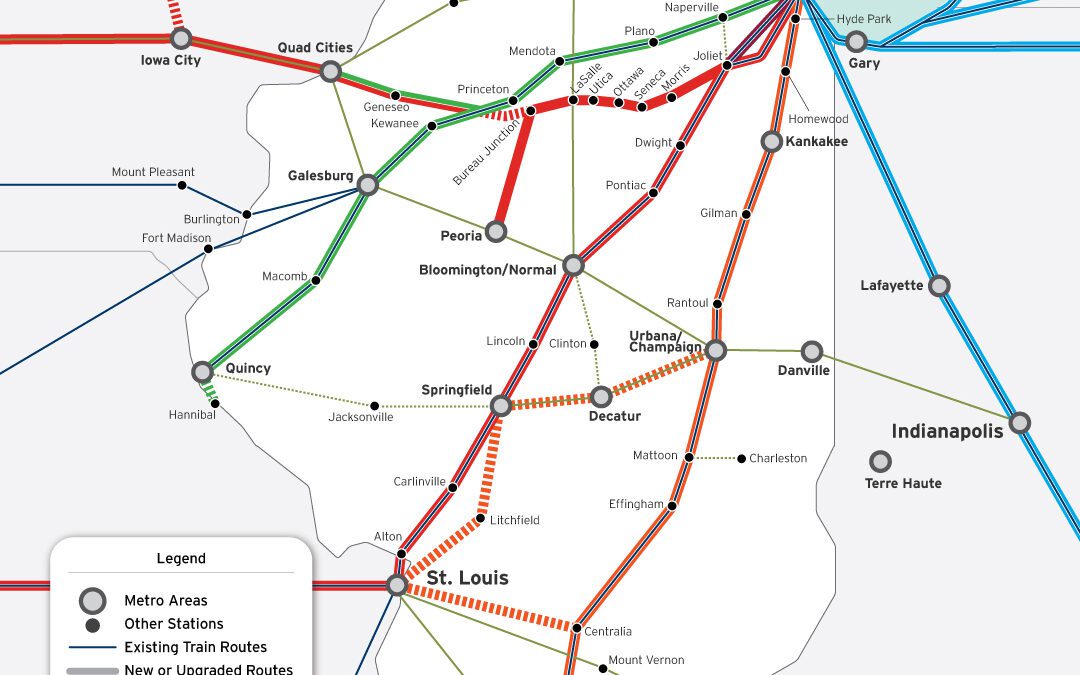
You can provide feedback to IDOT through October 2026. The Illinois Department of Transportation (IDOT) is working to update the 2023 State Rail Plan, with a final draft expected July 2027. State rail plans set future goals for freight and passenger rail. They can be...
Northeast Corridor Choke Point Un-Clogged
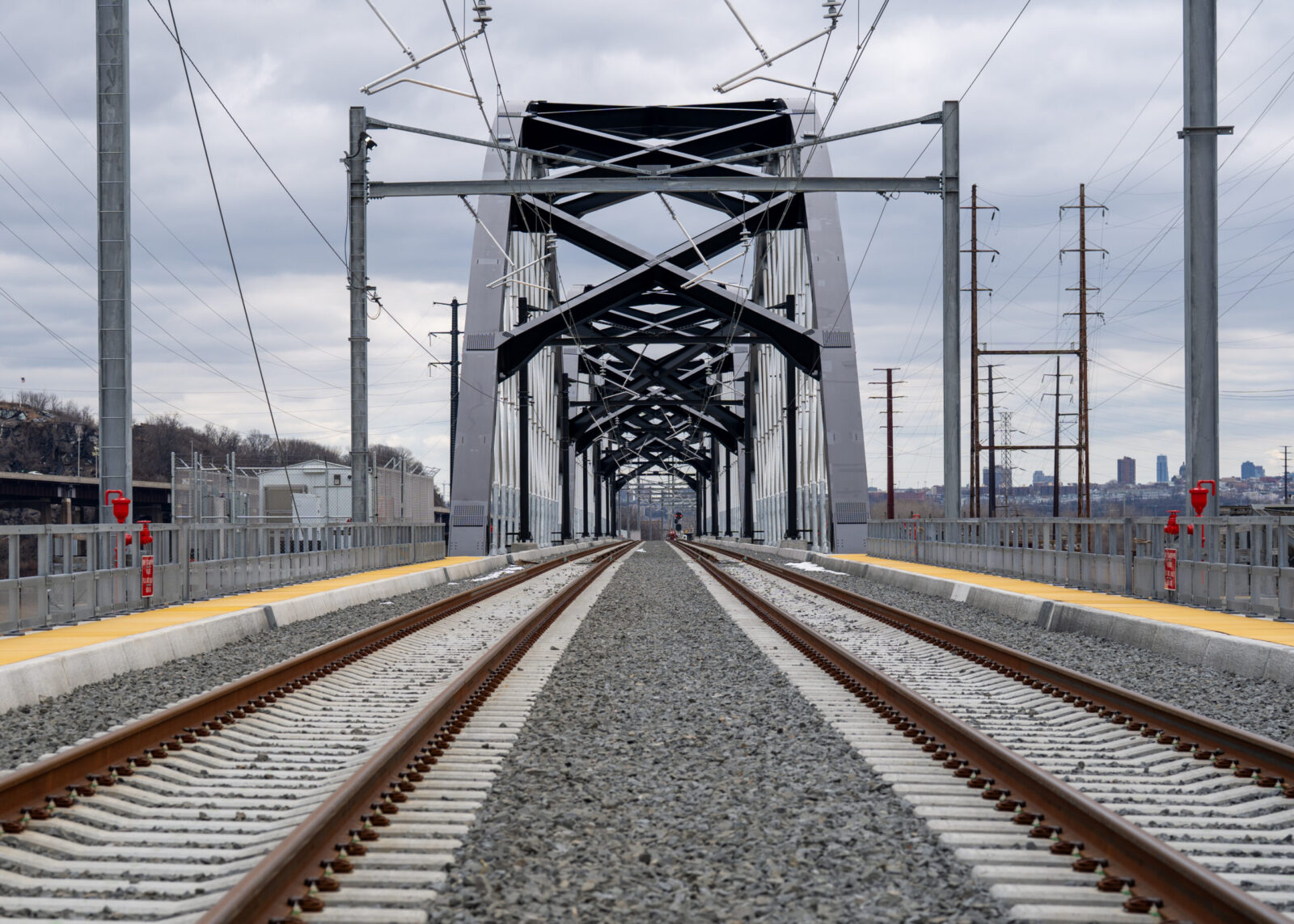
Portal North Bridge opens, clearing artery in New Jersey
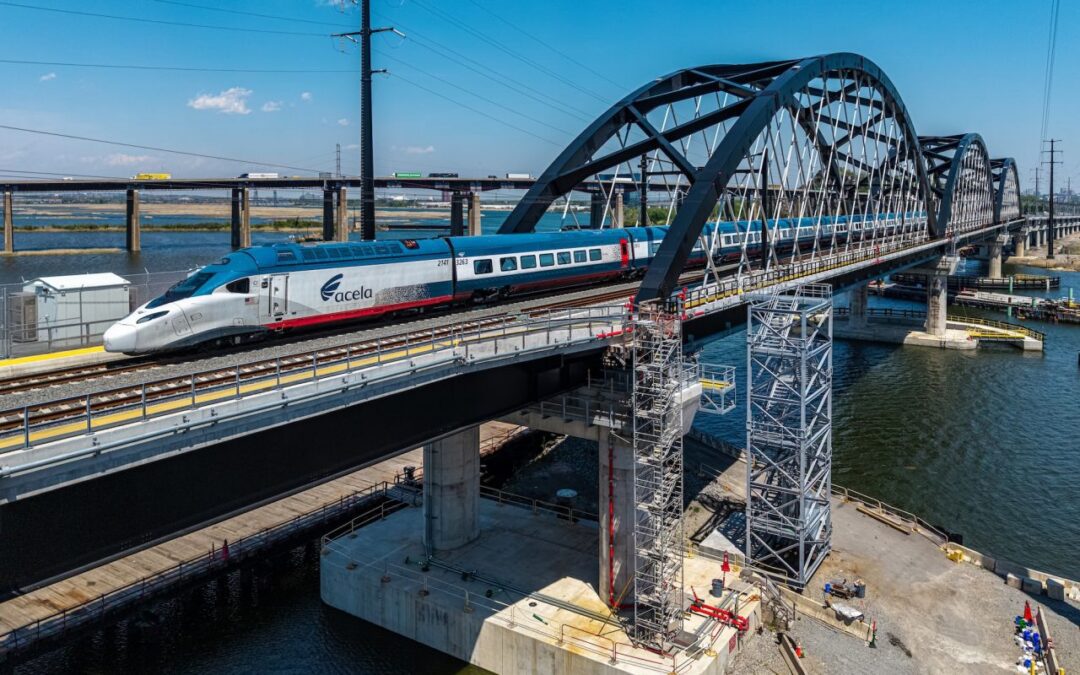
Monday was a splendid occasion for rail passengers throughout the Northeast Corridor. It was the first full weekday of trains using the new Portal North Bridge, which carries 200,000 passengers on 400 Amtrak and New Jersey Transit trains daily across the Hackensack River between Secaucus and Kearney.
The United States urgently needs more investment in this kind of infrastructure.
The old Portal Bridge, built in 1910 by the Pennsylvania Railroad, had outlived its expected 100-year lifespan, and it had been troublesome for decades. Trains were limited to 60 mph after a derailment in 1996, and the bridge was balky when it swung open for maritime traffic on the river. Rails often failed to lock when the bridge returned to its operating position, which sometimes required railroad crews to pound the rails into place with sledgehammers before trains could resume crossing.
The new bridge—with a price tag of $1.56 billion—is a fixed span with higher clearance above the river, allowing trains to travel at 90 mph. It is part of the Gateway Program, meant to de-congest some of the busiest passenger-train tracks, bridges, and tunnels in the nation. One of the two tracks is now in use on the new bridge. The old bridge will be used in tandem with the new one until next year.
There is a need to initiate many more projects like this all over the country. America is riddled with similar choke points that prevent passenger trains from reaching their speed and reliability potential.
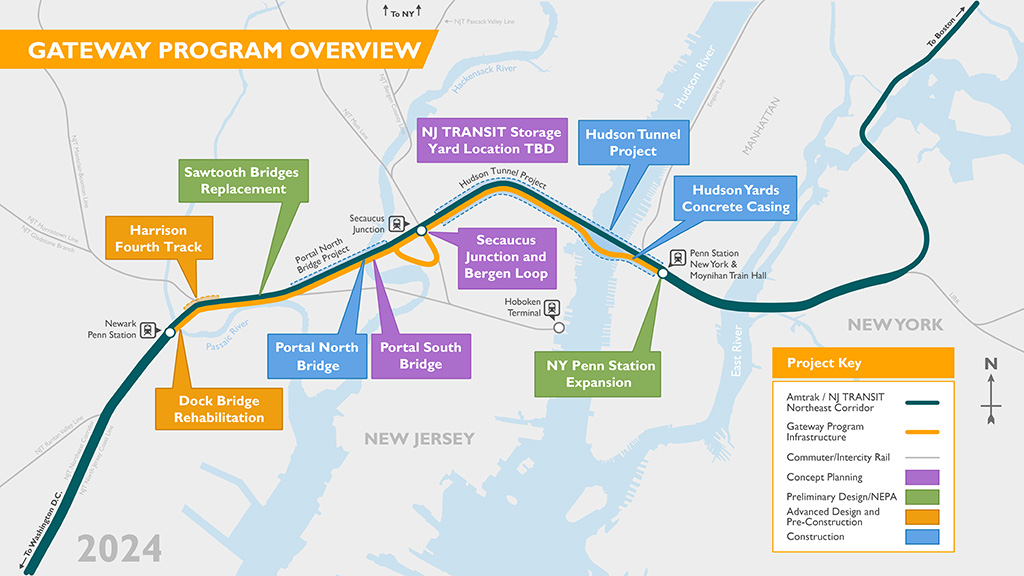
A map of the Gateway Program, which is a series of rail infrastructure projects that will improve the most congested 10-mile section of the Northeast Corridor. Credit: Amtrak
Find, fix other choke points
With the retail price of gas now up 81 cents per gallon since the war in Iran started Feb. 28, demand for train travel will rise. Unfortunately, new and occasional passengers will find that their options are deficient in terms of routes, frequency, and seat availability. All of these should be addressed.
In addition to building world-leading high-speed trains running on dedicated tracks, the U.S. should improve the speed, performance, and accessibility of regional and long-distance trains. We need trains that publish good, fast schedules, and then reliably stick to them.
Specifically, the federal government and the freight railroads should work to eliminate the causes of delays that erode a train’s performance. The U.S. needs a program to identify slow zones, pinch points, congested areas, bottlenecks, conflicts between passenger and freight trains, and anything else that slows or stops passenger trains—like a finicky swing bridge over a river—and fix the problems promptly.
This program will include adding mainline tracks and sidings, replacing old tracks, installing crossovers, and building grade separations so that trains move faster and without delays.
It will require the will to make substantial investments and a strong commitment to working with the freight railroads. But it can be done, and it should be done. This should be treated like the national emergency that it is—with a timeline of five years, not forever.
As the saying goes, the best time to plant a tree was 20 years ago. The second-best time is now.
Get Involved
Tell Congress: It’s time to reconnect the country with high-speed and regional rail!
The Latest from HSRA
Our Latest Blog Posts
Check out the latest news, updates, and high speed rail insights from our blog!