Help expedite California High-Speed Rail permitting work Unlike other state agencies (Caltrans, the Department of Water Resources, etc.), the California High-Speed Rail Authority cannot issue ordinary permits for work conducted on its right-of-way, such as sewer and...
Penn Station and the Two Paths Forward for American Trains
Competing visions for transportation reauthorization
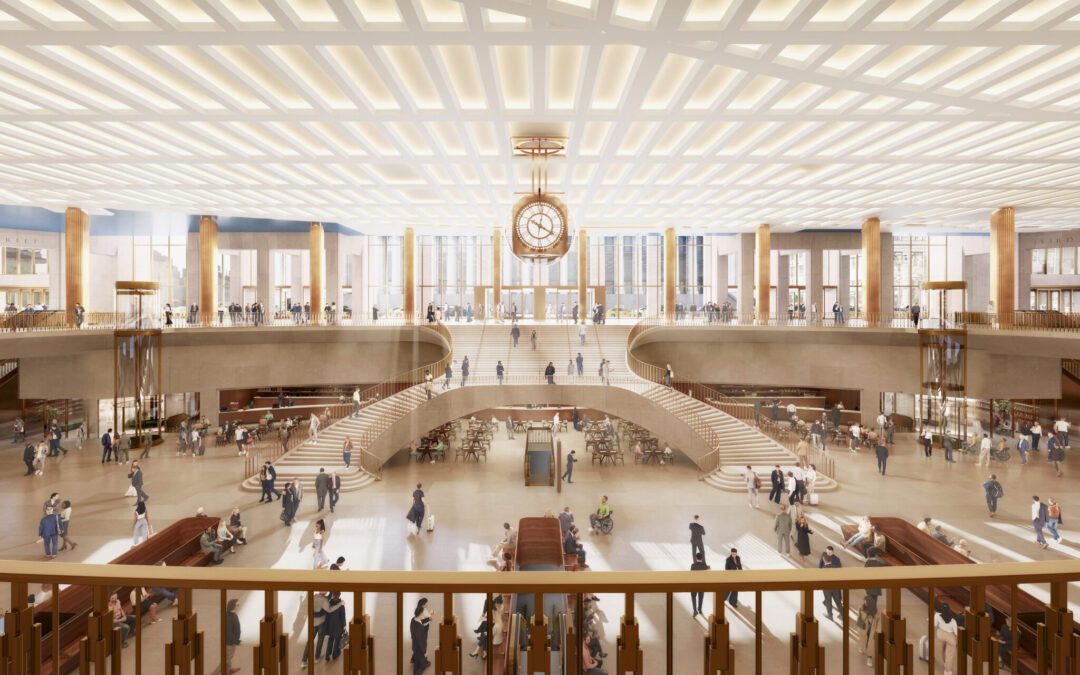
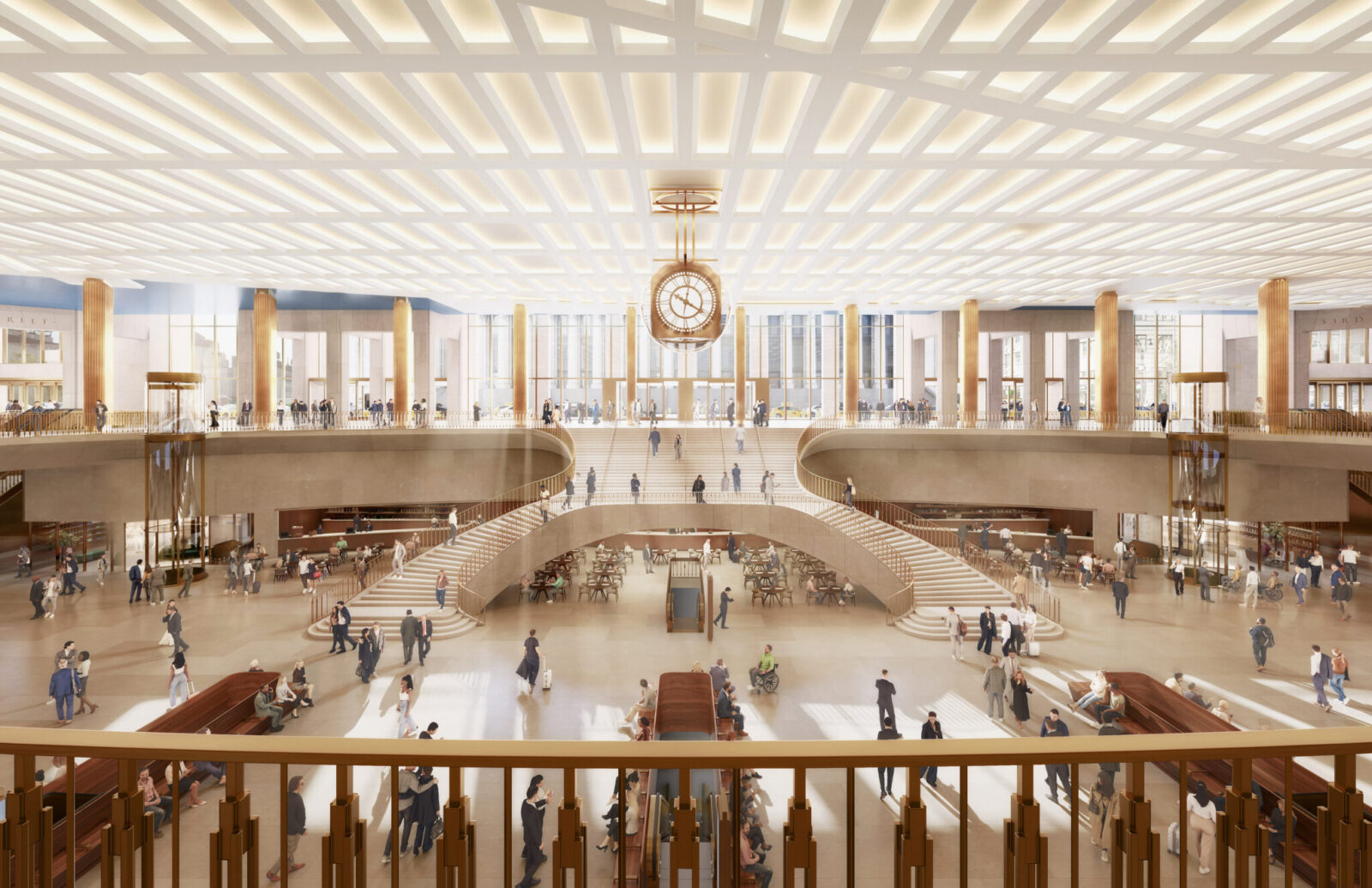
Penn Station handles about 600,000 passengers on a typical weekday—more than LaGuardia, JFK, and Newark airports combined. It powers New York City’s economy, and it’s the beating heart of the most developed and heavily used passenger-rail line in the US, the Northeast Corridor.
Plans to renovate and transform the station are moving forward: Amtrak’s Andy Byford has said shovels will be in the ground by late 2027. We support Amtrak’s approach, which was laid out in a study published by the Federal Railroad Administration (FRA) in June. It makes the case for a fundamental overhaul of Penn Station’s concourse, track configuration, and operating culture—with the goal of running more trains into and through the station by slashing dwell times.
That’s the good news. The catch is that the Trump administration is driving the rapid progress on Penn even as it deprioritizes trains everywhere else—cutting and undermining the very federal programs needed to get projects like this done.
That disconnect reveals two competing agendas. And the new surface transportation bill will determine which one wins. The bill—which will set transportation policy and funding frameworks for roughly five years—is being debated in Congress. The current bill will likely be extended into 2027 while the new bill is finalized under a new Congress.
Which means that either of the administration’s agendas could win out: The Penn Station overhaul could be a one-off, stand-alone project. Or it could help initiate and build momentum for an era of serious investment in America’s train networks.
Our actions, right now, can help determine which path Congress chooses.
Get Involved
Contact your representatives. Ask where they stand on the High-Speed Rail Act and on a federal railroad plan. It takes five minutes—and it’s the difference between a single renovated station and building a national network of fast, frequent trains.
The strategy behind the administration’s smoke and mirrors
Last week, the Federal Railroad Administration announced a $5.3 billion package of investments in US passenger rail. It includes grants of $572 million for a new Midwest Maintenance Facility and $87 million for bridge and viaduct repairs in Chicago. It also includes money for 43 new trainsets in high-demand corridors and 41 overhauled trainsets in the Midwest and Pacific regions.
Department of Transportation Secretary Sean Duffy said that his department is “making unprecedented investment in Amtrak because President Trump and I are committed to making passenger rail in America great again.” The headline on the press release said “GOLDEN AGE OF RAIL.”
The investments are welcome, obviously, but there’s a caveat. The money isn’t new. It was appropriated by Congress years ago. It’s just now being released (and $2 billion of it was clawed back from California’s high-speed rail project). The vast majority goes to nuts-and-bolts infrastructure upgrades, not ushering in the golden age Duffy promises.
The administration’s actual intentions are painfully clear in a letter Duffy sent Congress in late July, outlining his vision for the next surface transportation bill.
Duffy’s letter calls for Amtrak to rename Penn Station. That was the buzzy headline in most media accounts, because it suggests that he’s angling for Amtrak to put Trump’s name on the station. The more relevant news is that it calls for building and expanding highways and defunding nearly all mobility modes that aren’t powered by internal-combustion engines.
For example, it proposes a new grant program for expanding the entire Interstate Highway System to “at least” three lanes in each direction; eliminating the Mass Transit Account from the Highway Trust Fund—and funneling all fuel-tax dollars into the Highway Account; and killing a program for building bike lanes, “which are not an Administration priority.”
Together, the announcement last week and the letter in late July reveal the administration’s actual priorities and strategy: pocket a few high-visibility railroad wins—while quietly defunding much of the nation’s train and transit network.
The New York Times recently analyzed the (mostly) under-the-radar effect of the administration’s policy priorities. The piece noted that the administration is not only eliminating grants but slow-walking the process for awarding new ones. The Federal Transit Administration has so far failed to distribute more than $7 billion approved by Congress for train and transit projects. “That absence of action is harder to trace,” the Times observed, “and harder for communities to contest.”
The delays aren’t limited to blue states. In fact, three of the top five projects (by dollar value) are in states that Trump won handily. Broward County (FL) seeks $352 million for a commuter rail line; Charleston (SC) seeks $374 million for a bus rapid transit line; and Salt Lake City (UT) seeks $2.4 million to add parallel track to sections of a commuter rail line. Each project is now stalled.
A real golden age
The surface transportation bill is a perfect vehicle for initiating a real golden age of railways. If that’s what the administration is actually interested in, it should work with Congress and show the same energy and forward-thinking that it brings to the Penn Station overhaul.
Again, the current law expires on Sept. 30 but will likely be extended into 2027 as the new bill is finalized. So there’s still time to shape the final version. Two priorities stand out.
First, we need a national railroad plan. Congress should direct the FRA or Amtrak to develop a federal-level, intercity railroad plan “rather than trying to assimilate state rail plans of varying quality or relying solely on grant programs to stitch together a vision,” as a report by the Transit Costs Project (based at New York University) argued in 2024.
A federal plan would fundamentally change the calculus for major projects like the Penn Station renovation. It could be planned with an eye on improving travel well beyond the New York region—by simultaneously upgrading Chicago Union Station, for example, and by investing in the infrastructure for faster, more frequent service between Chicago and New York.
Second, advocates for trains should push legislators to sponsor and support the American High-Speed Rail Act of 2026, which would authorize $205 billion (over five years) for a national high-speed rail network. As we wrote recently, it accomplishes three key goals, beyond just the funding levels, by defining high-speed rail, facilitating right-of-way acquisition, and promoting development around train stations.
The bill now has 53 cosponsors. It’s important because it puts key ideas in the conversation. Half the battle in politics is getting your ideas in the arena, putting them up for debate, and planting a flag for the kind of change you want.
The American High-Speed Rail Act does exactly that. And the plans for Penn Station show what’s possible when the federal government shows a real commitment to trains. That’s one possible path.
The other is a path of ever-expanding highways. That’s a dead-end we can’t afford and don’t have to accept.
The Latest from HSRA
Our Latest Blog Posts
Check out the latest news, updates, and high speed rail insights from our blog!