Petition to the 120th Congress: Let's Change How America Moves Sign the PetitionA new Congress starts January 3, 2027. Tell them to commit to great trains. To the Senate and House of Representatives of the United States in the One Hundred Twentieth Congress Assembled:...
Putting High-Speed Rail in Highway Medians is a Bad Idea
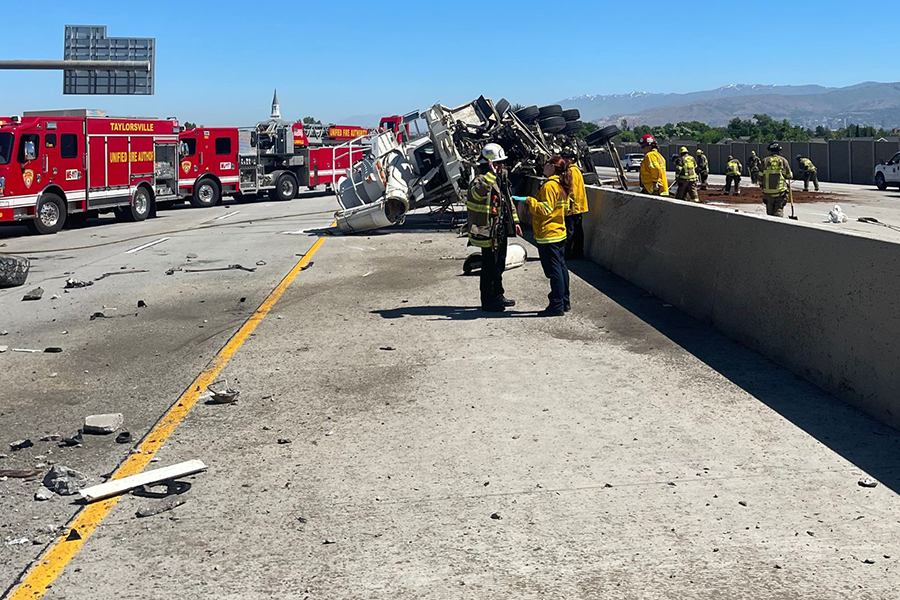
There are no shortcuts to building high-speed rail. We need the confidence and political will to do it right.
The hardest part of building high-speed rail is acquiring a right-of-way that’s straight, serves population centers, and keeps environmental impacts to a minimum.
Those facts lead every high-speed rail advocate who drives the nation’s highways to the same thought: Why not just put train tracks in the median?
The highways are already there, graded and publicly owned. They connect every place that people want to go. Putting a railroad in the median requires no new corridor, no new land, and no decades-long fight over where it will go.
It seems like a cheap and practical way to build high-speed rail. Then it crashes against the realities of actually making it work. Fixing the problems it creates isn’t worth the cost and effort.
Those problems fall into three categories: safety, geometry, and maintenance.
Safety
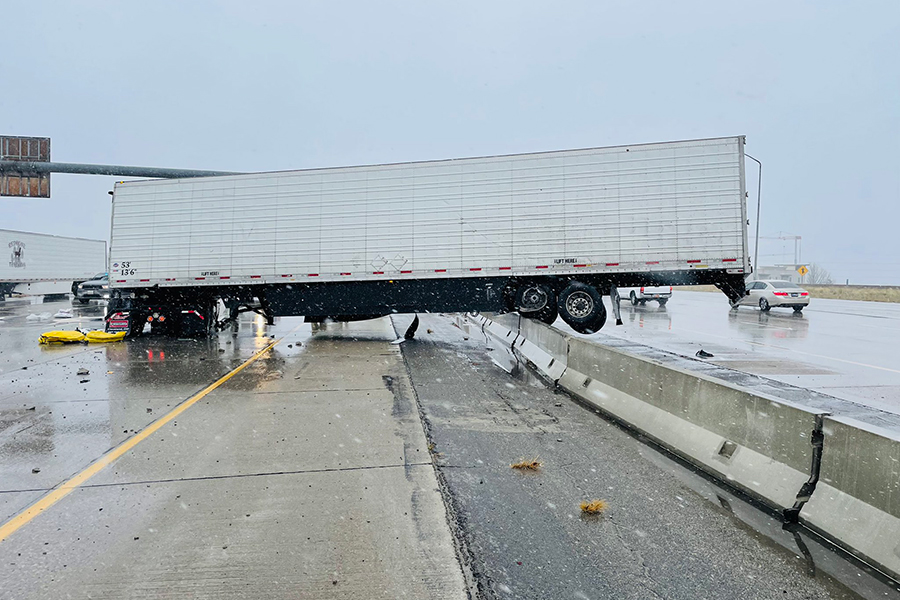
Highway barriers slow trucks down, they don’t stop them.
There is no practical way to keep trucks off the tracks. A fully loaded semi leaving the road at highway speed will barrel over a barrier designed to deflect a car. With a railroad in the median, that vehicle ends up on the track. Then the dispatcher has seconds, not minutes, to alert a train that may be moving at 200 mph.
Standard highway median barriers slow vehicles down; they don’t stop them. In theory, you could build a wall tall and thick enough to effectively protect both drivers and the train. But it would be expensive, and it would leave no way to reach the tracks for maintenance or emergencies. And train passengers would spend the entire trip staring at concrete.
Drivers will be startled. Imagine looking in your rearview mirror and seeing a train overtaking you at twice your speed. With the noise and visual impact, it would be reasonable to expect drivers to swerve or brake hard. And high-speed trains push a great deal of air out of their way. The pressure wave that a passing train throws off can rattle cars and startle drivers. Add snow and rain and the problems multiply.
Drivers will race the train. Some will do it out of bravado. Others will simply misjudge the speed, because nothing in their experience prepares them to estimate a closing speed of 130 mph or more. Either way, the railroad has no way to prevent it.
First responders have limited access. First responders use highway medians to easily cross from one side of a divided highway to the other. Fill it with a rail corridor and their crossover points are greatly reduced.
Geometry
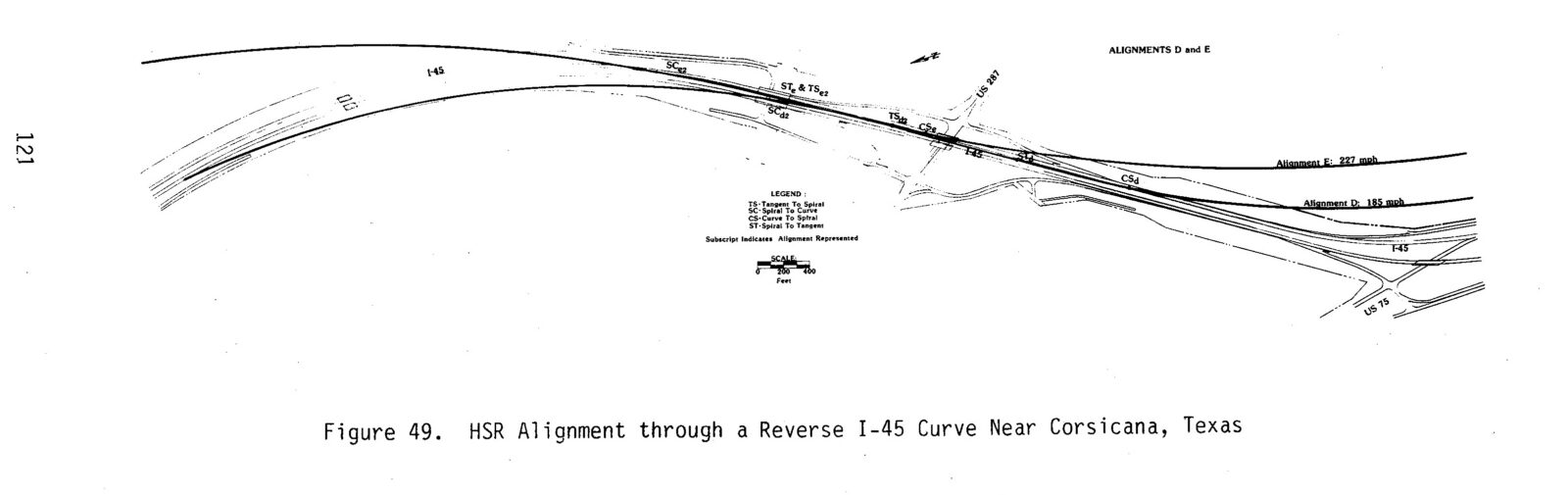
A 1985 study by the Federal Highway Administration compared high-speed rail curves to an s-curve in I-45 near Corsicana, TX
The curves are too sharp. To run at 220 mph, a curve must be roughly ten times gentler than one a car takes at 75 mph. When a train must slow down routinely to stay inside the median, it becomes just a very expensive way to travel at highway speeds.
The bridges are too low. The standard vertical clearance on the Interstate system is 16 feet. An electrified high-speed line needs at least 19 feet, enough for the catenary and its electrical clearance. So using the highway means raising, replacing, or rebuilding every overpass along the route. Using the median doesn’t avoid building new structures. It generates them.
There isn’t room for two tracks in many places. When Florida planned a high-speed line in the I-4 median, its standard for a dual-track rail envelope was 44 feet (a regulation bowling lane is about 60 feet long, for comparison). That is not much space for two tracks, a safety buffer, and the barrier walls on either side. And it’s more room than many older highways offer—particularly east of the Mississippi, where the corridors are narrower and the surrounding land is now fully developed.
Maintenance
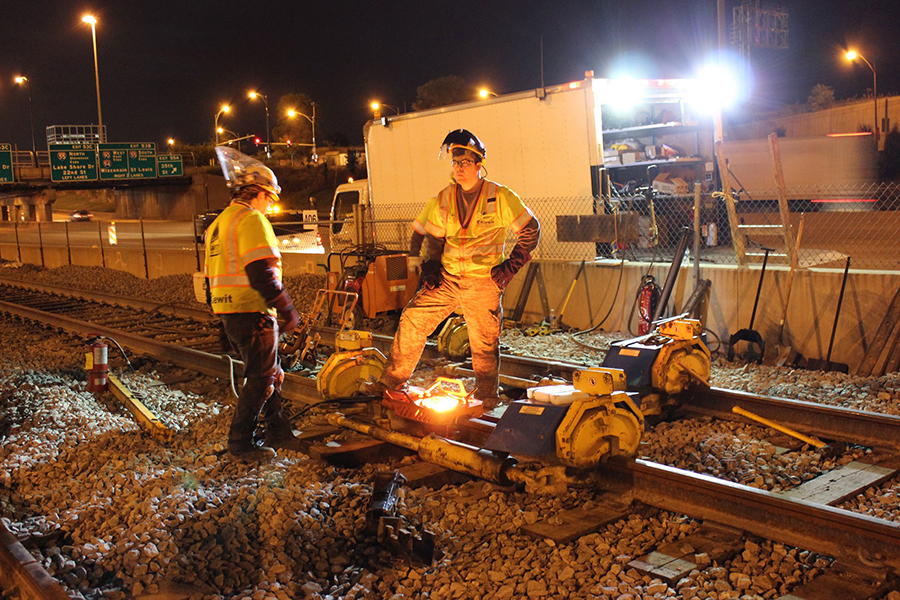
These welders had to park their truck on the inside lane of the Dan Ryan Expressway.
Road salt destroys electronics. Every winter, a high-speed railroad in a median would be surrounded by a fine mist of salt spray thrown up by traffic and spread by plows. Salt and electrical equipment cannot coexist.
Snow clearance becomes a hazard. Getting snow off the railroad would be very difficult without creating a safety hazard on the road.
Every repair closes highway lanes. Track work in a median means putting workers within a few feet of live traffic and closing lanes to protect them. This is unsafe for the crews as well as drivers, and it means the railroad’s maintenance schedule is set by the highway’s traffic volumes—not its own needs.
The case of Brightline West
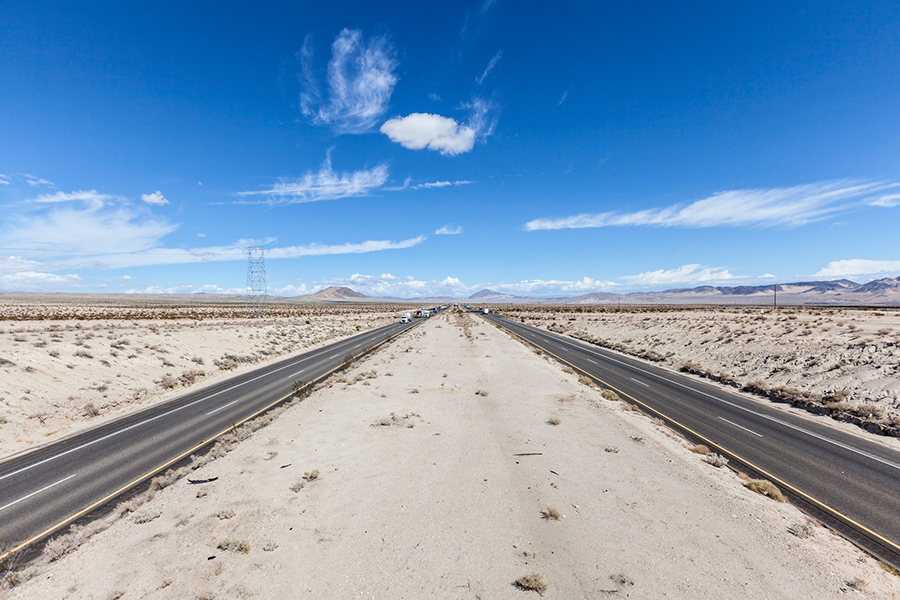
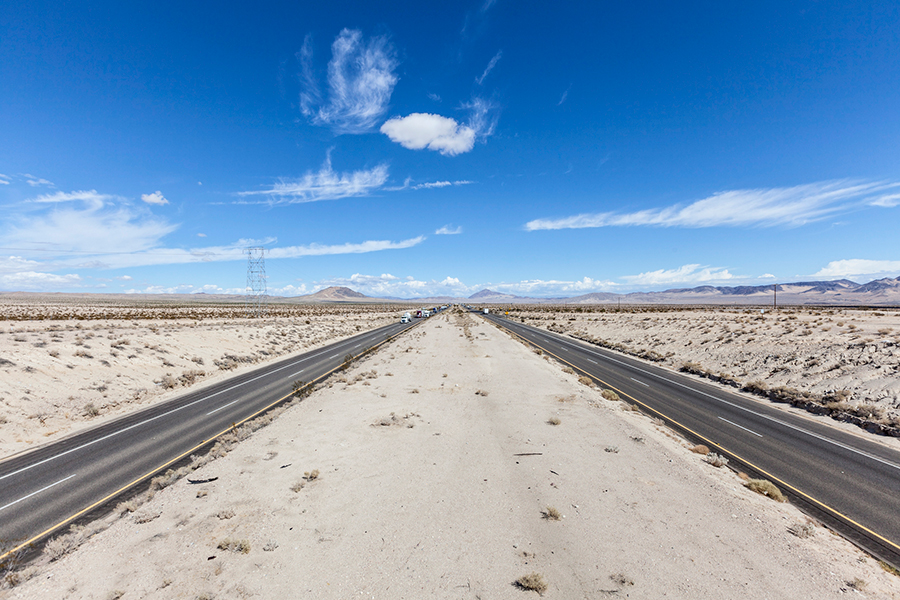
I-15 is very straight and has a wide median between Cajon Pass and Las Vegas.
This doesn’t mean the median is never viable. But the cases where it makes sense are rare.
Brightline West is the most relevant example. Roughly 96 percent of its 218-mile alignment, between Las Vegas and the outskirts of Los Angeles, sits within the median of I-15, and Brightline has moved more of the line into the median over time. So it is happening, in one place.
But consider what it takes. To fit passenger platforms into the median at Victor Valley, the project must realign the northbound lanes of I-15 approximately 50 feet east and raise them approximately 25 feet. Near Sloan Road, the southbound lanes must be lifted so a track can leave the median and pass beneath them. The contractor’s scope lists more than 160 structures—viaducts and bridges—along the 218-mile route.
Brightline West isn’t using the freeway’s spare space. It’s rebuilding the freeway around the railroad. It can do so because the Mojave Desert offers a corridor with no frontage development, no urban grid, no intersecting streets, and almost nothing to curve around.
Brightline West hasn’t yet offered its plan to avoid driver impacts, though.
Brightline West is the exception that proves the rule. There is no magical solution to the challenges of building high-speed rail. Even the best-case scenario for putting trains in a highway median requires an immense amount of workarounds. And even then, the safety problem isn’t solved.
So jury-rigging our highways creates more problems than it solves.
The path forward is the harder one: building high-speed rail the way every country that has it does—with dedicated corridors, built for trains.
We’ll solve the where and the how once we decide it’s worth the cost.
Get Involved
Tell Congress: It’s time to reconnect the country with high-speed and regional rail!
The Latest from HSRA
Our Latest Blog Posts
Check out the latest news, updates, and high speed rail insights from our blog!