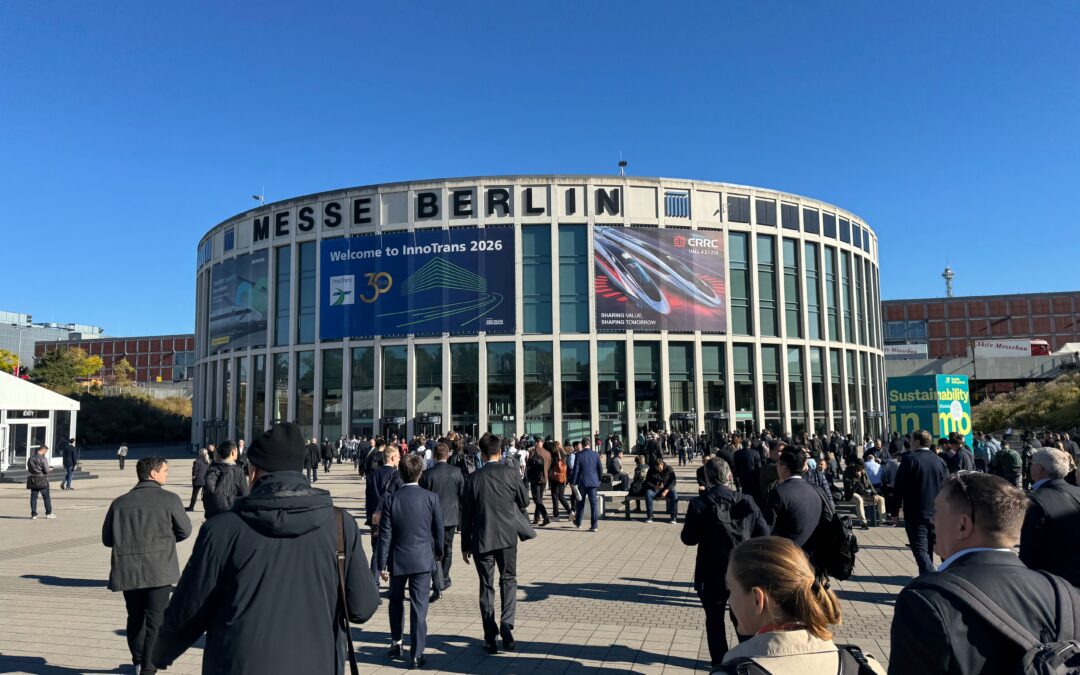
U.S. Takeaways From the Largest Railway Trade Show on Earth By Jordan Pokorney, Manager of Outreach & Engagement There’s nothing like InnoTrans. Held every two years since 1996 at the massive Messe Berlin, InnoTrans is where the latest transit technology is...
The Truth About Why U.S. Transit Ridership Cratered—And How It Can Recover
It’s not what you think
Six years on from the start of the COVID pandemic, we have good data on how it affected transit systems globally, how some systems are successfully responding, and how high the stakes are.
First, the bad news.
From 2019 to 2024, overall transit ridership declined by 23 percent in the US, according to a recent study published by the Urban Institute. Of the 25 cities analyzed, ”only Dallas had more bus and train services operating in 2024 than in 2019,” author Yonah Freemark writes. “All the other areas saw declines—and sometimes quite substantial ones, such as in Denver.” It’s crucial to note that the pandemic only accelerated a decline in transit ridership that started in the mid-2010s.
The good news? It’s a very different story elsewhere.
As Freemark notes, “many of the largest urban areas in Asia and Europe have recovered their pre-pandemic ridership on rail lines.” Specifically, “ridership increased by about 10 percent, on average, between 2015 and 2024” in France’s major urban areas. And, as we reported here, the increase in ridership on Caltrain after its electrification in 2024 is a bright spot in the US transit landscape.
Notably, Caltrain’s resurgence is driven by weekend ridership, which more than doubled from late 2024 to late 2025 and now exceeds pre-pandemic levels. The traditional commuter model—which focuses on workers going downtown in the morning and returning to suburban homes in the evening—mostly ignores that market.
The upshot is that US transit systems can thrive by doing what Caltrain and systems across Europe and Asia have done: electrifying their fleets, running faster trains, running them with more frequencies from early morning to late at night—including on weekends—and attracting whole new customer segments.
In short, they can adapt to people’s actual needs, behaviors, and preferences with expanded and upgraded service.
Turning the corner?
Systems in the US struggle due to a combination of disinvestment, weak political will, the brittleness of transit agencies, and anti-transit campaigns funded by corporations and special interests.
One concrete example: In 2018—two years before the pandemic hit—the New York Times published a story under the headline “How the Koch Brothers Are Killing Transit Public Transit Projects Around the Country.” It focused on Nashville, which had proposed a $5.4 billion transit plan funded by a new sales tax. The plan had strong support from the city’s leadership and business interests.
But a Koch-affiliated group mobilized volunteers to knock on doors and make phone calls, opposing it. The outcome “stunned the city: a landslide victory for the anti-transit camp, which attacked the plan as a colossal waste of taxpayers’ money,” the Times reported.
Fortunately, we seem to be turning a corner—albeit slowly.
In November 2024, Nashville voters approved (by a two-to-one margin) a slimmed down, $3.1 billion transit package, to be funded through a half-cent sales-tax. The money will go to building 90 miles of new sidewalks, 54 miles of new bus lanes, and 12 new bus hubs. The plan had been a major item on the agenda of the city’s new mayor.
A local publication, the Tennessee Lookout, noted that the victory was “part of a national wave of successful transit ballot measures” in 2024, “positioning transit as an issue capable of unifying voters across the political spectrum.” In total, “voters across the nation supported 19 out of 26 pro-transit ballot measures, approving more than $25 billion in public transportation spending.”
Other notable successes included the approval of a half-cent sales tax to fund transit—including a light-rail system—in Maricopa County, Arizona (home to Phoenix). But in the Atlanta region, voters rejected—yet again—a one-cent sales tax to fund transit expansion.
The upshot is that we are in a transition period. The death grip of cars is gradually loosening as voters increasingly embrace the idea of investing in trains (and other modes) that build healthier, more prosperous communities. Illinois is a prime example of the shift.
Yet car culture remains a potent and well-funded force in our politics. Contesting it will be a decades-long fight.
A great success
In early January, the results of New York’s first year of congestion pricing underscored the stakes in this battle.
On January 5, 2025, New York began charging drivers a $9 toll for entering Manhattan below 61st Street during peak hours. The proceeds are invested in transit infrastructure—a projected $550 million in the first year alone.
The policy resulted in 27 million fewer car trips, the New York Times reported. Buses are running at least 2% faster in the congestion-pricing zone, and about 300,000 more people ride the subway every day. “People are still coming” to the city’s busiest areas,” the Times noted, just not necessarily by private car.” Visits to the business district in fact rose by 2.4%.
The results has been a higher quality of life for everyone: Serious injuries in car crashes are down 8.6%, and vehicle noise complaints are down 17%.
With “fewer cars, less congested roads, more transit riders” the Times reported, “readers described experiencing safer crosswalks, less stressful bike riders and what feels like cleaner air.”
As a reader from Brooklyn summed up the results: “It’s allowed me to believe that perhaps America can change for the better.”
Please join our movement of people working to change America for the better—through fast, frequent, and affordable trains—by donating today.
The Latest from HSRA
Our Latest Blog Posts
Check out the latest news, updates, and high speed rail insights from our blog!