
A Caltrain Trip Report
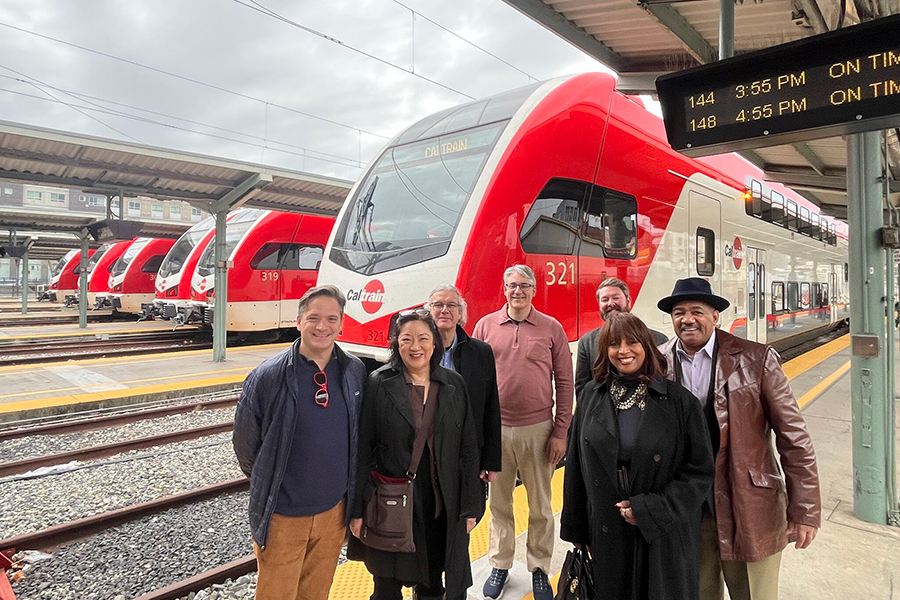
What every “commuter” railroad should be
Recently, the Alliance and a group of Illinois legislators traveled to California to learn about its integrated railway program. One of the highlights of the trip was taking Caltrain, the Silicon Valley regional rail line. We rode its all-electric fleet to meet the staff in San Carlos.
One thing became clear: California’s big investments in Caltrain are paying off in spades. Here are a few quick observations and highlights.
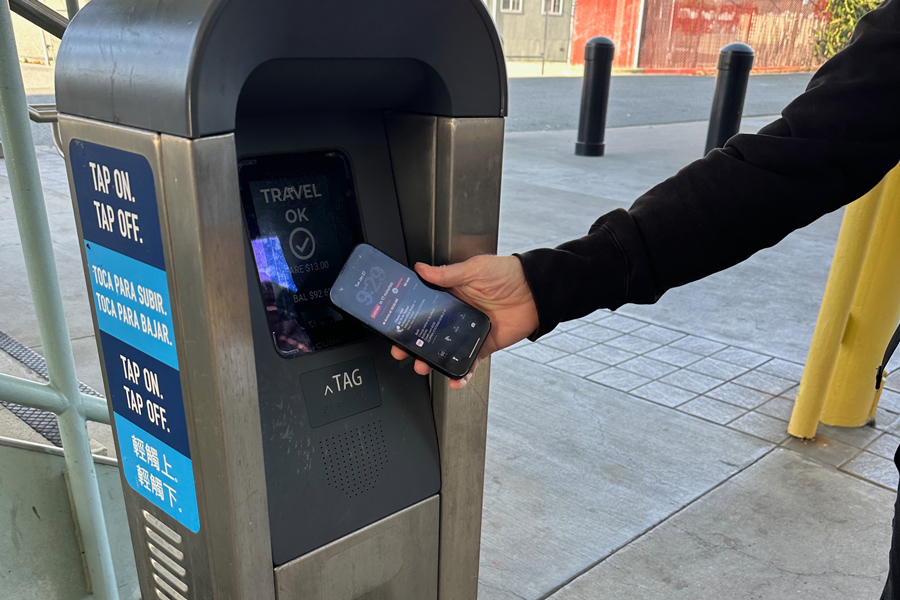
Buying a ticket takes just two taps
No need to buy a ticket. Just tap your credit card or phone on the platform when you get on and off. Easy-peasy.
And, California is working to get a “unified” fare card by helping all transit agencies accept credit cards and phones.
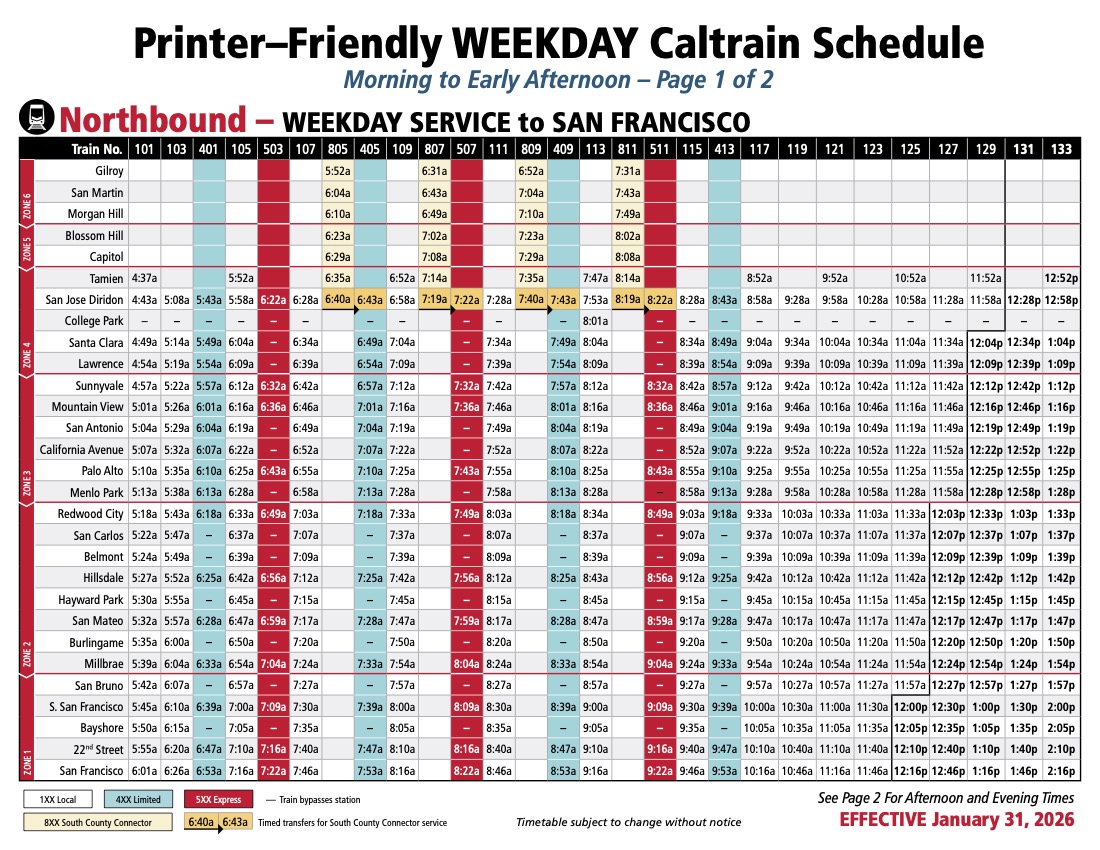
30 minute headways, even on weekends
A train every 30-minutes, plus rush hour expresses, means no worries about changing your schedule last minute.
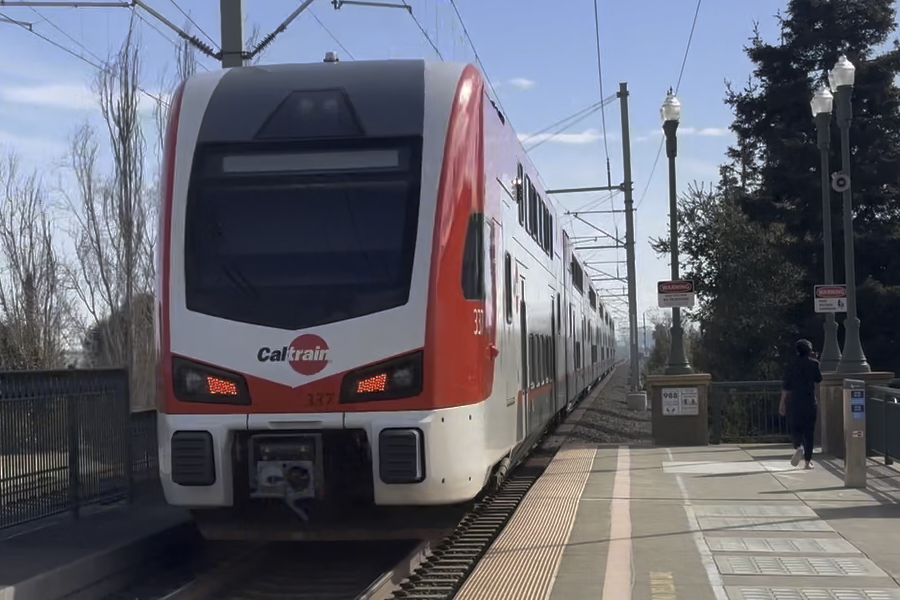
Acceleration
No smelly, polluting diesel trains lumbering their way out of the station. Electric trains zip out of the gate—which means they’re 20-minutes faster than diesel trains, end-to-end, even without increasing their top speeds.
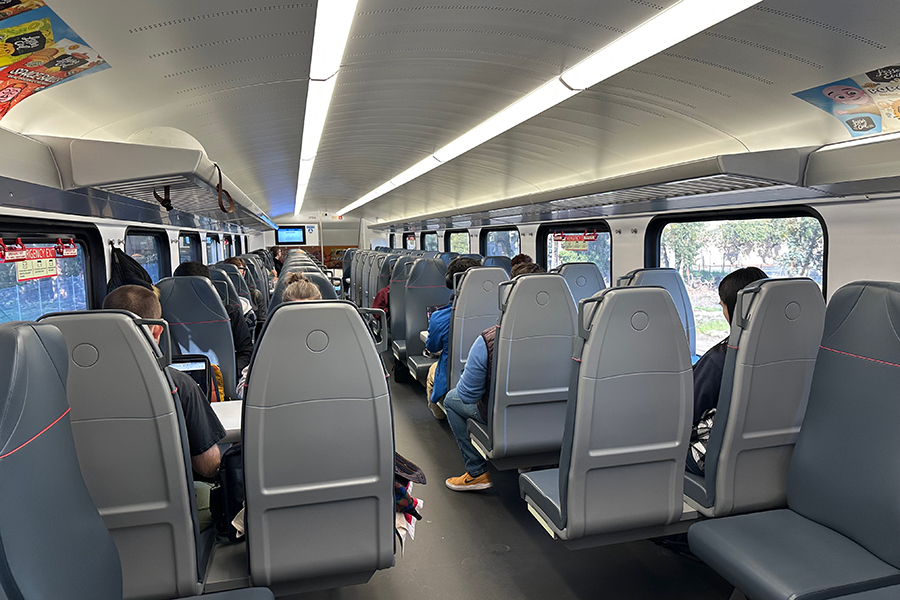
Spacious, clean, and comfortable
Comfortable seats, tables, and a smooth ride make the ride enjoyable.
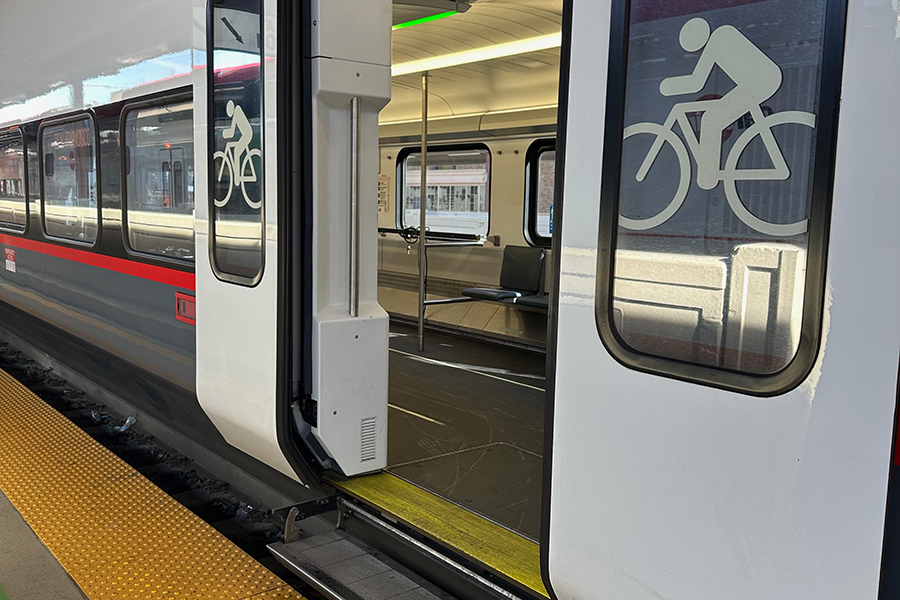
Multi-Modal
Great bus connections and a car dedicated to bikes.
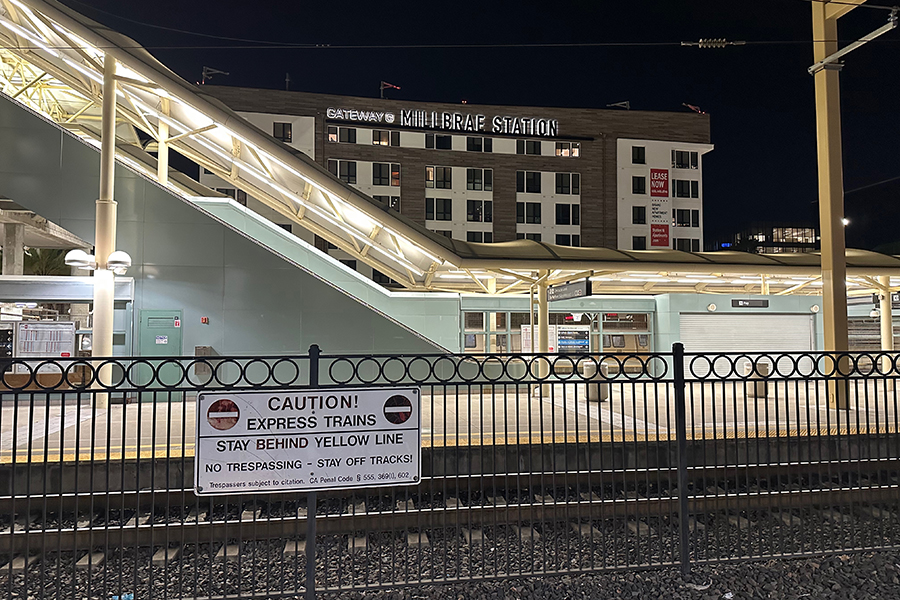
Stronger cities
Lots of new apartment buildings and office complexes are going up around the stations.
Like this new apartment building near Millbrae.
The difference that great trains make to a place’s overall quality of life is hard to describe, but it’s real. And it’s transformative.
The overall experience is so much better than “normal” US train service, it’s almost hard to believe. It’s like the difference between wheeled luggage and the old bags you had to carry around—on a vastly bigger scale.
The speed and cleanliness are the most obvious differences. But soon it hits you: Things are so quiet and pleasant on electric trains. You’re not enveloped in the smells and fumes of a diesel train, especially as it (slowly) pulls out of a station.
While Caltrain is leading the way in the US, great trains are already the norm in much of the world. Which is bad news because we’re so far behind. But good news because there’s so much potential here for communities to learn from their peers globally, step up, and build strong economies and healthy communities with great trains.
Caltrain should be the norm for every regional rail system in the US. We should demand nothing less.
