More Amtrak equipment, California tunnels, Corridor ID on the list The movement to develop a great train network in the United States made undeniable gains in 2025: Illinois passed transit legislation worth $1.5 billion a year, which not only will continue to fund...
Burlington Trailways to Discontinue Important Midwest Connectors
Illinois faces a crucial choice
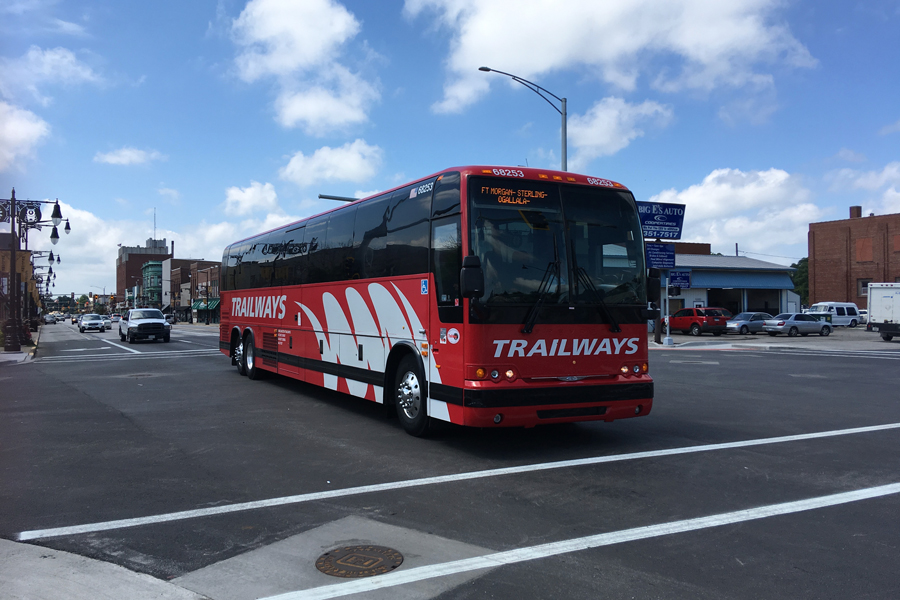
Burlington Trailways has announced that it will end its intercity bus service on September 27—citing high insurance costs, uncertain relationships with its partners (including Greyhound), and the outdated funding formula used by the federal government in supporting rural transportation services. It will continue to offer charter services.
The cuts come at a pivotal moment. In October, the Illinois General Assembly will consider legislation to remedy the “fiscal cliff” facing the state’s transit systems. Advocates are pushing for $1.5 billion to upgrade and modernize the Chicago region’s train and transit systems. The loss of Burlington Trailways service shows the need include support for intercity buses in the package.
Based in West Burlington, Iowa, the company began as Burlington Lines—the motor-coach division of a railroad—in 1929. Its modern era began in 1981, when a couple bought rights to Missouri and Iowa routes from the firm that had bought (and renamed) Burlington Lines. The new owners restored the Burlington name. In 2011, the company began constructing a new headquarters in West Burlington. By then, it served more than 200,000 passengers each year.
Burlington Trailways’ intercity bus lines, which connect communities throughout the Midwest, are the only east/west bus routes running through much of central Illinois. For example, one of its lines stretches from Des Moines to Indianapolis with stops in Galesburg, Peoria, Normal, Champaign, and Danville. Burlington Trailways is also an Amtrak Thruway carrier, which means travelers can buy rail and bus segments of a trip as a single ticket on Amtrak’s site. So, cities like Normal and Champaign are popular transfer points between Burlington buses and Amtrak trains (and vice versa).
As the Alliance has argued elsewhere, intercity buses play a crucial role in transportation networks. They supplement and fill in gaps in existing rail service, and they build a base of customers for rail lines that are in the planning or construction stages. They’re also extremely flexible, since it’s easy and (relatively) inexpensive to launch or add service. And they’re among the greenest, most fuel-efficient transportation modes we have.
Get on it, Illinois
Earlier this year, a report on the industry’s national outlook by DePaul University’s Chaddick Institute for Metropolitan Development underscored the urgency of investing in an intercity bus network in Illinois specifically. It projected growth of about 4 percent for intercity-bus ridership nationally, versus about 2.5 percent for car and plane travel. But it also pointed out that Chicago and the Midwest are falling short and being left behind.
For example, it noted that Chicago had lost direct bus or rail service to several mid-sized communities, including Danville, Decatur, and Galena. And, at a moment when states across the red/blue political divide (including Colorado, North Carolina, Ohio, Virginia, and Washington) are building strong, statewide bus networks, Illinois has no plans to do so. (Go here for the Alliance’s profile of the Colorado intercity-bus network, Bustang.)
Similarly, Chicago is an outlier in its lack of planning and support for intercity-bus service. The city’s foot-dragging is summed up in the uncertain status of its Greyhound bus station, which is in limbo a year after Greyhound’s corporate owner let its long-term lease expire. Advocates, including the Alliance, have called for Chicago to buy the building and renovate the space into a modern facility. City leaders have been non-committal.
The lack of urgency shown by Chicago and Illinois reflects a broader, general neglect of intercity-bus transportation at the federal level. During the Covid pandemic, for example, Congress quickly passed the CARES Act, which provided $100 billion worth of grants and loans to support airlines, Amtrak, and public transit systems. Intercity bus carriers received no relief until the CERTS program provided $2 billion for transportation services in 2021.
The recent surge of intercity-bus ridership—and the move by many states to build their own networks—highlights the immense economic, environmental, and quality-of-life value of intercity buses. The key question facing Chicago and Illinois, next month, is whether they will invest in them and start reaping the benefits—or drag their feet and get left behind, again.
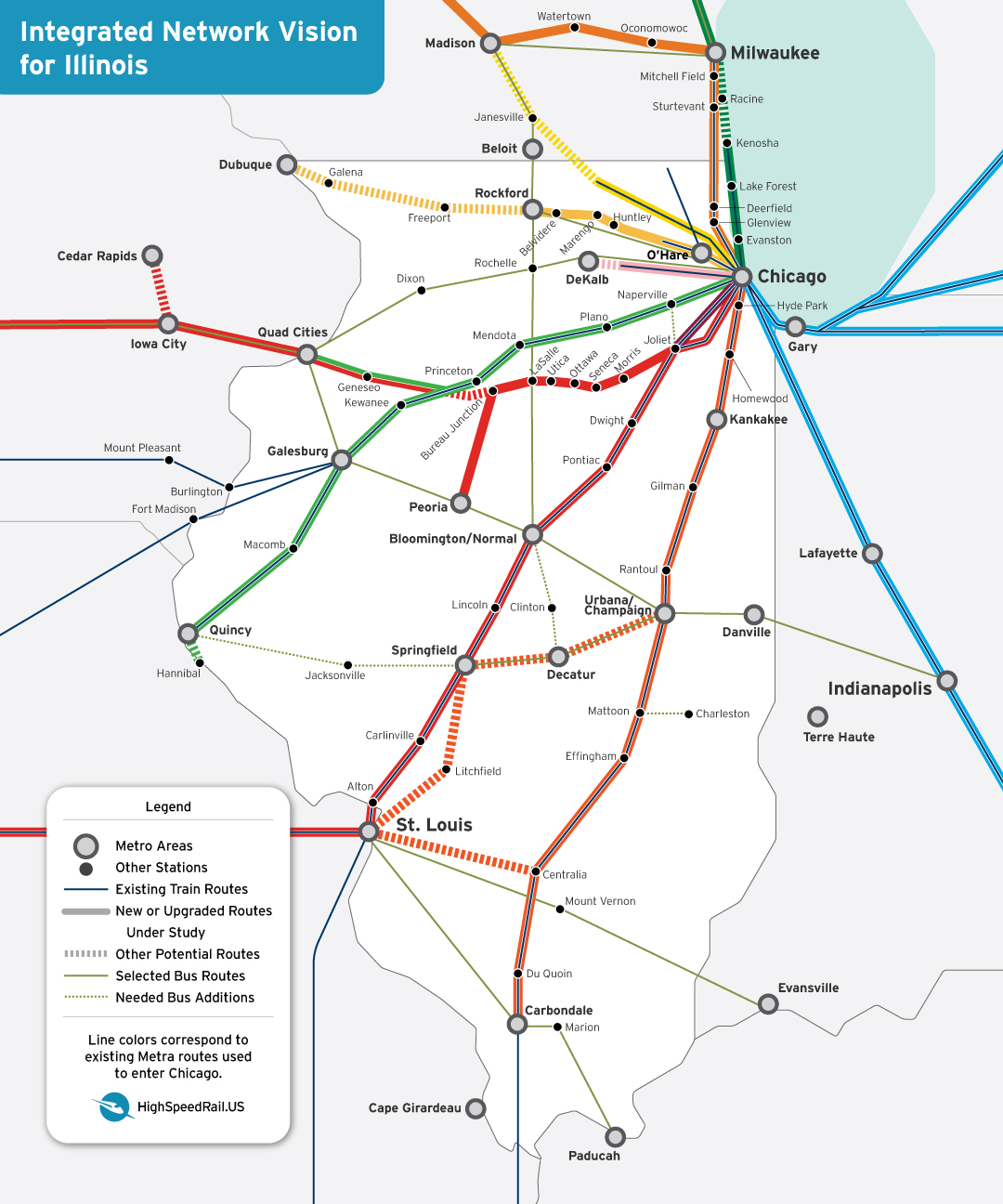
Burlington Trailways provides the important link across the middle of the state linking Iowa City, Moline, Galesburg, Peoria, Champaign, Danville and Indianapolis. They also provide one daily roundtrip from Moline to Chicago.
Get Involved
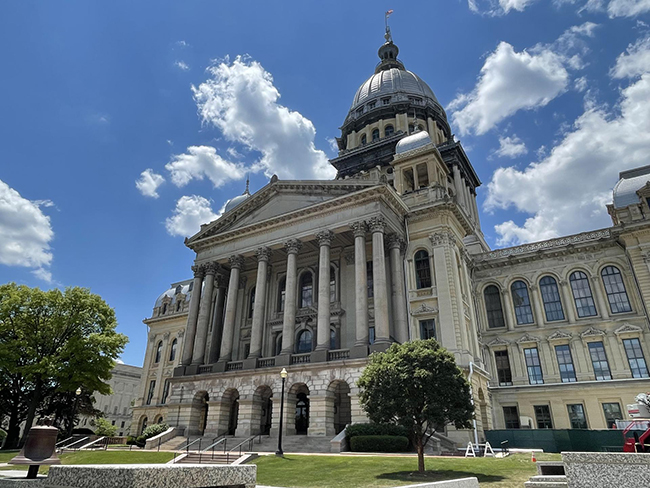
The Illinois General Assembly is debating the future transit and regional rail right now.
The Latest from HSRA
Our Latest Blog Posts
Check out the latest news, updates, and high speed rail insights from our blog!