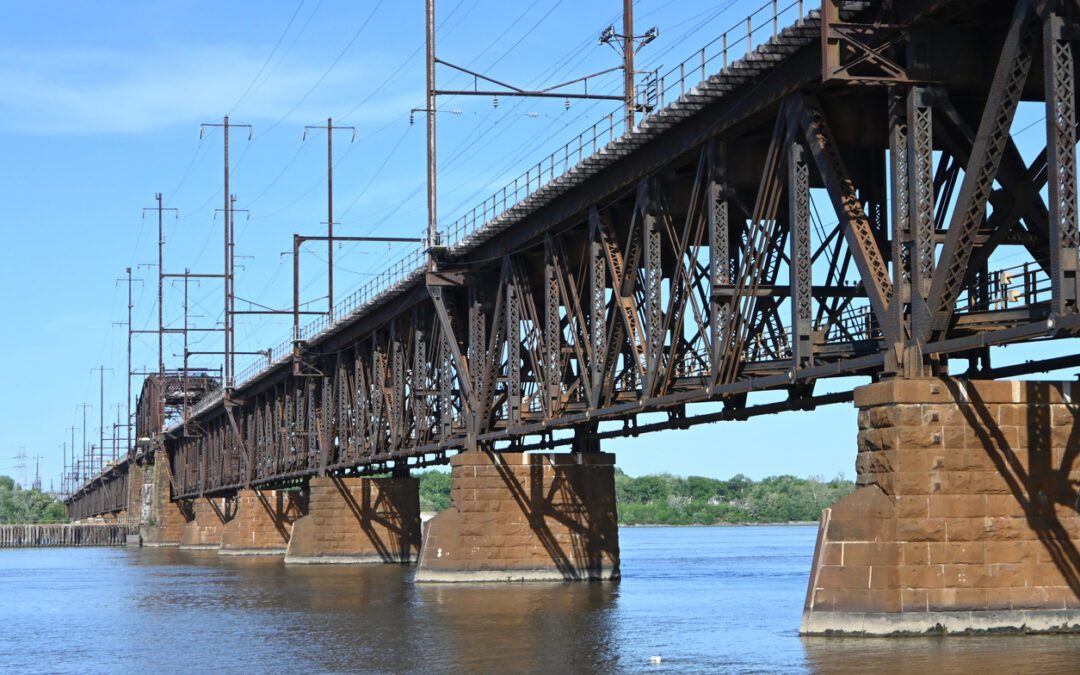
First of three critical projects is under construction Maryland has quietly become one of the key sites of railway upgrades in the Northeast Corridor (NEC). Three consecutive water crossings on a 35-mile stretch between Baltimore and the Susquehanna River will soon be...
Five Trains That Would Smoke Your Uncle’s Porsche 911 in the Quarter Mile
A Car and Driver-style comparo for people who think “zero to 200” should only apply to supercars and motorcycles
Guest post by HSRA Board Treasurer Matthew Roling
When I was ten years old, I had a poster up on my wall of a cherry red Porsche 911 “whale tail”—it was likely hanging right above my box of HO scale Athearn model trains. Having a Porsche poster or model trains in the 90s wasn’t unique, but the fact that I got to drive a Porsche 911 as a 20-year-old working at a car dealership probably was. (There’s nothing quite like the sound of a rear-mounted, naturally aspirated engine changing gears.)
In my teens and early 20s, my love of trains and cars went in opposite directions—that was until I began to slowly learn how problematic cars were for things I also loved: cities, community, our environment. A decline in interest that coincided with a trip to Japan, where I got to ride the Shinkansen for the first time—love at first sight. Since then, I’ve made up for lost ground and learned to appreciate that trains can be a luxury and performance product – if not yet here in the United States.
There is a very specific kind of joy in standing on a platform as 750 tons of aluminum and steel scream past you at 200 miles an hour without so much as spilling your coffee. Car people know this feeling. It’s the same experience you get standing next to a Bugatti at idle, or watching an F-16 during a flyover, except the train did it while carrying hundreds of people to a meeting, and it’ll do it again in 11 minutes, on schedule, forever.
We don’t talk about trains like this enough. We talk about them like boring infrastructure. Ridership numbers. Farebox recovery ratios. Right-of-way acquisition. All true, all important, all deeply unsexy. But underneath it all, the fastest trains on Earth are impressive machines: distributed traction systems putting out more horsepower than a field of Formula 1 grids, aerodynamic noses shaped by the same wind-tunnel obsession that goes into a hypercar, national pride riding on every kilometer per hour. Japan, China, Italy, Saudi Arabia, and a dozen other countries have spent the last two decades in an arms race to build the fastest, smoothest, most impressive vehicles ever to run on a fixed guideway.
So, we’re doing this the way a car magazine would. Specs, comps, a little bravado, some honest reporting on which numbers are real and which ones are marketing.
What are the fastest passenger trains in the world?
A quick word on eligibility
First, we’re ranking trains that carry actual paying passengers, not tests or pilots. A test run happens on a stripped-down, reinforced, empty train chasing a top speed for a press release. Commercial service means reliability, energy efficiency, and getting grandma to Osaka on time, every day, for 30 years—safely. We will give a quick nod to the record chasers at the end; they deserve some limelight too.
Second, “fastest” gets tricky, because trains have three different speeds: a design speed (what the engineers built it to theoretically survive), a certified speed (what regulators have approved), and a day-to-day operating speed (what shows up on the ticket). We’re leading with the highest speed each train has genuinely run in revenue passenger service.
On to the comparo!
#5: Haramain High-Speed Railway — Kingdom of Saudi Arabia
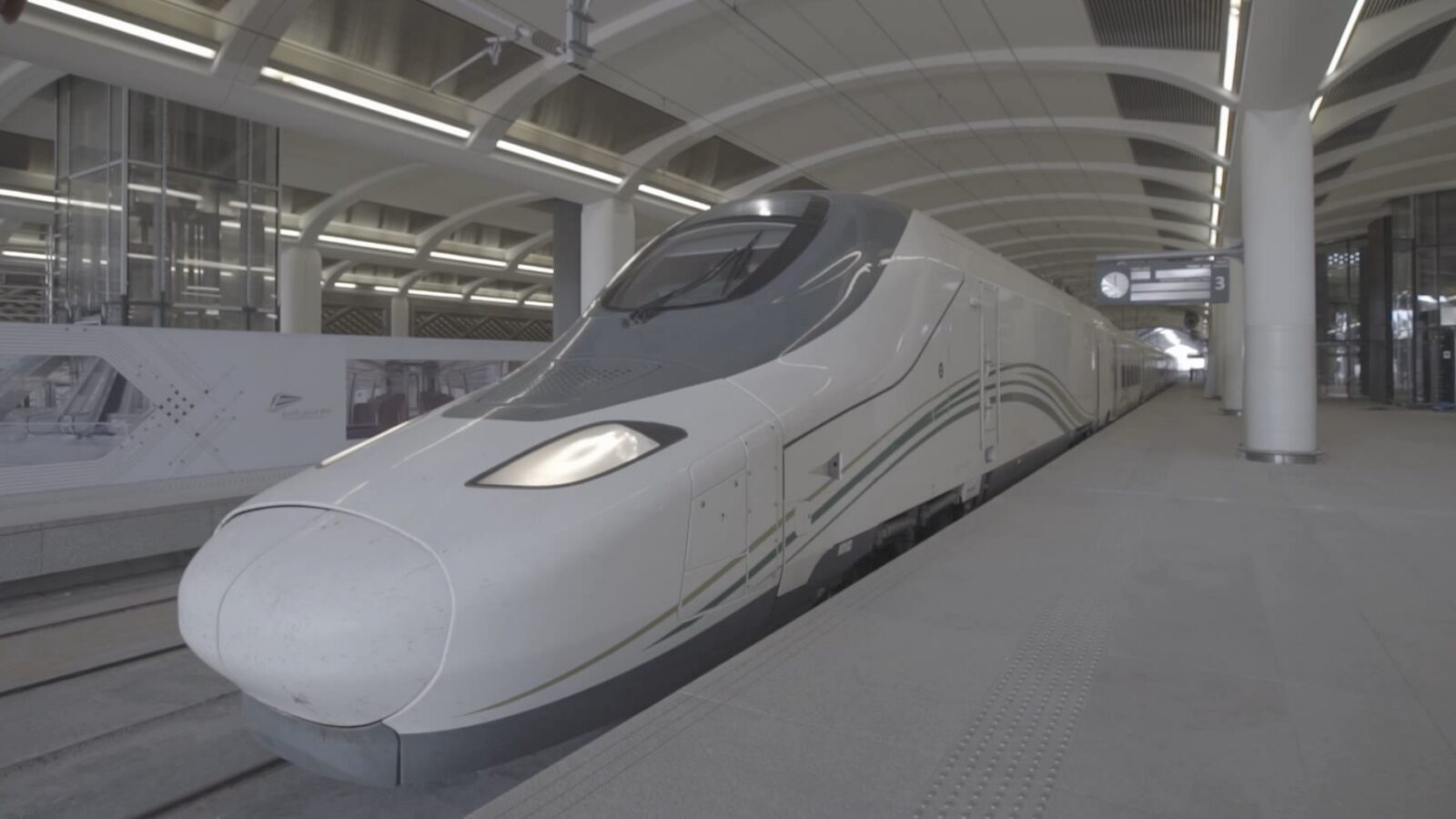
The Haramain, launched in 2018, connects the holy cities of Mecca and Medina with Jeddah’s airport.
The Comps
- Top speed in service: 300 km/h (186 mph), with the fleet tested up to 310 km/h and infrastructure built for 330
- Trainset: Talgo 350 SRO
- Manufacturer: Talgo, Spain
- Power output: two power cars driving the train, part of a fleet built specifically to handle 50°C desert heat and windblown sand
- Service area: Mecca to Medina via Jeddah and King Abdullah Economic City, 453 km, roughly two hours
- Capacity: 417 passengers per set, in two classes
You’re probably just as surprised as I am that one of the world’s largest oil producing nations made the “fastest trains” list. The Haramain line is the first high-speed railway in the Middle East, and it was built for pilgrims. During Hajj season the line runs more than 100 services a day, moving nearly two million people between Mecca and Medina in a matter of weeks. Talgo engineered a “desert pack,” more than 30 extra technologies bolted onto a proven European platform just to keep a 300-km/h train running reliably through sandstorms and triple-digit heat. It’s less a bullet train and more a bullet train that also survived basic training in the Empty Quarter.
#4: Frecciarossa 1000 — Italy
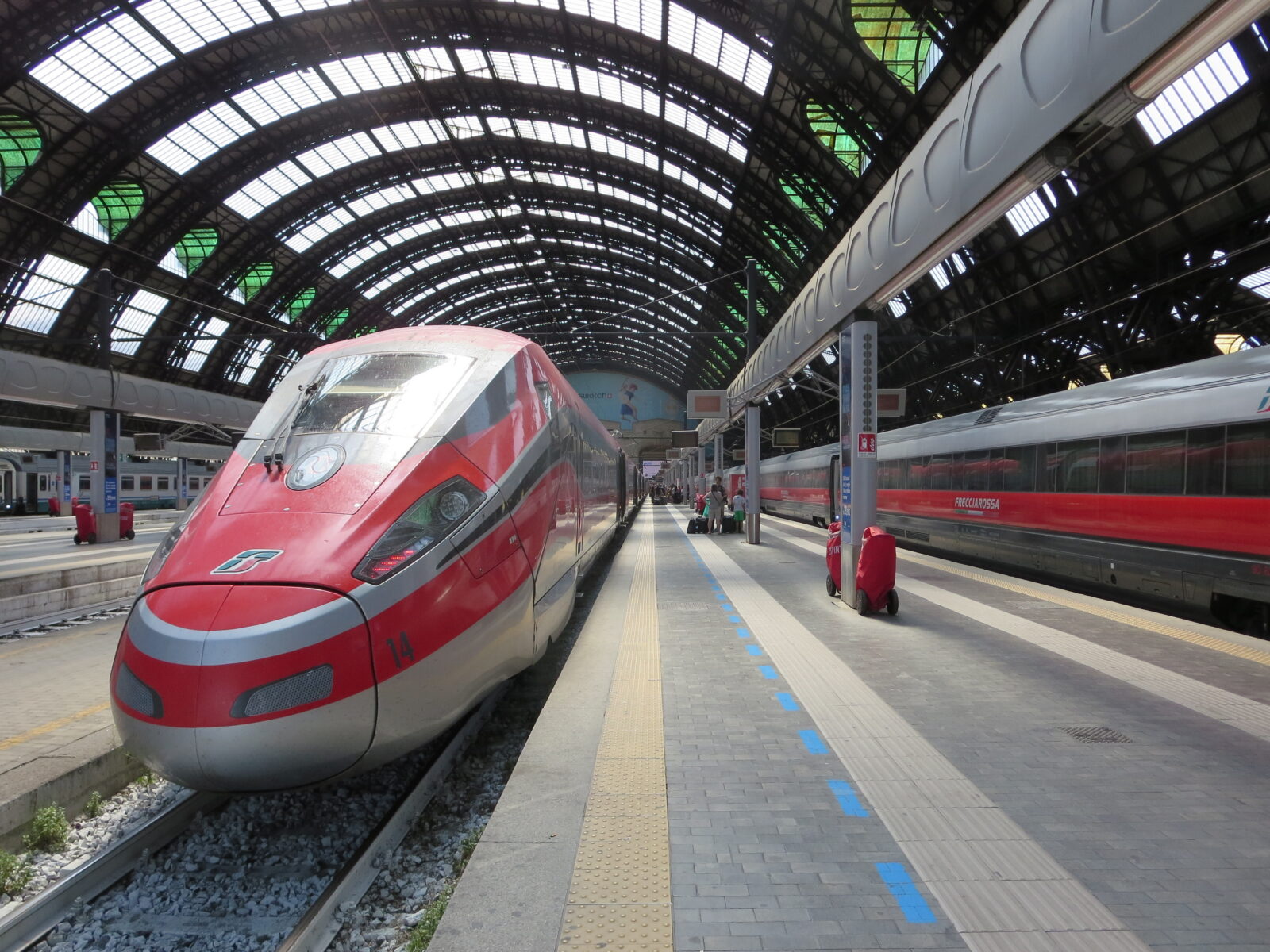
The Frecciarossa 1000 is the latest addition to Bombardier’s ZEFIRO class of high-speed trains.
The Comps
- Top speed in service: 300 km/h (186 mph); rated commercial speed 360 km/h, design speed 400 km/h
- Trainset: ETR 1000
- Manufacturer: Hitachi Rail / Alstom (formerly Bombardier and AnsaldoBreda), interior by Pininfarina
- Power output: roughly 9,800 to 10,000 kW, about 13,300 horsepower, spread across 16 traction motors on all eight cars
- Service area: Turin, Milan, Bologna, Florence, Rome, Naples, and international runs into France and Spain
- Capacity: up to 485 passengers, four classes
The Frecciarossa is the car in this set with a gorgeous engine it isn’t legally allowed to use. Italy built this thing to run at 360 km/h and it has already proven it can hit 389 km/h on a test run, but current infrastructure caps it at 300 in daily service. That’s the automotive equivalent of a 220-mph supercar stuck behind a 65-mph speed limit governor its entire life: still gorgeous, still brutally fast off the line, just not living up to its own spec sheet yet.
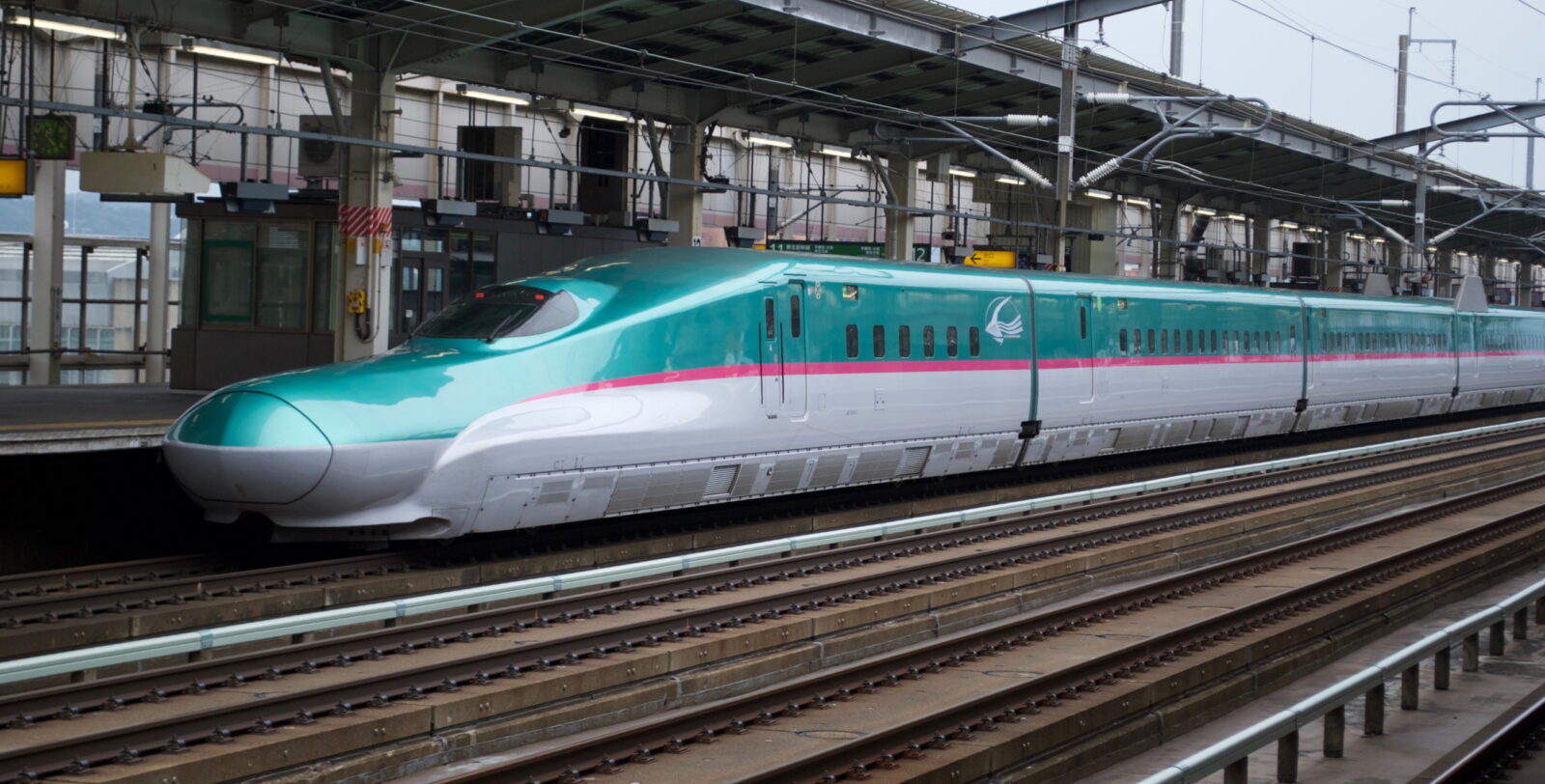
#3: Shinkansen E5/H5 Series “Hayabusa” — Japan
The Comps
- Top speed in service: 320 km/h (199 mph)
- Trainset: E5 (JR East) and H5 (JR Hokkaido)
- Manufacturer: Hitachi and Kawasaki Heavy Industries
- Power output: 9,600 kW, about 12,900 horsepower, from 32 traction motors
- Service area: Tohoku and Hokkaido Shinkansen, Tokyo to Shin-Aomori and on to Hokkaido
- Capacity: 731 passengers, including an 18-seat Gran Class cabin
The Hayabusa, literally “peregrine falcon,” (a name that may also be familiar to motorcycle enthusiasts) is the one that built the modern idea of what a bullet train should look like: that long, elongated nose exists purely to punch through tunnel air pressure at speed without producing a sonic boom out the other end. Japan tested a predecessor called Fastech 360 at up to 360 km/h and deliberately dialed the production train back to 320 for passenger comfort and noise regulations. Since Shinkansen service began in 1964, across tens of billions of passenger trips there has never been a single passenger fatality from a derailment or collision.
#2: CR400 “Fuxing” — China
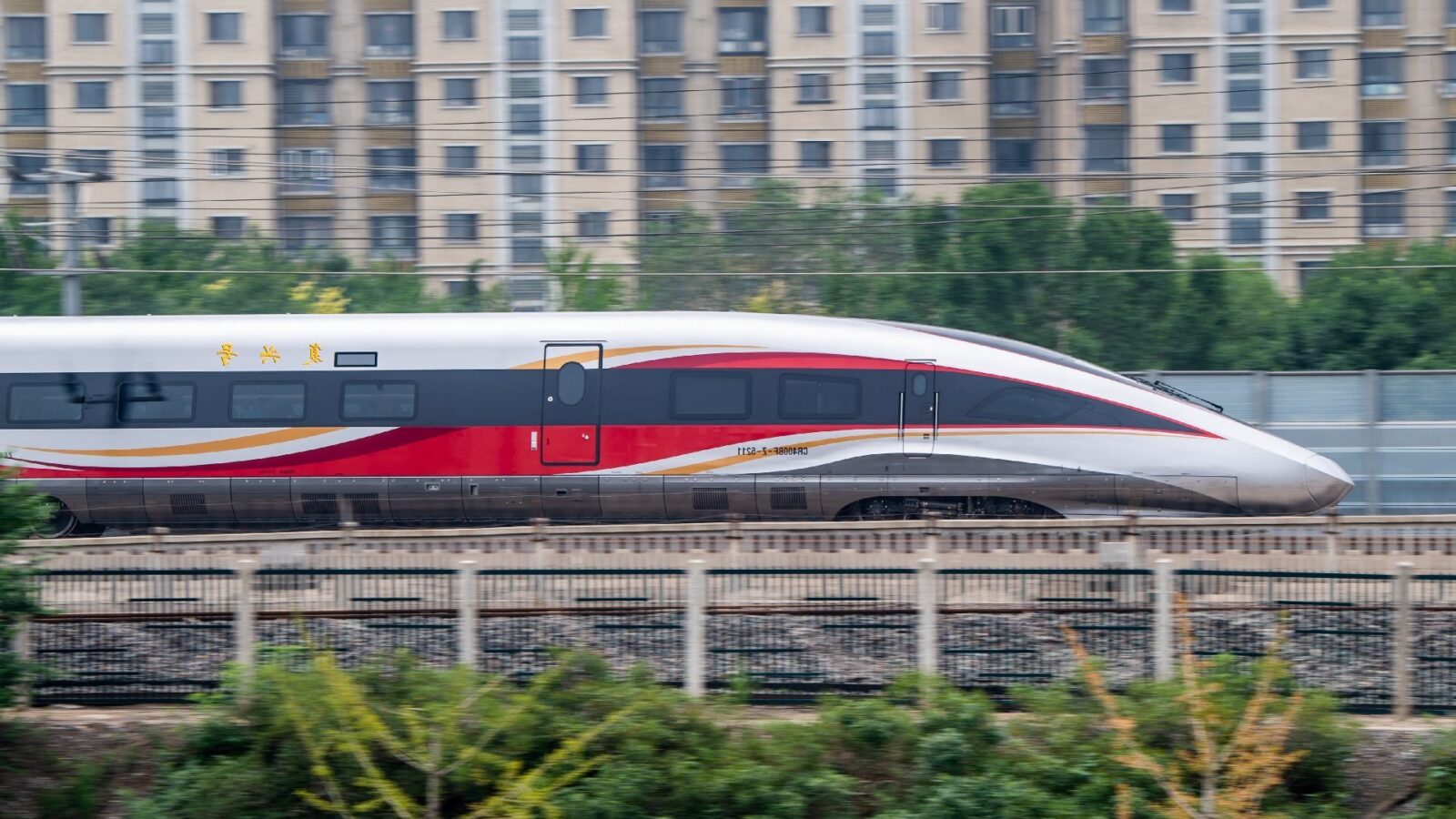
Fuxing CR400BF “Golden Phoenix” high-speed train
The Comps
- Top speed in service: 350 km/h (217 mph), the fastest conventional wheel-on-steel-rail train running in regular commercial service anywhere
- Trainset: CR400AF “Red Dragon” and CR400BF “Golden Phoenix”
- Manufacturer: CRRC Qingdao Sifang and CRRC Changchun
- Power output: roughly 10,400 kW, close to 14,000 horsepower on the standard eight-car set, scaling up on the longer 16 and 17-car formations
- Service area: the Beijing to Shanghai high-speed corridor and most of China’s 40,000+ km high-speed network, more track than the rest of the world combined
- Capacity: 556 to 1,283 passengers depending on formation
If the Frecciarossa is the beautiful car that isn’t allowed to use its full engine, the Fuxing is the one that just floors it every single day. This is the actual fastest conventional train you can currently buy a ticket for, cruising at 350 km/h on the daily Beijing-Shanghai run, covering 1,318 km in about 4.5 hours. It’s hit 420 km/h in trials and China has more than 1,100 of these sets in revenue service. And it’s not resting: the next-generation CR450 has already clocked 453 km/h in pre-production testing and is expected to enter commercial service at 400 km/h, which will bump this whole list the moment it happens. China has built an entire industrial base that churns out fast trains at a scale nobody else can match.
#1: Shanghai Maglev — China
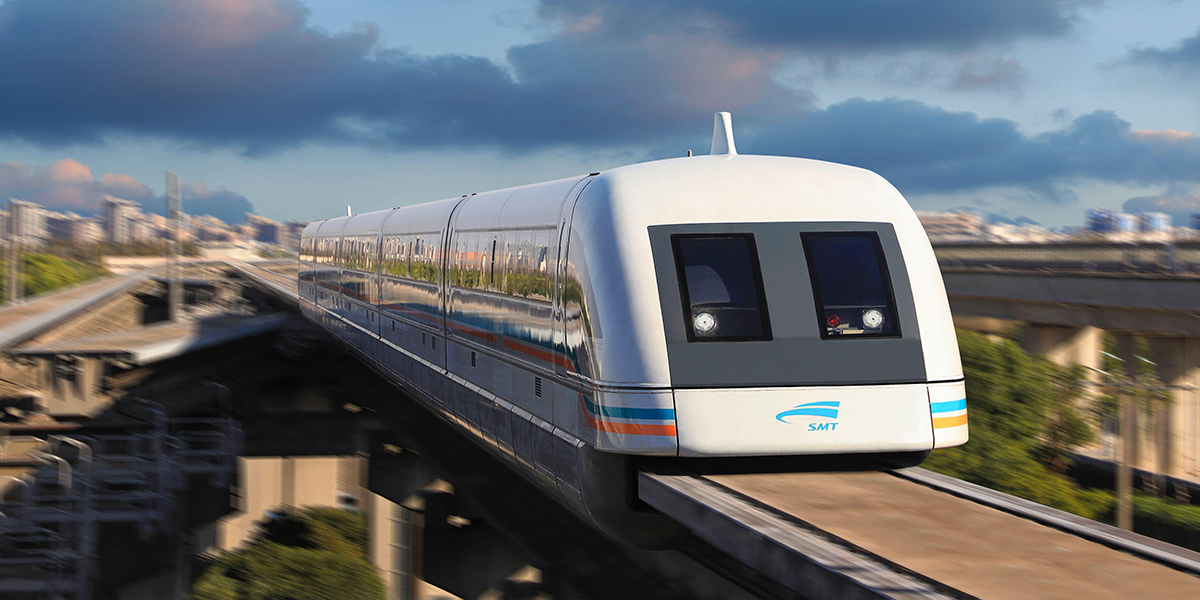
China’s Shanghai Maglev Train – the fastest train in the world
The Comps
- Top speed in service: 431 km/h (268 mph), the fastest any train has ever run in regular passenger service
- Trainset: Transrapid SMT (TR08)
- Manufacturer: Transrapid International, a joint venture of Siemens and ThyssenKrupp, built in Kassel, Germany
- Power output: none, in the way you’re thinking. The propulsion is entirely in the guideway itself, a linear motor made of magnetic coils that both levitates the train about a centimeter off the track and pulls it forward.
- Service area: Shanghai Pudong International Airport to Longyang Road station, 30 km
- Capacity: 574 passengers, three classes
From 2004 to 2021, the Shanghai Maglev ran at a sustained 431 km/h in daily commercial service, making the 30-km airport run in 7 minutes and 20 seconds, a trip that takes close to an hour by taxi. Since May 2021, Shanghai has throttled the line back to a more sedate 300 km/h, largely for cost and wear reasons on a route that was never meant to turn a profit. It’s the trainset equivalent of a factory detuning a hypercar’s engine to make the warranty feasible. But it’s still rated and fully capable of the 431 km/h, it hit an unofficial 501 km/h on a 2003 test run, and for seventeen straight years it held the outright record for the fastest thing you could buy a ticket for.
Honorable Mention: L0 Series SCMaglev — Japan (not yet in service)
The first segment of the Tokyo – Nagoya SC Maglev has been the testbed for perfecting the technology. Photo: Rick Harnish
Top speed on record: 603 km/h (375 mph), the fastest any train has ever moved
Need we say more? No passenger has ever ridden this thing on a real route, and none will for a while. The L0 is the prototype for Japan’s Chuo Shinkansen, a floating superconducting maglev line meant to eventually connect Tokyo and Osaka in about an hour, running at a planned commercial speed of around 500 km/h. It set the world rail speed record of 603 km/h back in 2015 on a test track in Yamanashi, faster than a Boeing 747’s takeoff speed, and it does it without touching the ground. The line was originally supposed to open in 2027. Geology, groundwater disputes with Shizuoka Prefecture, and some of the most tunnel-heavy construction ever attempted (upwards of 90% of the route runs underground) have pushed that date out to somewhere in the 2030s. It’s the concept car of this list.
Bringing these speed beasts home
Every train on the list exists because a country decided, at some point, that moving people at 200-plus miles an hour on the ground was worth the investment, the engineering risk, and the decades of patient buildout. We, the people of the United States, have not yet made that decision. We have the busiest air corridors and the worst traffic corridors of any developed country on Earth, as well as (ironically) the most miles of train track on Earth.
That’s what the High Speed Rail Alliance is trying to change.
Join the over 1,000 members who help make sure HSRA stays on track to bring amazing trains like this to North America.
The Latest from HSRA
Our Latest Blog Posts
Check out the latest news, updates, and high speed rail insights from our blog!