First of three critical projects is under construction Maryland has quietly become one of the key sites of railway upgrades in the Northeast Corridor (NEC). Three consecutive water crossings on a 35-mile stretch between Baltimore and the Susquehanna River will soon be...
InnoTrans 2026: An American in Germany
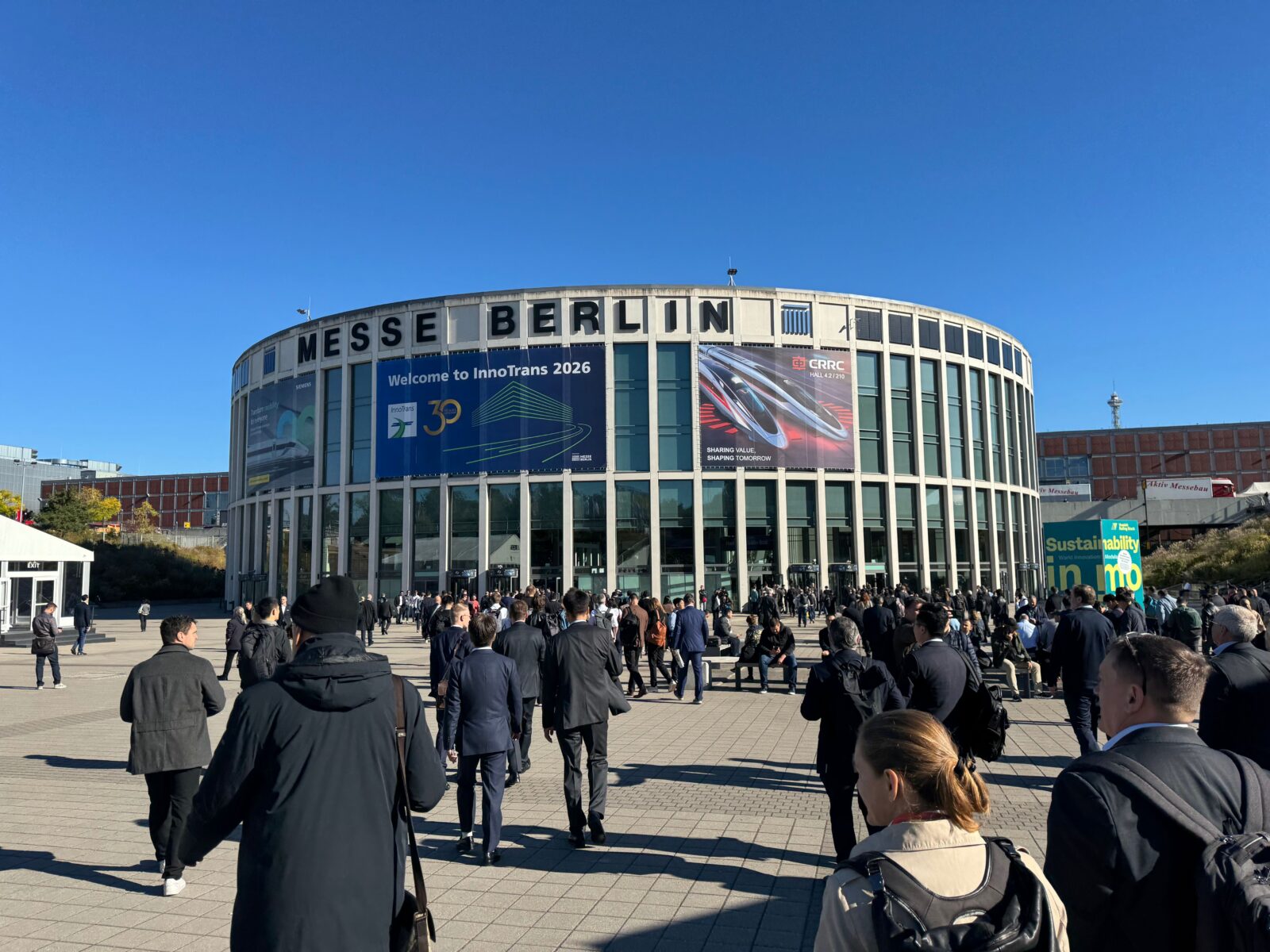
U.S. Takeaways From the Largest Railway Trade Show on Earth
By Jordan Pokorney, Manager of Outreach & Engagement
There’s nothing like InnoTrans. Held every two years since 1996 at the massive Messe Berlin, InnoTrans is where the latest transit technology is unveiled to the world. This year, the expo enjoyed record-breaking attendance during its September 22–25 run, a perfect way to celebrate the 30th anniversary of the largest railway trade show on Earth.
I was fortunate to experience two days of this international gathering during a week-long educational tour in Germany, curated in large part by our friends at DB E.C.O. North America.
My souvenirs for you are takeaways for American passenger rail development, namely:
- We need to BFR (be for real) about public funding for trains.
- Electrification is urgent and should be accelerated.
- Integrated network planning builds railways at their finest.
I dedicate this post with gratitude to the DB E.C.O. North America team for organizing this trip and for including the High Speed Rail Alliance in its delegation of North American railroaders, transit leaders, and advocates.
Here are my observations from InnoTrans 2026—and its host country.
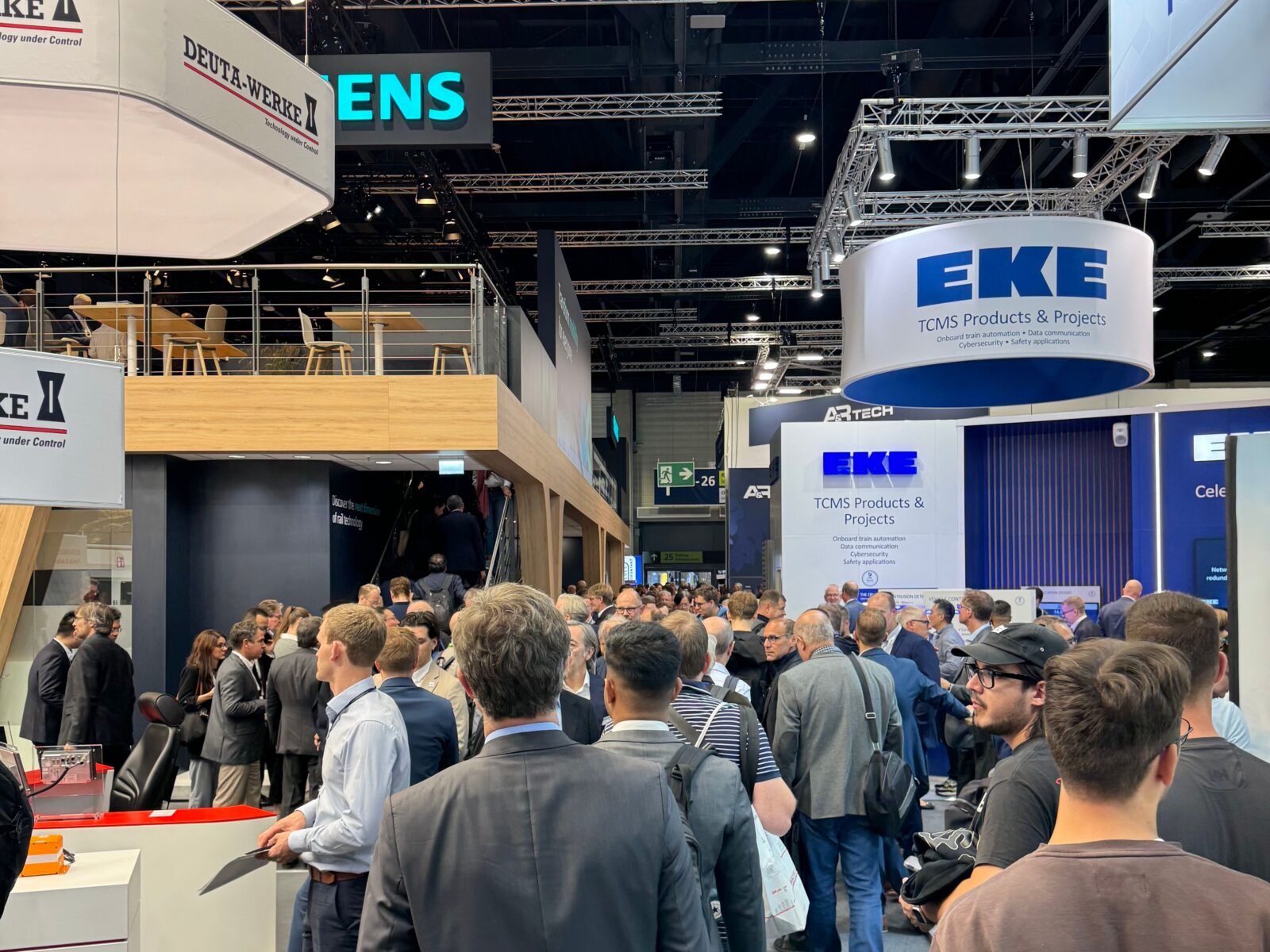
InnoTrans 2026 was the most well-attended InnoTrans on record since its inception in 1996.
Supply (Chain) and Demand
InnoTrans brings together the brains and products behind rail excellency throughout the world.
Railway operators, rolling stock manufacturers, and suppliers of just about every train part you can think of are there to make deals, make connections, and make history. Passengers and train nerds (like me) make it their business to make the pilgrimage, too.
It’s like Comic Con for the global rail industry, minus the costumes (though some attendees were already breaking in their dirndl and lederhosen for Oktoberfest).
InnoTrans 2026 drew an all-time high of over 175,000 visitors from 128 countries and featured 3,190 exhibitors from 59 countries.
Between the outdoor areas and the exhibition halls, the convention takes up nearly 120,000 square meters. And it’s growing: InnoTrans Asia, the expo’s first iteration outside Europe, will launch in Singapore in 2027.
The immense volume and variety of businesses on display show that robust public funding for railways not only leads to great trains but also develops a thriving commercial market; the wheel of the supply chain spins consistently enough to sustain it. It should also be noted that most of the participating countries at InnoTrans have long since nationalized their railways.
Speaking of which, let’s talk about Deutsche Bahn (DB).
BFR About Funding
DB has become infamous for its lack of punctuality. While the railway reports 88% of its trains as arriving on time, that figure drops to 60% when you look at their long-distance trains, which includes their flagship Intercity Express (ICE) service. (For reference, DB classifies “on time” as a train arriving within six minutes of its scheduled time.)
Historic underfunding has led to a railway that cannot meet the high demand it sees today. In the words of one DB executive we met, the system is “too full, too old, and too dilapidated.”
Fortunately, Germany is doing something about it: They have decided to “be for real” about their trains.
In 2025, the German government committed €108 billion through 2029 to modernize its aging rail network, add capacity, and meet the future travel needs of its people.
Compare that figure to the measly $31.1 billion Amtrak will get over the next five years (minus the benefit of advanced appropriations) if Congress passes the BUILD America 250 Act. Germany, by the way, is roughly the size of Montana.
The idea that we should accept so little for infrastructure so important is a failure of the American government.
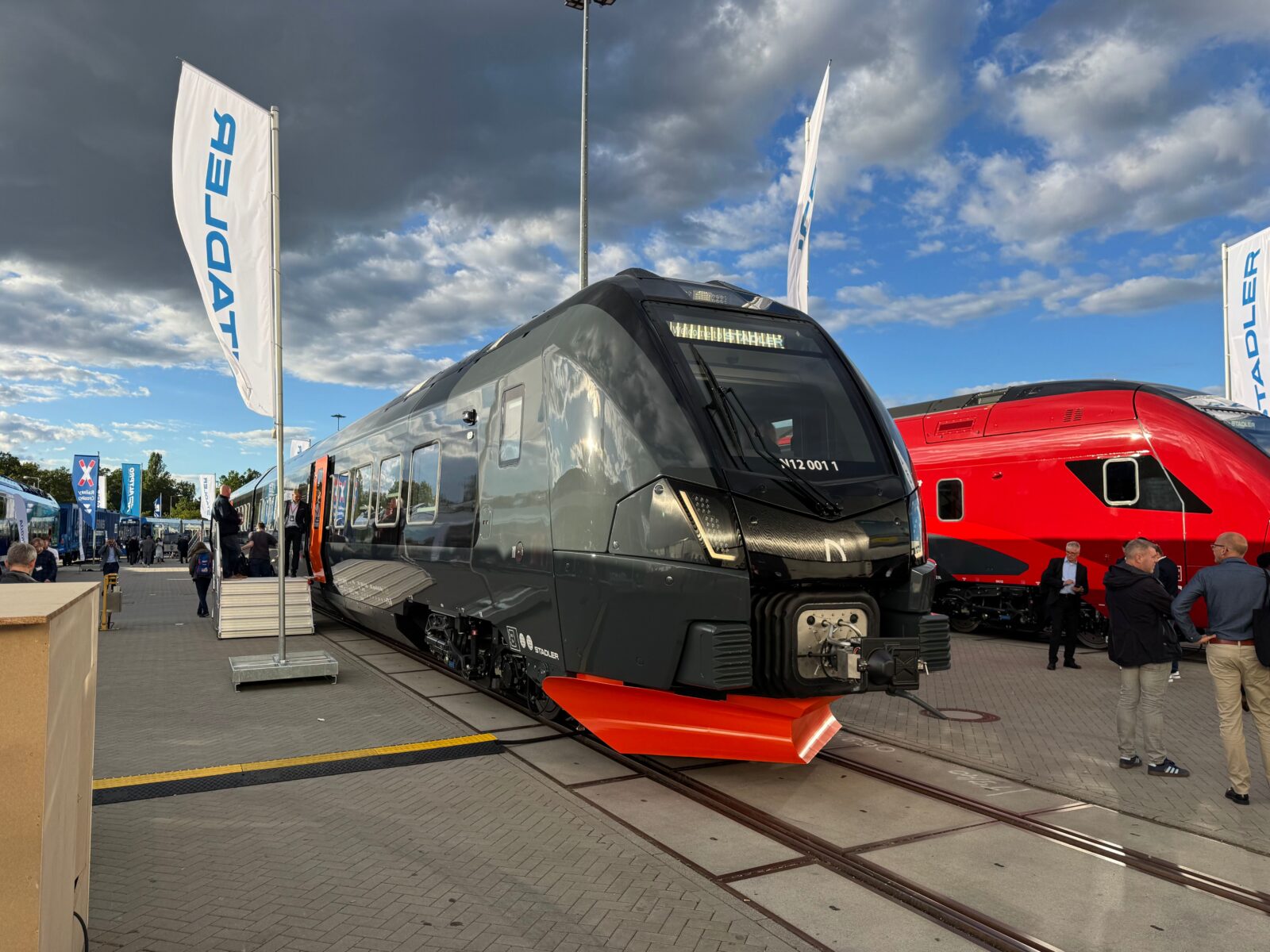
Stadler’s new electric Nordic Express FLIRT train for Norske tog
The Future Is Electric
The European Union is taking the climate crisis seriously, making intentional efforts to become climate-neutral by 2050.
Of the 113 shiny new vehicles on display at InnoTrans this year, not one of them was a diesel locomotive.
Instead, exhibitors focused solely on alternative energy sources, from electric and battery-electric to hydrogen. (Stadler made history by unveiling the world’s first narrow-gauge hydrogen train, which will serve communities in Sicily, Sardinia, and Calabria.)
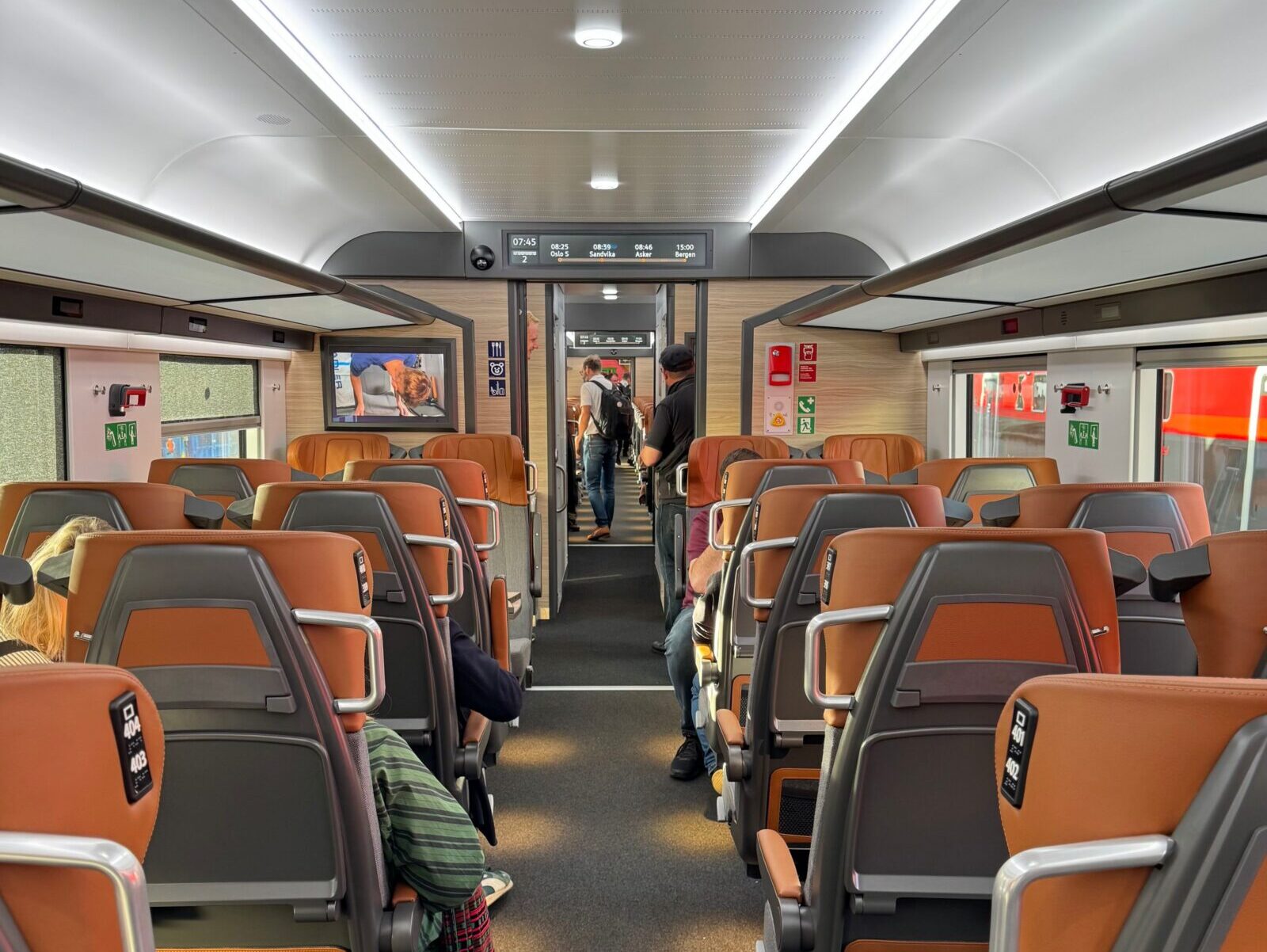
Representatives from Stadler took us on guided tours through some of their upcoming rolling stock. New FLIRT Nordic Express EMUs for Norway were extremely sexy inside and out, with luxury interiors and a sleek, eye-catching livery of black, gray, and orange. These trainsets can withstand Arctic temperatures ranging from –40 °C to 35 °C. Meanwhile, Stadler’s battery-electric FLIRT AKKU for ÖBB (Austrian Federal Railways) can fully charge its batteries while running under catenary in 15 minutes.
Recently, Chicagoans got a chance to check out Stadler’s upcoming battery-powered FLIRTs for Metra at APTA EXPO 2026, which riders can expect to operate on the Rock Island District Beverly Branch in 2028.
The Alliance champions overhead catenary as the ultimate long-term railway electrification solution. We recognize the value of alternative solutions until the wires go up, but as Caltrain’s electrification in 2024 illustrates, the investment is more than worth it.
Over 57% of railways in the EU are electrified. North American electrification sits at less than 1%. We need to stay vigilant to get that number into the double digits. Not for trains’ sake, but for ours.
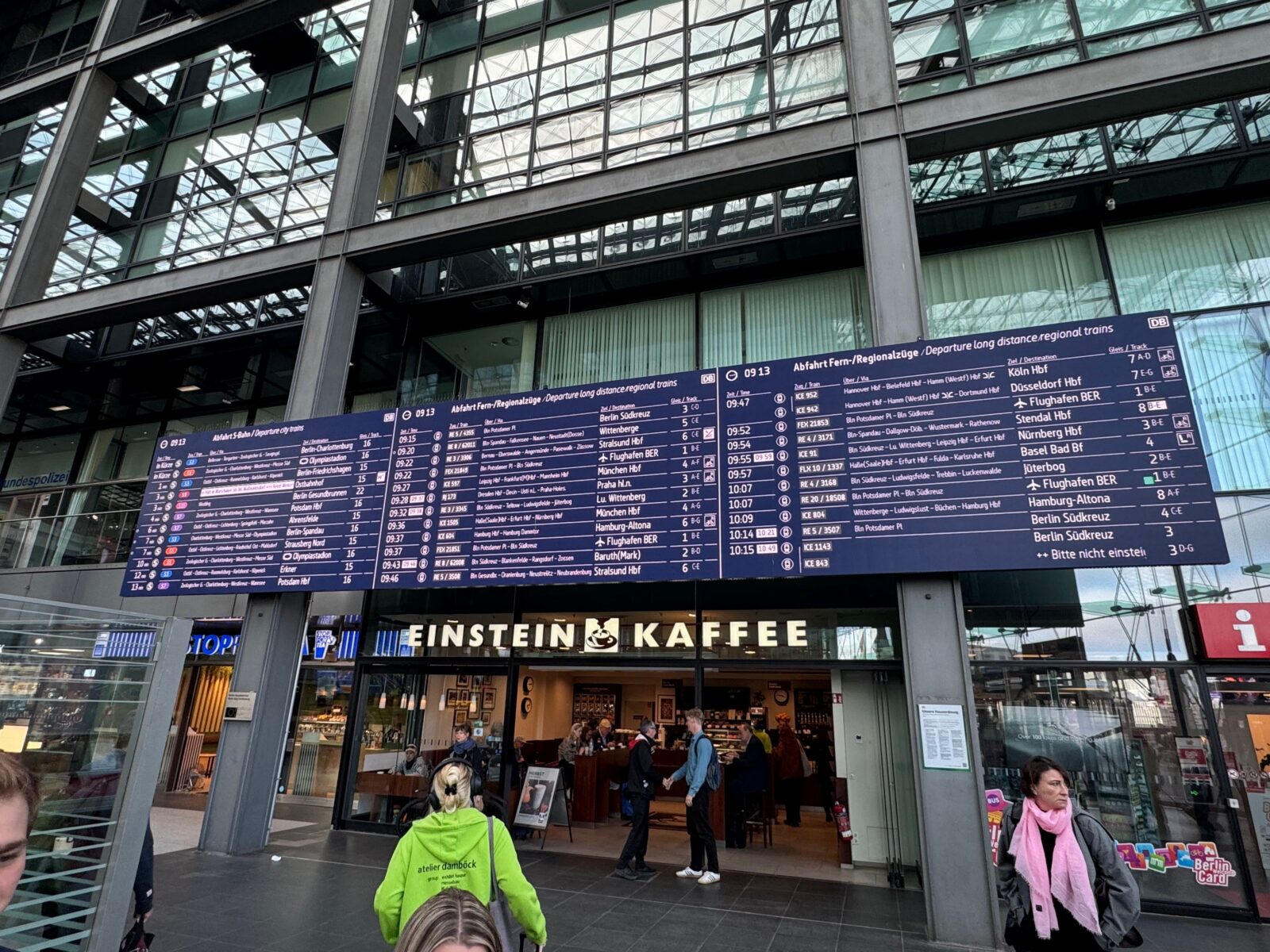
A departure board for regional and long-distance trains at Berlin Hauptbahnhof, where some of our group, myself included, continued our journey to Munich.
What the Germans Do Right
DB is not too dissimilar to Amtrak. It is a joint-stock company with the German government, ergo the German people, as its sole shareholder. But its jurisdiction extends beyond passenger service into freight operations, infrastructure management, and engineering consultancy. At 21,000 miles of track, DB owns the vast majority of the German rail network—the largest in Europe.
As mentioned earlier, historic underfunding has undermined the quality and capacity of the system, but Germany is making moves to fix this.
They deserve credit in other areas, too.
German railway planning adheres to the integrated network approach. Long-distance trains, of which some run on true high-speed lines, make up the mainline trunks between city pairs. These trunks connect to frequent regional trains at multiple hubs, including high-frequency S-Bahn trains in larger cities. (In fact, DB ICE trains can be considered both high-speed and regional rail.) Almost all of the country’s major airports are served by long-distance trains, regional trains, or both. Plus, regardless of whether you book a day pass for public transit via DB or the local operator, you can usually expect your ticket to be valid for all buses, metros, and S-Bahn trains within a particular city area (pending zone restrictions).
All this to say, the train can take you pretty much anywhere.
Our advocacy at the High Speed Rail Alliance is unique because the integrated network approach guides all of our work to make great trains a reality in North America. By creating a wholistic transportation system that balances speed, frequency, and easy connections, you begin to see how competitive the train can be. You’ll wonder why we ever decided to subsidize the Interstate Highway System so much instead of the national rail network.
In Chicagoland, the Northern Illinois Transit Authority officially launched on September 1, 2026. Its foundational goals include fare and service integration between the Chicago Transit Authority, Pace, and Metra, supported by a mandate to transition Metra operations from commuter rail to regional rail.
We are excited to see the benefits of truly integrated network planning applied at the regional level through NITA, and we are continuing to guide the new agency so that it be a model example for the rest of the country.
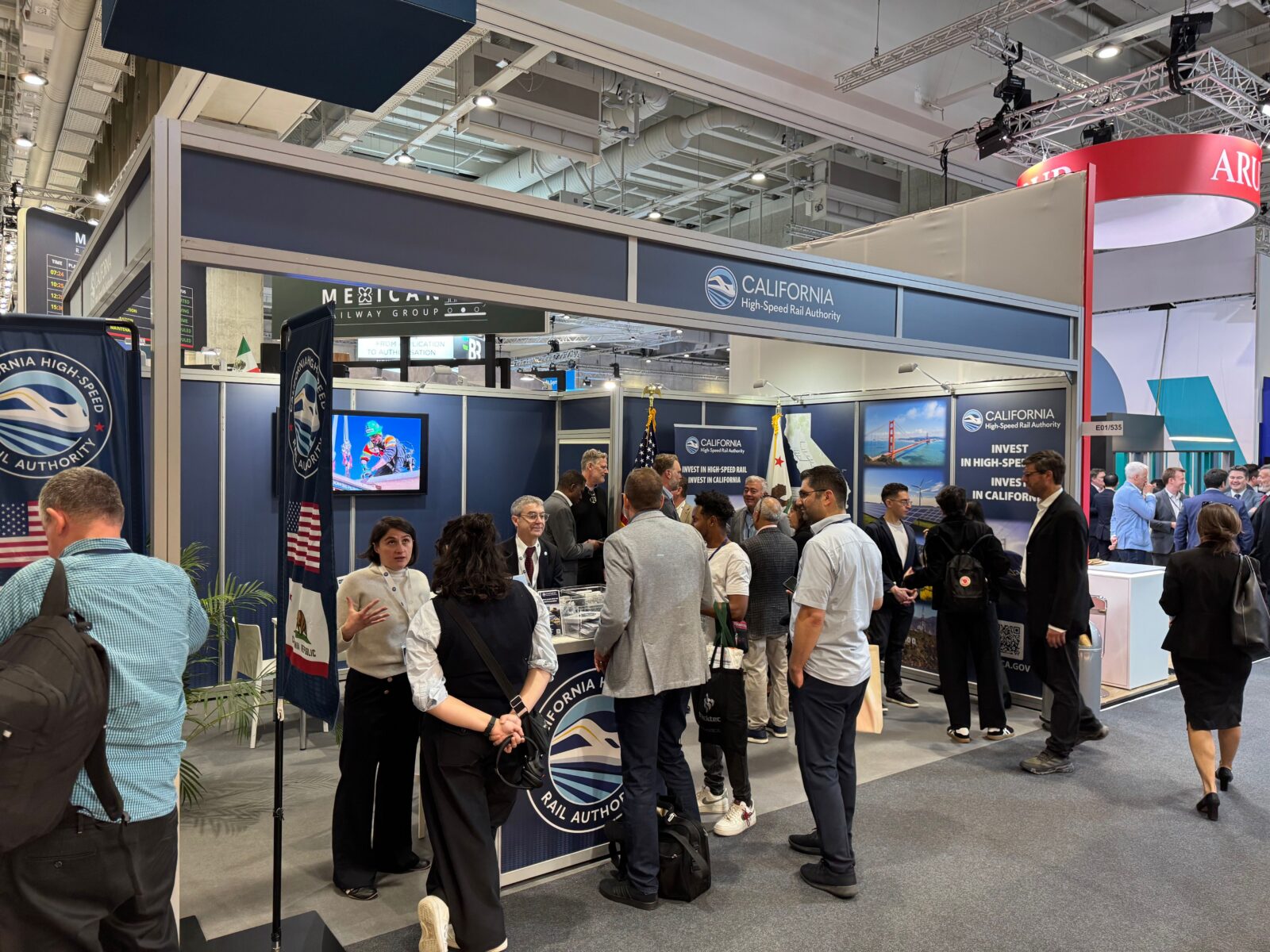
California High-Speed Rail made a featured appearance at InnoTrans this year, the Authority’s first time at the expo. California is the only state whose rail plan adheres to the integrated network approach so far.
Conclusion
InnoTrans and Germany present a bright future for the railways, even in the face of deep systemic challenges. They reveal a vibrant international rail industry that continues to grow from rising passenger demand and legitimate federal investment.
America has a long way to go when it comes to passenger rail, but that does not diminish the progress that has been made in the 21st century. Now is not the time to be discouraged. The conditions have never been better to tip the scales.
It is critical for Americans to engage with their elected leaders and transportation providers to let them know that high standards for passenger rail matter. This means standing up for greater public funding, progress toward electrification, and integrated network planning.
The alternative is to keep building highways costing tens of billions of tax dollars mindlessly like a cancer.
So, I invite you to become an HSRA member (if you haven’t already) to help make this progress for American railways possible.
Let’s get to work. We’ve got tracks to lay.
Photo Gallery
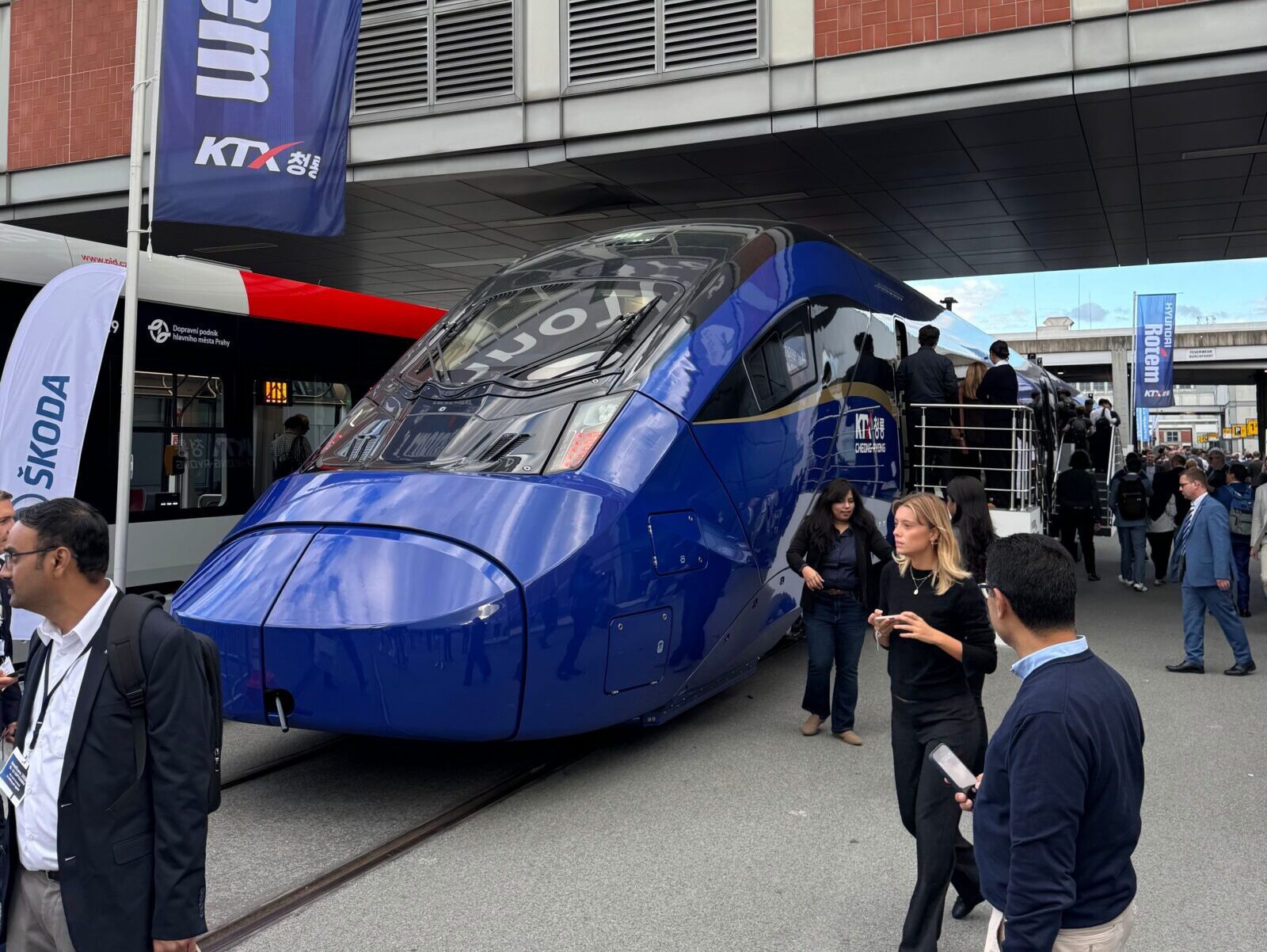

- KTX EMU-320 Korean high-speed train from Hyundai Rotem
- Coach interior of the new Stadler electric Nordic Express FLIRT
- A live guzheng player at the massive China Railways exhibition area
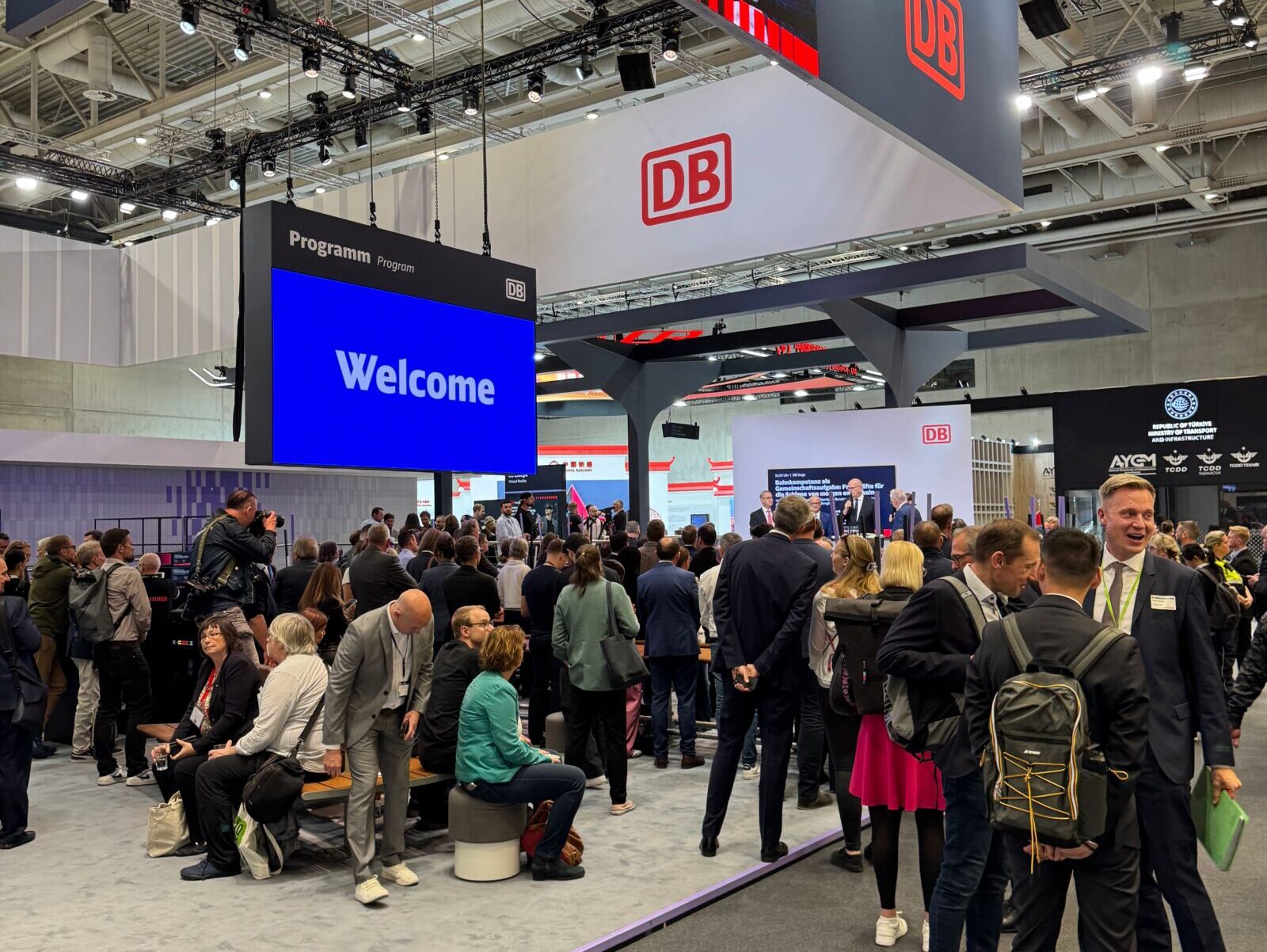
- Neighboring national railway exhibitors included Deutsche Bahn.
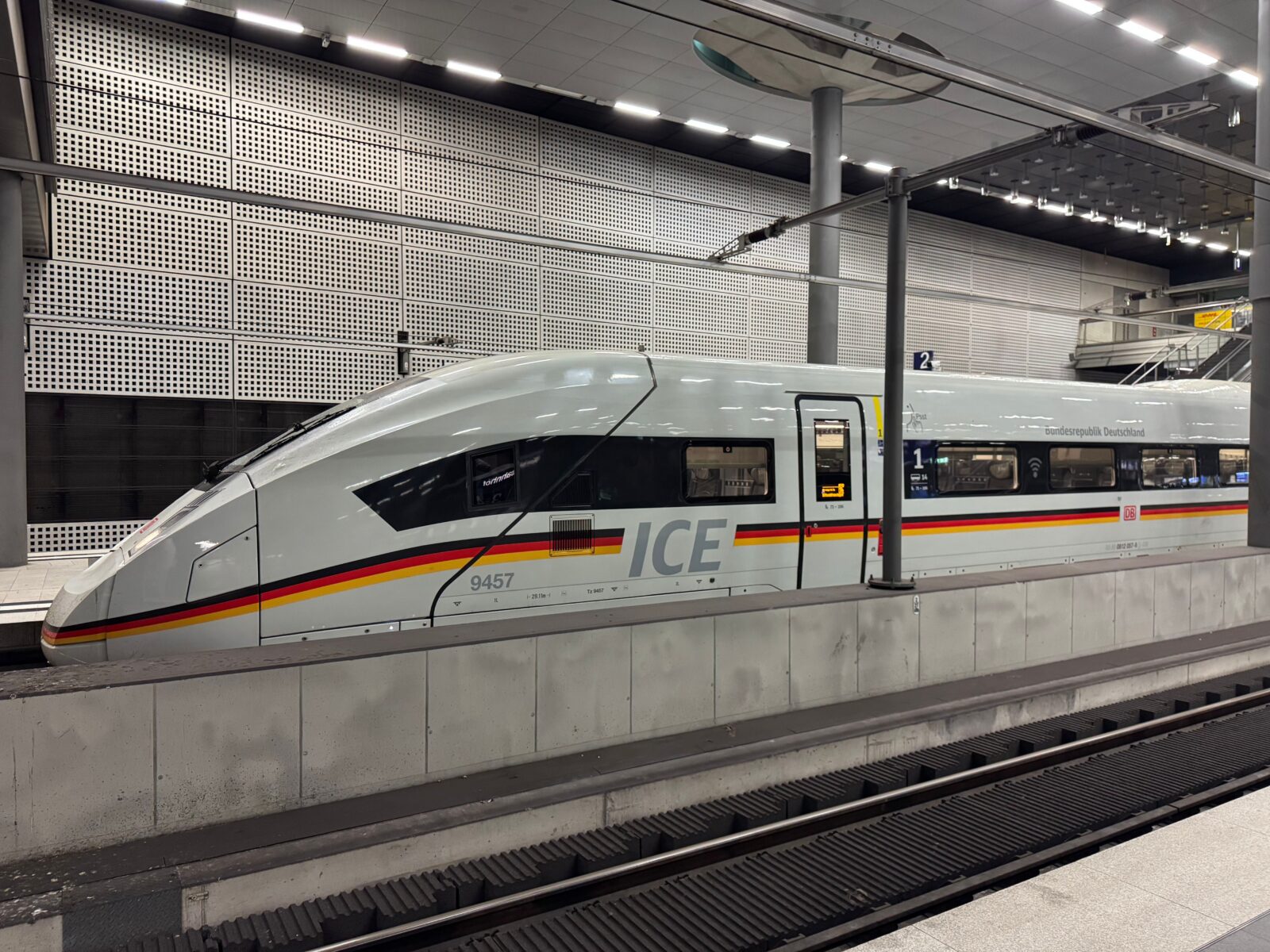
- ICE 4 9457 “Bundesrepublik Deutschland” spotted at Berlin Hbf
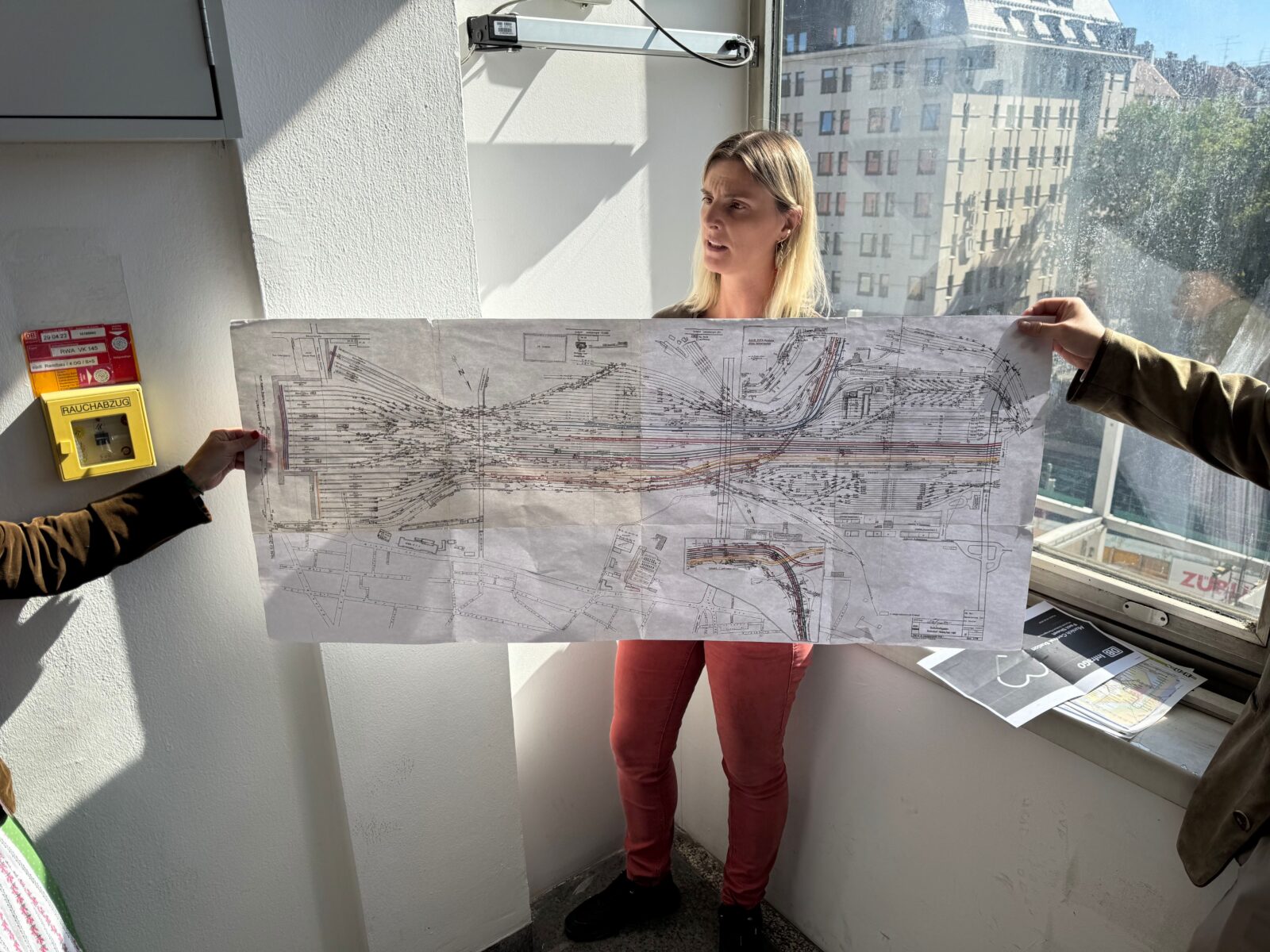
- A Deutsche Bahn employee identifies chokepoints at Munich Hbf.
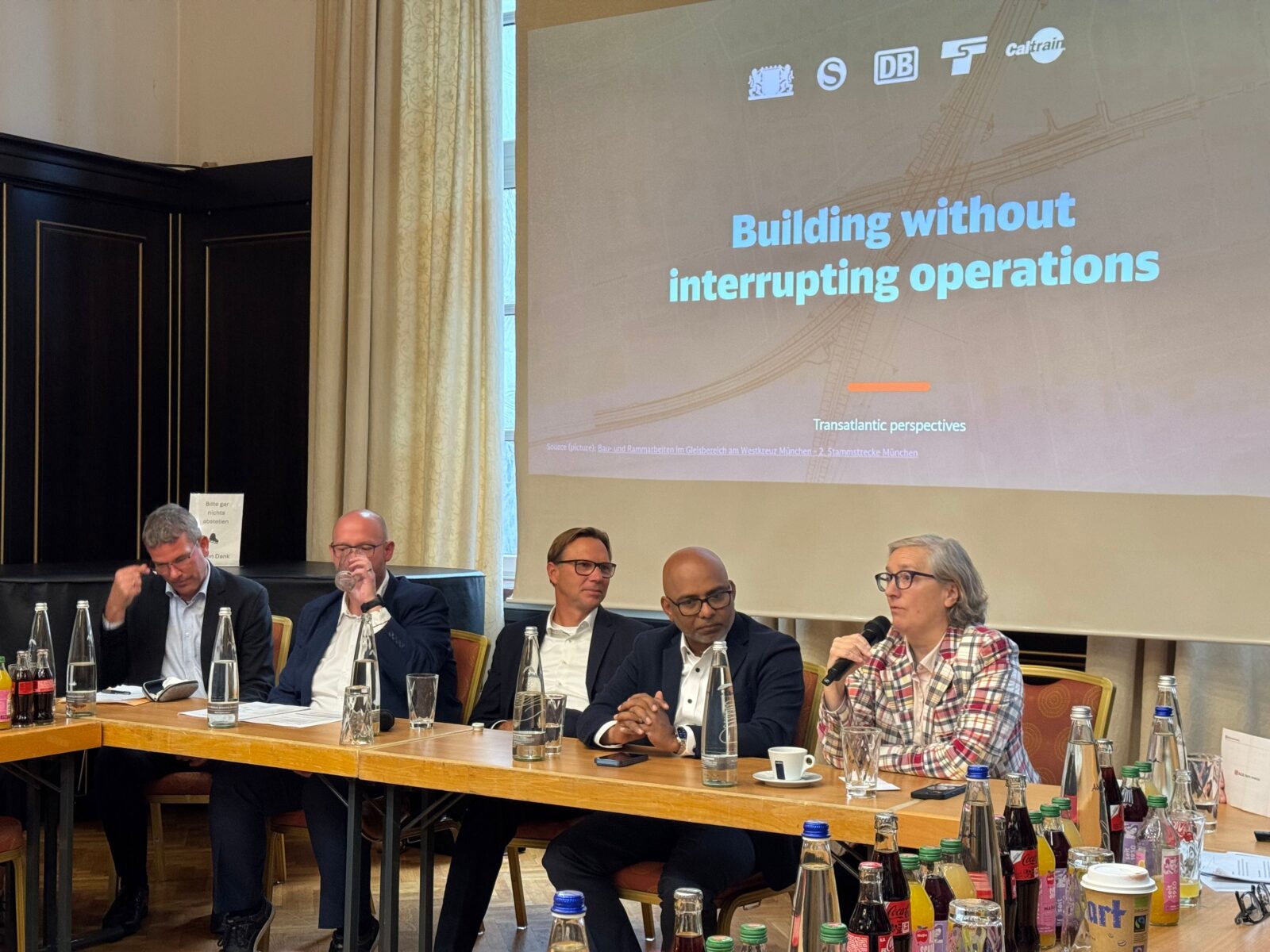
- Caltrain CEO Michelle Bouchard speaking on a panel in Munich
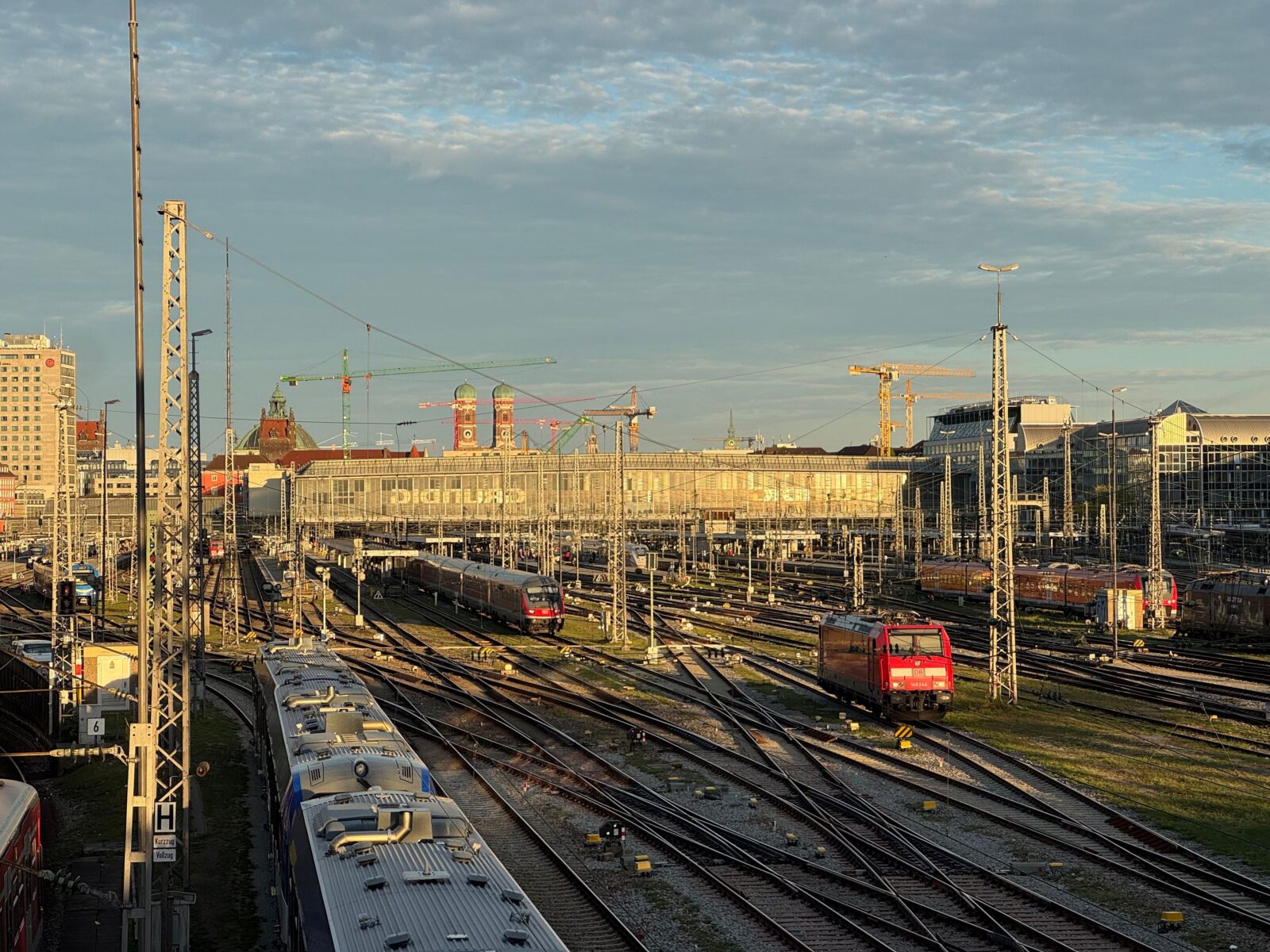
- Oktoberfest brought ~100,000 additional daily passengers to Munich Hbf.
The Latest from HSRA
Our Latest Blog Posts
Check out the latest news, updates, and high speed rail insights from our blog!