
Take the SurveyWashington is designing a transformative high-speed line The Washington State Department of Transportation (WSDOT) is taking public comment on its study for a high-speed line between Portland, Seattle, and Vancouver, B.C. The study will be released in...
London’s St. Pancras International Station Is Set for Massive Service and Concourse Expansion
Guest post by Caleb Villamin
Thirty-two years after its opening, Britain’s Channel Tunnel is set to expand high-speed rail services to more European destinations. In July 2025, London St. Pancras High Speed and Eurostar signed a joint letter of intent, declaring ambitious plans to expand one of Europe’s busiest international rail hubs to support growing post-pandemic demand for sustainable cross-channel travel. Major cities in Germany, Switzerland, France, and Italy, are slated to be connected to London St. Pancras by 2030.
Richard Thorp, Engineering Director at HS1, cites this growing demand as motivation to “boost capacity” at London’s St. Pancras Station, the current terminus of Eurostar high-speed rail services in the U.K. London St. Pancras High Speed is cooperating with officials at Eurotunnel owner Getlink, as well as international rail operators, to facilitate expanded services.
Get Involved
Tell Congress: It’s time to reconnect the country with high-speed and regional rail!
History, Impact, and Status in London
Opening in 2007, the HS1 (High-Speed 1) rail link established a vital connection between the U.K. and mainland Europe. The 212-mile (342-km) journey from London’s St. Pancras International Station and Paris’ Gare du Nord could be made in a mere 2 hours and 16 minutes, with services operated by Eurostar. Routes eventually expanded to Lille, Brussels, and Amsterdam.
Coinciding with the HS1’s opening, the King’s Cross/St. Pancras area, once a derelict, brownfield site in the heart of London, underwent redevelopment to transform it into a booming, international economic hub. Victoria-era coal sheds were given new life as a shopping center and marketplace. Offices for Google, Meta, and Universal Music were opened. And new mid-rise mixed-use development sprung up, catering to students and the health industry alike. As a result, the area is a prime hub for expanded travel. St. Pancras is excellently connected by London’s public transport network, served by six Tube lines and a plethora of National Rail services. The economic benefit brought to London by the original HS1 is estimated to be 427M Euros annually. In 2024, Eurostar saw an all-time ridership record of 9.5M passengers. London St. Pancras Highspeed projects that demand will triple by 2040, expecting 35M annual passengers.
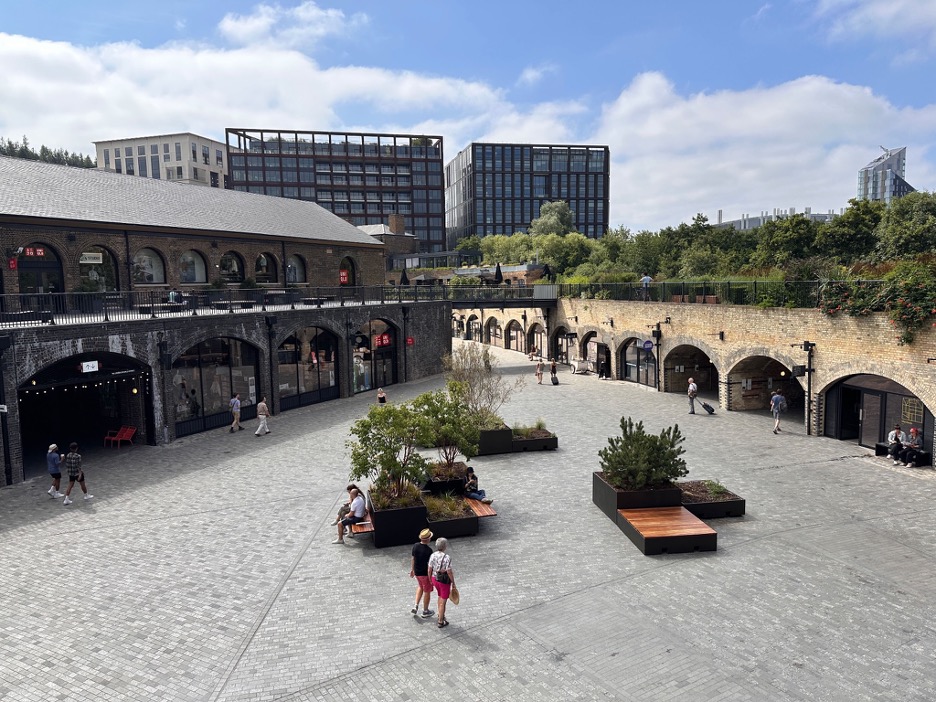
Coal Drops Yard – Former Victorian coal sheds were repurposed into a vibrant shopping center and community space. Photo Credit: Caleb Villamin
Current Operations & Eurostar’s Monopoly
However, despite the success, the Channel Tunnel is being limited by three main factors: Eurostar’s monopoly, British-EU bureaucracy, and an at-capacity rail terminal. As a result, the Channel Tunnel is operating well-below its intended capacity of 1000 trains per day, running only about 400 now.
Eurostar’s control over the route and its infrastructure has been a major barrier for competing operators adding service to London St Pancras. The only operations and maintenance facility in the U.K for high-speed trains, Temple Mills Depot, was until recently solely controlled by Eurostar.
Meanwhile, the U.K being outside the Schengen visa-free travel zone meant that border security checks and airport-style passport control infrastructure needed to be built at St. Pancras and other mainland destinations. These added immigration and regulatory requirements for rail operators to run service to London also dissuaded competitors. And recent increases in ridership has stretched London’s infrastructure to its limit within St. Pancras’ current floor plan, resulting in overcrowding.
Lastly, post-Brexit bureaucracy, driven by a tightening of border control and independence from the EU, has made obtaining the appropriate permissions to run new service to London more difficult. These combined factors result in a high-speed service which, while convenient, is oftentimes quite expensive compared to other similar services on the continent.
Developments in Summer 2025
The victory of Keir Starmer’s Labour government at the 2024 General Election signaled a positive shift for expanded services at St. Pancras and through the Channel Tunnel.
In January 2025, the Office for Rail and Road (ORR) “cut charges” for track usage between London to the Channel Tunnel to “attract” more competing operators to the route (Clatworthy, 2025). In March of that same year, an audit by the ORR found that two of the eight maintenance lanes at Temple Mills Depot were “underused”, despite claims by Eurostar that they had no spare tracks available. This finding opened the door for a bidding process for competing rail operators to run service to the continent later that year.
What expanded services would require
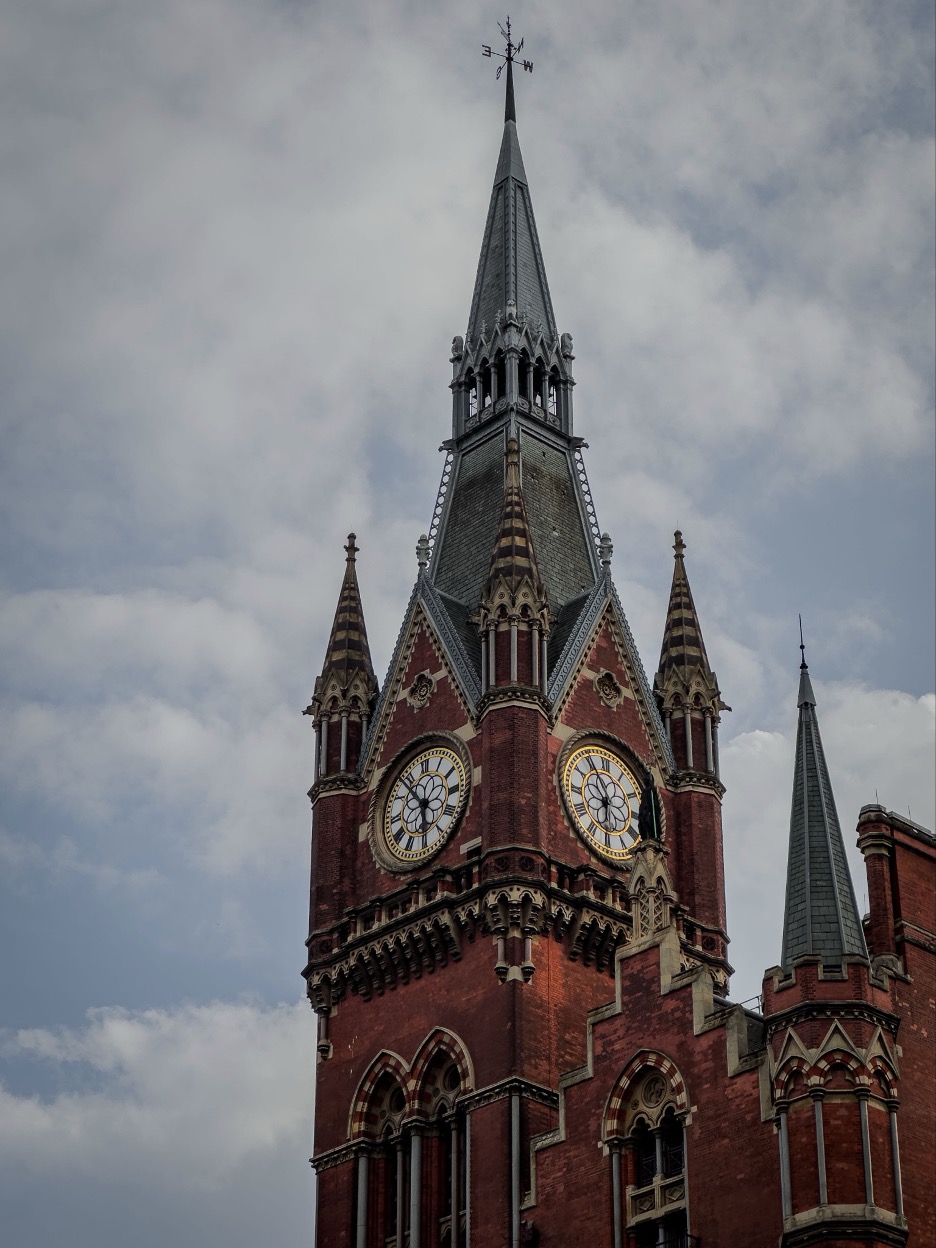
With the grip of Eurostar’s monopoly and bureaucratic hurdles loosened, London St. Pancras and the Channel Tunnel are set to receive more rail service to the continent by 2030. But to achieve those plans, major work needs to be carried out on London’s iconic terminal. The Victorian-era Gothic station is currently able to handle about 1,800 passengers per hour, and already underwent massive reconstruction for the HS1 project. Expansion plans have already been solidified, with the design consultancy Active Thinking stating that they plan to expand capacity to reach 5,000 passengers per hour. The goal is to improve the international reach of the station and expand the main concourse by 2028.
As part of this expansion, the passport control process is set to be more streamlined to better align with a turn-up-and-go style of service. Expansions to the concourse and passport control facilities seek to reduce wait times and bring the recommended pre-arrival time down to just 15 minutes. E-Gates and self-serve passport kiosks, in compliance with the EU’s new biometric Entry-Exit System (EES), have already begun to be installed. This new system began a soft launch in October 2025, and is expected to be fully operational by April 2026. All of these improvements will be a major relief for travellers, who are currently advised by Eurostar to arrive at least 75 minutes before departure, due to long lines and an at-capacity waiting area.
Rolling stock would also need to be fine-tuned for interoperability between the U.K and other countries’ rail standards. As Germany, Spain, and Switzerland have all expressed interest in running their own services alongside the Eurostar, operators would need to procure trainsets that are compatible across various European countries. This however has already been done with the highly successful Siemens Velaro platform, with the British Rail Class 374 being compatible with French, Belgian, and Dutch railway infrastructure.
Route Expansion & Operator Competition
As of winter 2026, the following cities have expressed interest in establishing a direct rail route to London:
- Germany
- Frankfurt
- Cologne
- Switzerland
- Basel
- Zürich
- Geneva
- France
- Bordeaux
- Marseille
- Lyon
- Strasbourg
- Italy
- Milan
All of these cities are within an ideal six-hour time window that makes rail travel a competitive option. For instance, a journey from Zürich Hauptbahnhof, Switzerland to London St. Pancras would take around 5-hours, around the same time as a full airport journey.
Various operators alongside Eurostar have expressed interest in running services into St. Pancras, such as Germany’s Deutsche Bahn and the Swiss Federal Railway (SBB). Mark Smith, a rail journalist who runs the popular travel website “The Man in Seat 61”, calls a London – Cologne – Frankfurt route a “realistic possibility”, and expects such a route as early as 2029-2030.
The aforementioned bid for the remaining two maintenance lanes at Temple Mills Depot was awarded to the Virgin Group in October 2025, beating out Spanish Evolyn and Italy’s Tren Italia. Virgin Founder, Richard Branson, announced that “Virgin Trains” high-speed service to Paris, Brussels, and Amsterdam had been approved by the Office of Rail and Road. The company expects to directly compete with Eurostar on this route by 2030. Alstom has already been selected as the operator’s partner, providing 12 state-of-the-art “Stream” EMU trainsets with a top speed of 200 mph.
Meanwhile, a Eurotunnel spokesperson stated that the demand for increased and improved travel from mainland Europe to London is “clear and real”. Diversifying operators could signal a positive shift for certain demographics, such as cyclists or pet owners, they continued. Current Eurostar services do not allow travel with bicycles nor pets, which could be remedied by introducing competing operators.
Diversified service has been a long-held dream for travelers to and from London by rail. Despite Eurostar being a convenient option, high-prices and the company’s monopoly on the Channel Tunnel has deterred many from choosing it. But with firm commitments already being planned by various European operators, St. Pancras is on track for a generational expansion of passenger services, demonstrating the benefits of competition on major railway routes.
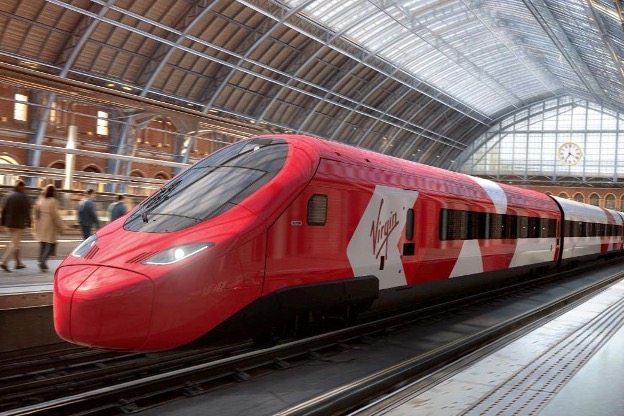
Rendering of Virgin Trains’ Avelia Stream trainset. Photo Credit: Virgin
The Latest from HSRA
Our Latest Blog Posts
Check out the latest news, updates, and high speed rail insights from our blog!