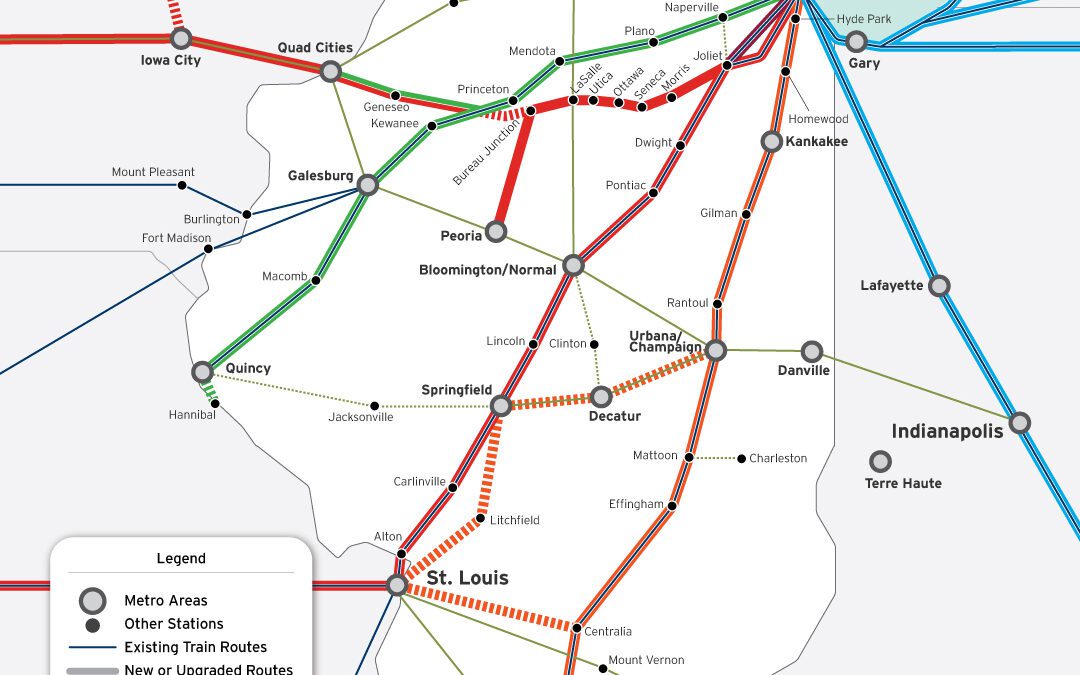
You can provide feedback to IDOT through October 2026. The Illinois Department of Transportation (IDOT) is working to update the 2023 State Rail Plan, with a final draft expected July 2027. State rail plans set future goals for freight and passenger rail. They can be...
Amtrak Should Rethink Its Plan to Sell a National Asset
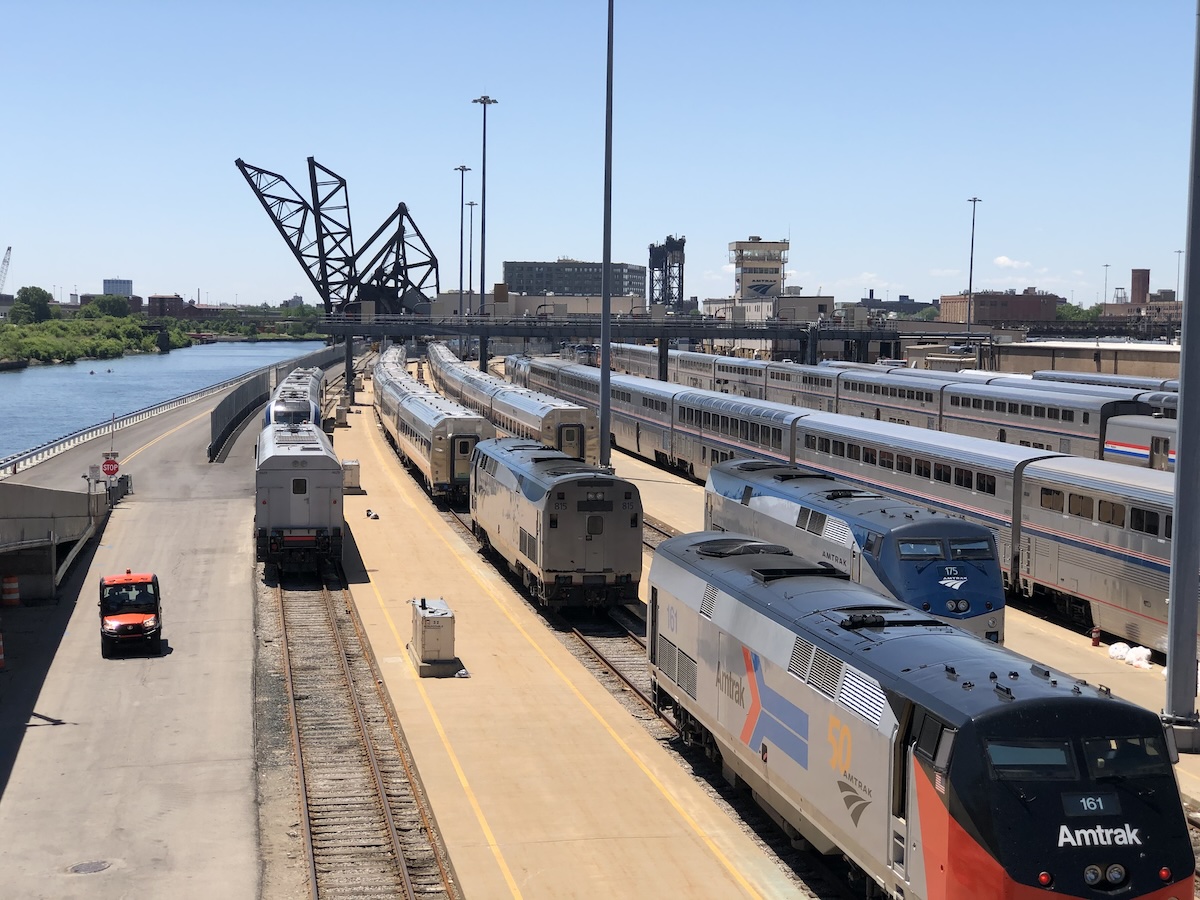
Amtrak is in talks to sell its 14th Street Coach Yard in Chicago to a private equity firm. Simultaneously, it plans to buy a new, larger rail yard a mile south of the present site.
Amtrak should pump the brakes on this plan. We don’t yet have enough information to know whether it makes sense. A rash decision could create irreparable harm, while taking the time to make an informed decision could be a boon for passenger-train travel throughout the state—and the region—for decades.
To be clear, Amtrak does need a new yard. The 14th Street maintenance facility, at 47 acres, doesn’t have the capacity to serve Amtrak’s needs. The target site for a new maintenance facility—the Union Pacific Canal Street Yard—makes sense. The 55-acre site would allow Amtrak to build a larger, upgraded maintenance facility to service modern, high-tech locomotives. So the move is necessary.
The problem? Selling off the 14th Street Coach Yard—a national asset—will diminish the options and possibilities for building a network of great trains in the Midwest. Amtrak is acting with zero public engagement, with no plan for developing world-class regional rail, and with no vision of Chicago as the hub of a thriving passenger-rail network that offers hourly service to destinations throughout the region.
To the extent that there is a guiding vision for the move, it’s Amtrak’s goal of doubling its national ridership by 2040. Amtrak had 34.5 million passengers in Fiscal Year 2025. Its goal by 2040 is 66 million passengers.
That goal seems ambitious only because the bar is set so low. Any number of factors could make it look excessively cautious within a few years. One timely example: A global energy crisis and spiraling gas prices could push millions of Americans to rediscover the virtues of train travel.
And there’s the potential impact of actual policy. The Passenger Rail Planning Act, currently being debated in the Illinois General Assembly, would direct the Illinois Department of Transportation to plan for hourly service, at minimum, in the main corridors throughout the state. It would also require the state to incorporate these service frequency goals into the Illinois State Rail Plan and into the Long-Range Statewide Transportation Plan.
The law will build the foundation for an ultra-modern railway network that connects the entire Midwest. At the same time, Illinois is making steady progress toward the advanced planning and design stages for a high-speed line between St. Louis and Chicago.
Amtrak appears to be operating without reference to these plans and possibilities. Yet it’s plausible that surging train ridership over the next decade will make both rail yards—the current one as well as the Union Pacific site—vital to the smooth operation of Amtrak trains in the hub of a thriving, rapidly expanding regional-rail network.
Sadly, we’ve seen this story too often: Cities, states, and railroad operators sell assets that have outlived their usefulness, at least at the moment. Then they discover, not long after, that those same assets are essential to revitalizing and expanding their railroad networks.
This short-term thinking often derails railroad projects in America. It has to end.
Instead of undercutting the energy and momentum for a world-class regional-rail network centered in Chicago, Amtrak should engage with the Federal Railroad Administration and Illinois Department of Transportation to develop a vision for that network, prepare the groundwork for its implementation, and help make it happen.
The Latest from HSRA
Our Latest Blog Posts
Check out the latest news, updates, and high speed rail insights from our blog!